
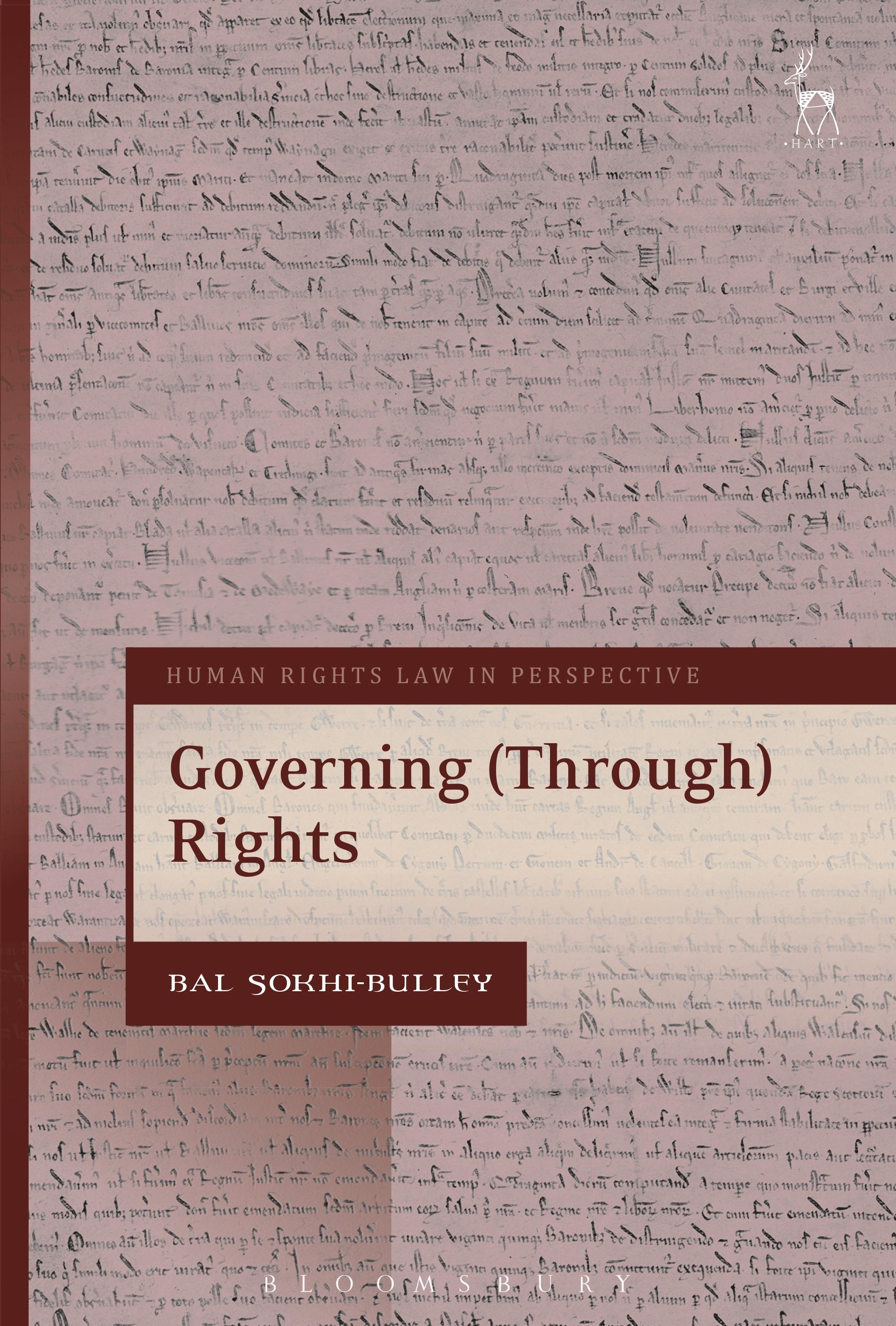
Taking a critical attitude of dissatisfaction towards rights, the central premise of this book is that rights are technologies of governmentality. They are a regulating discourse that is itself managed through governing tactics and techniques – hence governing (through) rights. Part I examines the 'problem of government' (through) rights. The opening chapter describes governmentality as a methodology that is then used to interrogate the relationship between rights and governance in three contexts: the international, regional and local. How rights regulate certain identities and conceptions of what is good governance is examined through the case study of non-state actors, specifically the NGO, in the international setting; through a case study of rights agencies, and the role of experts, indicators and the rights-based approach in the European Union or regional setting; and, in terms of the local, the challenge that the blossoming language of responsibility and community poses to rights in the name of less government (Big Society) is problematised. In Part II, on resisting government (through) rights, the book also asks what counter-conducts are possible using rights language (questioning rioting as resistance), and whether counter-conduct can be read as an ethos of the political, rights-bearing subject and as a new ethical right. Thus, the book bridges a divide between critical theory (ie Foucauldian understandings of power as governmentality) and human rights law.
Betal nemt med kort, Klarna, Apple Pay eller Google Pay. Ikke tilfreds? Du har altid 14 dages fortrydelsesret. Læs mere i vores vilkår. Har du spørgsmål, så send os en mail på hello@memmo.org.
Memmo gør det nemmere at studere – uanset hvor du er i verden. Hos os samler du dine kursusbøger og smarte studieværktøjer ét sted: resuméer, quizzer, podcasts og flashcards. Og så er der Ted, din studieven, der svarer på alt, du undrer dig over. Over 50 000 studerende studerer allerede her – bygget til at hjælpe dig med at lære hurtigere og stresse mindre.