
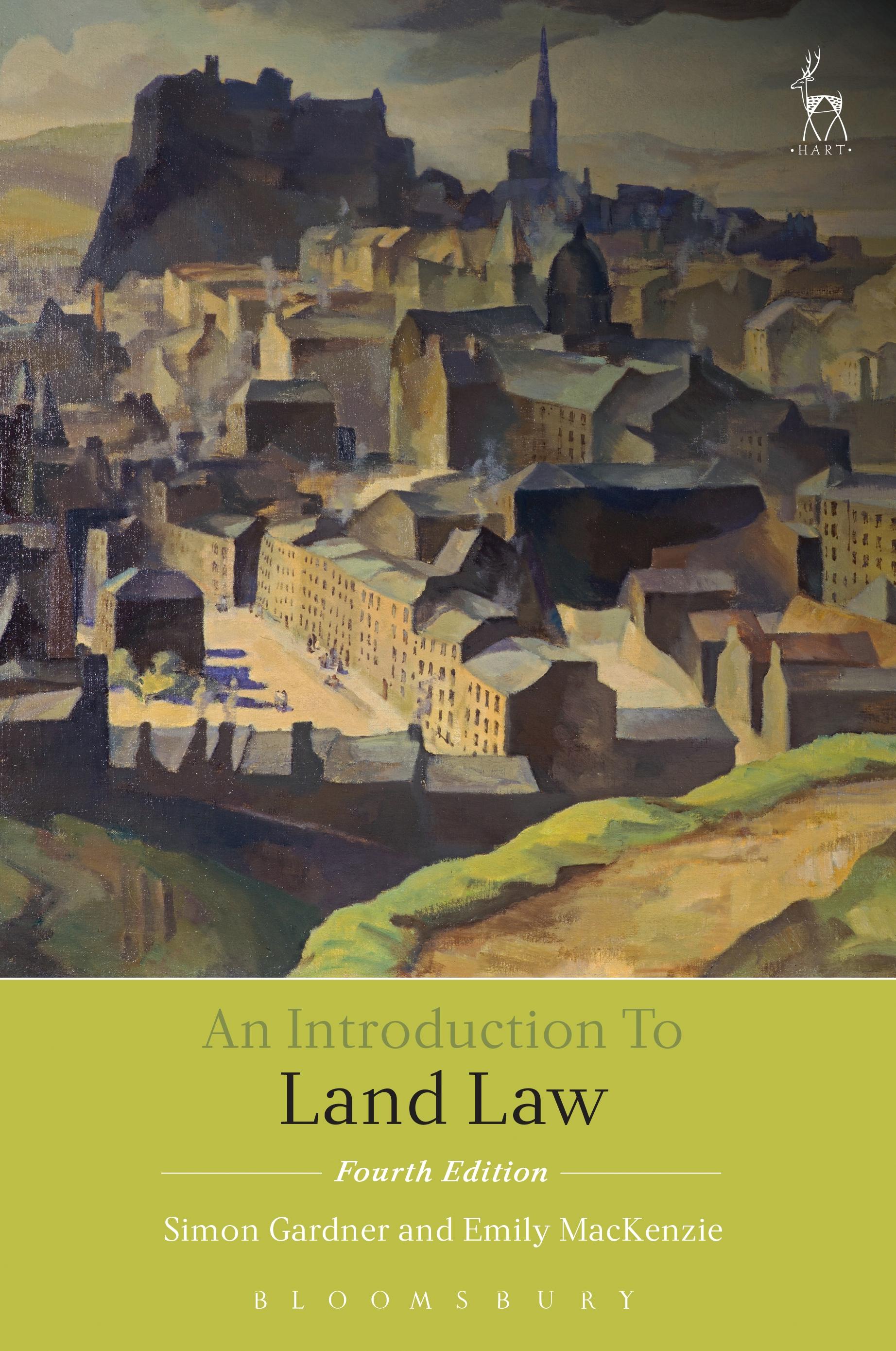
Gardner and MacKenzie's An Introduction to Land Law has been widely acclaimed by students and teachers for the distinctively informative and stimulating way in which it addresses this challenging subject.
Concise and highly readable, it covers the main points of land law found in the syllabuses of law schools in England and Wales. While not intended as a comprehensive textbook, it provides both sufficient detail, and especially the illuminating overview needed, for a real understanding, and many pointers for those seeking more.
Most of all, it stands apart from other land law books in the model it offers of critical engagement with the material. As the authors say in their Preface:
[W]e aim not just to state the law, but to paint its portrait, or tell its story, or something of that kind. So we set out to offer a careful, thoughtful, honest and critical (but not unsympathetic) appraisal, from a number of directions, both doctrinal and contextual. Once again, too, we present the portrait or story partly for its own interest, but most of all so as to encourage readers to try something similar for themselves – to reflect on the subject more, and so understand it better, and at the same time deepen their thinking skills in general.
As well as updating the book's overall coverage, this new edition features reworked discussions of areas where the law has recently undergone substantial change, and also where the authors' thoughts themselves have developed – including ownership, easements, and rectification of the land register.
As one reader of the first edition commented, 'it shone light where none had shone before, and lit a clear path to understanding'.
Concise and highly readable, it covers the main points of land law found in the syllabuses of law schools in England and Wales. While not intended as a comprehensive textbook, it provides both sufficient detail, and especially the illuminating overview needed, for a real understanding, and many pointers for those seeking more.
Most of all, it stands apart from other land law books in the model it offers of critical engagement with the material. As the authors say in their Preface:
[W]e aim not just to state the law, but to paint its portrait, or tell its story, or something of that kind. So we set out to offer a careful, thoughtful, honest and critical (but not unsympathetic) appraisal, from a number of directions, both doctrinal and contextual. Once again, too, we present the portrait or story partly for its own interest, but most of all so as to encourage readers to try something similar for themselves – to reflect on the subject more, and so understand it better, and at the same time deepen their thinking skills in general.
As well as updating the book's overall coverage, this new edition features reworked discussions of areas where the law has recently undergone substantial change, and also where the authors' thoughts themselves have developed – including ownership, easements, and rectification of the land register.
As one reader of the first edition commented, 'it shone light where none had shone before, and lit a clear path to understanding'.
Betal nemt med kort, Klarna, Apple Pay eller Google Pay. Ikke tilfreds? Du har altid 14 dages fortrydelsesret. Læs mere i vores vilkår. Har du spørgsmål, så send os en mail på hello@memmo.org.
Memmo gør det nemmere at studere – uanset hvor du er i verden. Hos os samler du dine kursusbøger og smarte studieværktøjer ét sted: resuméer, quizzer, podcasts og flashcards. Og så er der Ted, din studieven, der svarer på alt, du undrer dig over. Over 50 000 studerende studerer allerede her – bygget til at hjælpe dig med at lære hurtigere og stresse mindre.