
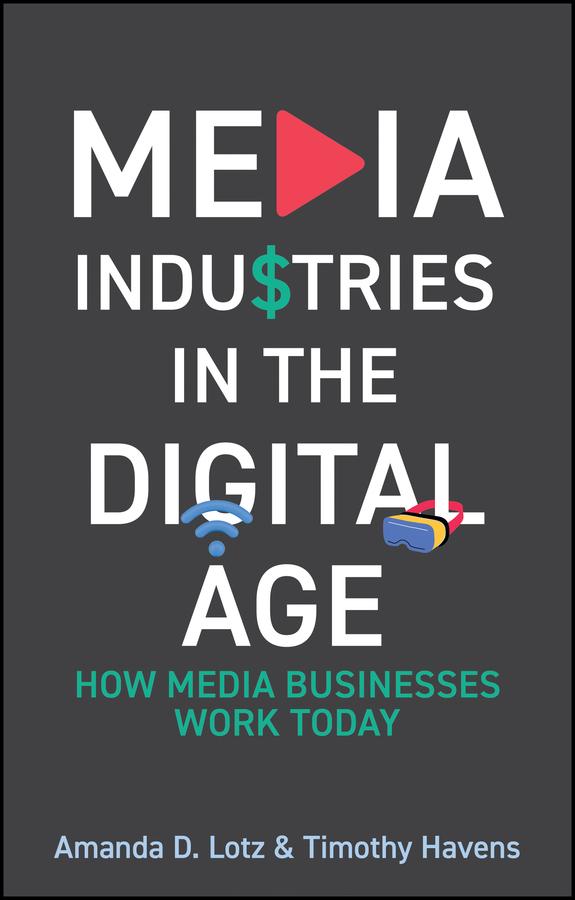
The digital communication technologies that emerged at the turn of the century have profoundly disrupted long-practiced norms of nearly every media industry. In particular, internet distribution has fundamentally changed the foundation of the media industry to enable the emergence of new sectors while posing a challenge for others.
Media Industries in the Digital Age reframes our understanding of media businesses in the light of these substantial changes. To develop an integrated understanding of media industries today, the book foregrounds the different funding sources that are now common. It begins by mapping the foundations and developments of media industry operation, and exploring all forms of advertiser-funded and consumer-funded media to identify connections across sectors, including digital and legacy media. The final section grounds the book’s conceptual work in examples of media making to explore how some “old” media have successfully adapted to internet disruption, and the differences and similarities of media making outside of corporations. Looking to the future, the book anticipates implications for the emerging “metaverse” media experiences and the key issues generative AI poses to the sector. Ultimately, the book argues that the contemporary differences in media industry operation vary by sector, but meaningful patterns can be identified by considering how advertiser, consumer, or government funding sets different priorities.
Offering a new and original way of understanding the media industries today, this book is enlightening reading for students and scholars of media studies and media industries, as well as global industry professionals
Media Industries in the Digital Age reframes our understanding of media businesses in the light of these substantial changes. To develop an integrated understanding of media industries today, the book foregrounds the different funding sources that are now common. It begins by mapping the foundations and developments of media industry operation, and exploring all forms of advertiser-funded and consumer-funded media to identify connections across sectors, including digital and legacy media. The final section grounds the book’s conceptual work in examples of media making to explore how some “old” media have successfully adapted to internet disruption, and the differences and similarities of media making outside of corporations. Looking to the future, the book anticipates implications for the emerging “metaverse” media experiences and the key issues generative AI poses to the sector. Ultimately, the book argues that the contemporary differences in media industry operation vary by sector, but meaningful patterns can be identified by considering how advertiser, consumer, or government funding sets different priorities.
Offering a new and original way of understanding the media industries today, this book is enlightening reading for students and scholars of media studies and media industries, as well as global industry professionals
Betal nemt med kort, Klarna, Apple Pay eller Google Pay. Ikke tilfreds? Du har altid 14 dages fortrydelsesret. Læs mere i vores vilkår. Har du spørgsmål, så send os en mail på hello@memmo.org.
Memmo gør det nemmere at studere – uanset hvor du er i verden. Hos os samler du dine kursusbøger og smarte studieværktøjer ét sted: resuméer, quizzer, podcasts og flashcards. Og så er der Ted, din studieven, der svarer på alt, du undrer dig over. Over 50 000 studerende studerer allerede her – bygget til at hjælpe dig med at lære hurtigere og stresse mindre.
Du kan måske også lide
Køb bogen0