
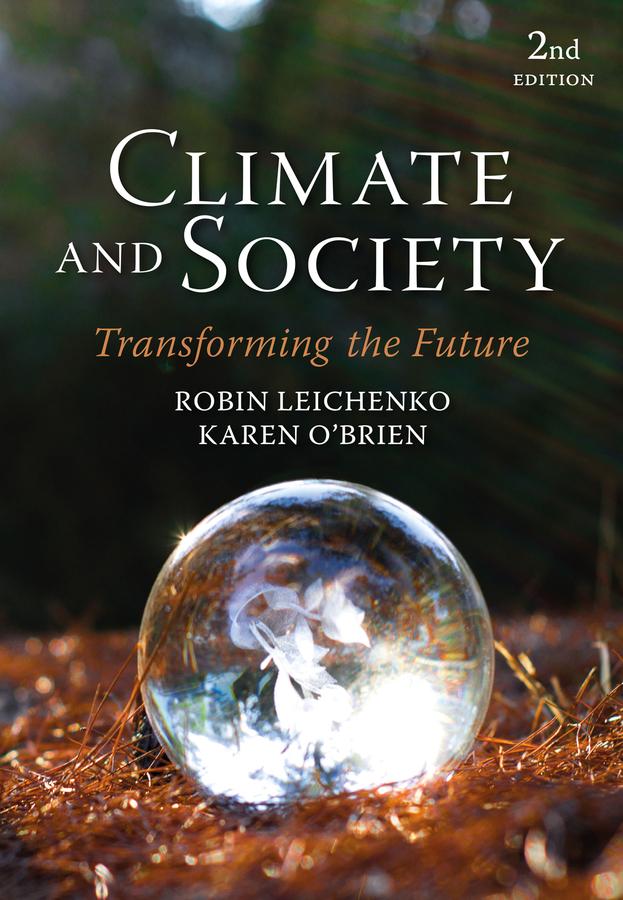
This bold and passionate textbook has become a go-to introduction to current and emerging thinking on the social dimensions of climate change, presenting key concepts and frameworks for understanding the multifaceted connections between climate and society.
Using clear language and powerful examples, Robin Leichenko and Karen O'Brien explore the varied social drivers, impacts, and responses to climate change. They highlight the important roles that worldviews, values, and – especially in this updated edition – emotions play in shaping interpretations of climate challenges. They include additional material on climate justice and equity, eco-centric discourses, paradigm shifts, and other topics. Situating climate change within the context of a rapidly changing world, the book demonstrates how dynamic political, economic, and environmental contexts amplify risks, often unequally for different groups based on race, gender, wealth, and location. Yet these shifting conditions also present opportunities for transformative responses: the new edition strengthens its emphasis on individuals’ power to influence systems, structures, and cultures.
With updated references, examples, and data, and expanded pedagogical features, this informative and engaging new edition empowers undergraduates across the social sciences and other disciplines with a broader and deeper understanding of climate change and the potential for equitable and sustainable responses.
Using clear language and powerful examples, Robin Leichenko and Karen O'Brien explore the varied social drivers, impacts, and responses to climate change. They highlight the important roles that worldviews, values, and – especially in this updated edition – emotions play in shaping interpretations of climate challenges. They include additional material on climate justice and equity, eco-centric discourses, paradigm shifts, and other topics. Situating climate change within the context of a rapidly changing world, the book demonstrates how dynamic political, economic, and environmental contexts amplify risks, often unequally for different groups based on race, gender, wealth, and location. Yet these shifting conditions also present opportunities for transformative responses: the new edition strengthens its emphasis on individuals’ power to influence systems, structures, and cultures.
With updated references, examples, and data, and expanded pedagogical features, this informative and engaging new edition empowers undergraduates across the social sciences and other disciplines with a broader and deeper understanding of climate change and the potential for equitable and sustainable responses.
Betal nemt med kort, Klarna, Apple Pay eller Google Pay. Ikke tilfreds? Du har altid 14 dages fortrydelsesret. Læs mere i vores vilkår. Har du spørgsmål, så send os en mail på hello@memmo.org.
Memmo gør det nemmere at studere – uanset hvor du er i verden. Hos os samler du dine kursusbøger og smarte studieværktøjer ét sted: resuméer, quizzer, podcasts og flashcards. Og så er der Ted, din studieven, der svarer på alt, du undrer dig over. Over 50 000 studerende studerer allerede her – bygget til at hjælpe dig med at lære hurtigere og stresse mindre.
Du kan måske også lide
Køb bogen0