
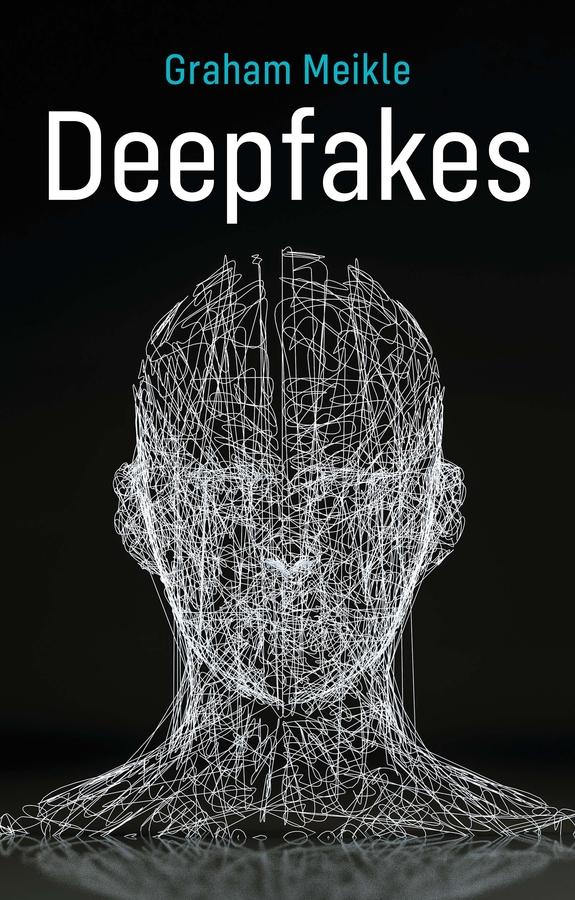
What happens when we can no longer believe what we see? Show the AI technologies that create deepfakes enough images of a celebrity or a politician and they will generate a convincing video in which that person appears to say and do things they have never actually said or done. The result is a media environment in which anyone’s face and image can be remixed and manipulated.
Graham Meikle explains how deepfakes (synthetic media) are made and used. From celebrity porn and political satire to movie mash-ups and disinformation campaigns, this book explores themes of trust and consent as face-swapping software becomes more common. Meikle argues that deepfake videos allow for a new perspective on the taken-for-granted nature of contemporary media, in which our capacity to remix and share content increasingly conflicts with our capacity to trust. The book analyses how such videos deepen the social media environment in which the public and the personal converge, and in which all human experience becomes data to be shared.
Timely, clear, and accessibly written, this is an essential text for students and scholars of media, communication, cultural studies, and sociology as well as general readers.
Betal nemt med kort, Klarna, Apple Pay eller Google Pay. Ikke tilfreds? Du har altid 14 dages fortrydelsesret. Læs mere i vores vilkår. Har du spørgsmål, så send os en mail på hello@memmo.org.
Memmo gør det nemmere at studere – uanset hvor du er i verden. Hos os samler du dine kursusbøger og smarte studieværktøjer ét sted: resuméer, quizzer, podcasts og flashcards. Og så er der Ted, din studieven, der svarer på alt, du undrer dig over. Over 50 000 studerende studerer allerede her – bygget til at hjælpe dig med at lære hurtigere og stresse mindre.