
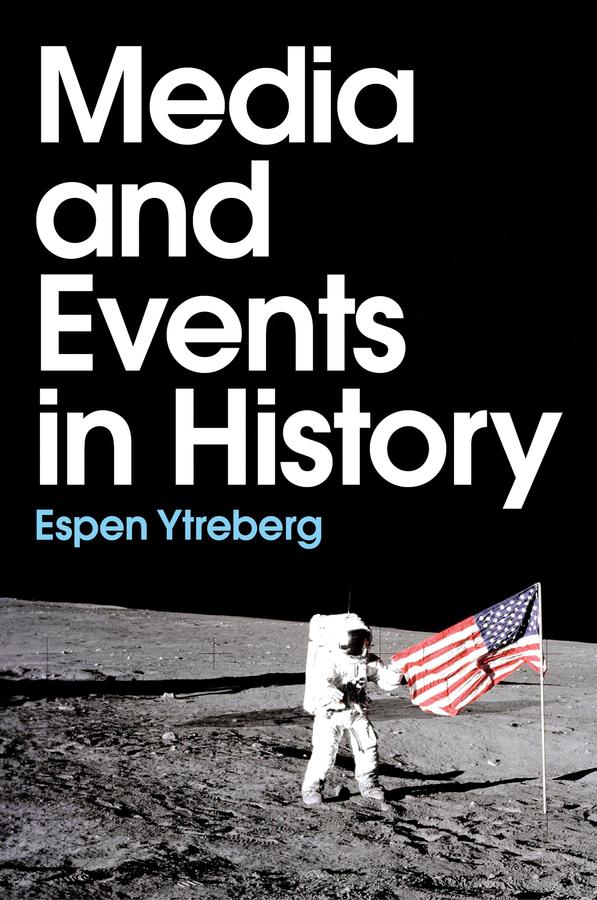
The most intense hopes and fears of our collective lives centre around large-scale events – from competitions, celebrations and festivals to environmental disasters, pandemics and terror attacks. The media are a crucial part of this process: they enable the planning, resource allocation and circulation of the vital information needed to mount major events. They are also where traces of events are stored for history. In short, large-scale and collective events have been, and still are, mediated.
Starting from nineteenth-century industrialisation, Media and Events in History explains how contemporary life has become saturated with events. It discusses how they have come to involve extensive infrastructures, forms of control and anticipation, attention and participation, contingency and transformation, and articulations of the past and the future. Synthesising and developing insights from history, media studies, philosophy and the social sciences, Ytreberg surveys the rise of event-planning via mediation, and exposes the historical driving forces behind ‘media events’, global ‘mega-events’ and ‘pseudo-events’.
Revealing the importance of events in history, this eye-opening book will be of interest to students of media studies, history, historical sociology and cultural history, as well as the general reader.
Betal nemt med kort, Klarna, Apple Pay eller Google Pay. Ikke tilfreds? Du har altid 14 dages fortrydelsesret. Læs mere i vores vilkår. Har du spørgsmål, så send os en mail på hello@memmo.org.
Memmo gør det nemmere at studere – uanset hvor du er i verden. Hos os samler du dine kursusbøger og smarte studieværktøjer ét sted: resuméer, quizzer, podcasts og flashcards. Og så er der Ted, din studieven, der svarer på alt, du undrer dig over. Over 50 000 studerende studerer allerede her – bygget til at hjælpe dig med at lære hurtigere og stresse mindre.