
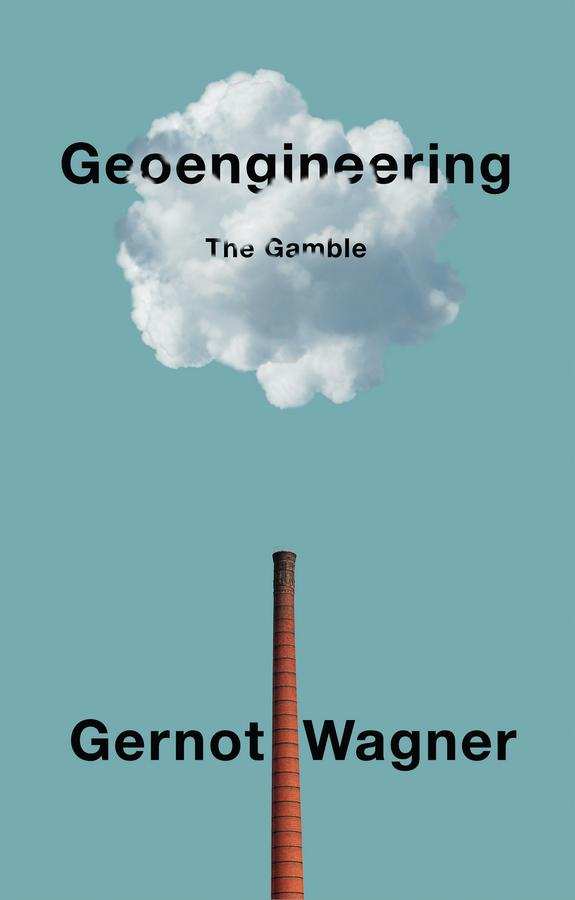
Stabilizing the world’s climates means cutting carbon dioxide pollution. There’s no way around it. But what if that’s not enough? What if it’s too difficult to accomplish in the time allotted or, worse, what if it’s so late in the game that even cutting carbon emissions to zero, tomorrow, wouldn’t do?
Enter solar geoengineering. The principle is simple: attempt to cool Earth by reflecting more sunlight back into space. The primary mechanism, shooting particles into the upper atmosphere, implies more pollution, not less. If that doesn’t sound scary, it should. There are lots of risks, unknowns, and unknowables.
In Geoengineering: The Gamble, climate economist Gernot Wagner provides a balanced take on the possible benefits and all-too-real risks, especially the so-called “moral hazard” that researching or even just discussing (solar) geoengineering would undermine the push to cut carbon emissions in the first place. Despite those risks, he argues, solar geoengineering may only be a matter of time. Not if, but when.
As the founding executive director of Harvard’s Solar Geoengineering Research Program, Wagner explores scenarios of a geoengineered future, offering an inside-view of the research already under way and the actions the world must take to guide it in a productive direction.
Betal nemt med kort, Klarna, Apple Pay eller Google Pay. Ikke tilfreds? Du har altid 14 dages fortrydelsesret. Læs mere i vores vilkår. Har du spørgsmål, så send os en mail på hello@memmo.org.
Memmo gør det nemmere at studere – uanset hvor du er i verden. Hos os samler du dine kursusbøger og smarte studieværktøjer ét sted: resuméer, quizzer, podcasts og flashcards. Og så er der Ted, din studieven, der svarer på alt, du undrer dig over. Over 50 000 studerende studerer allerede her – bygget til at hjælpe dig med at lære hurtigere og stresse mindre.