
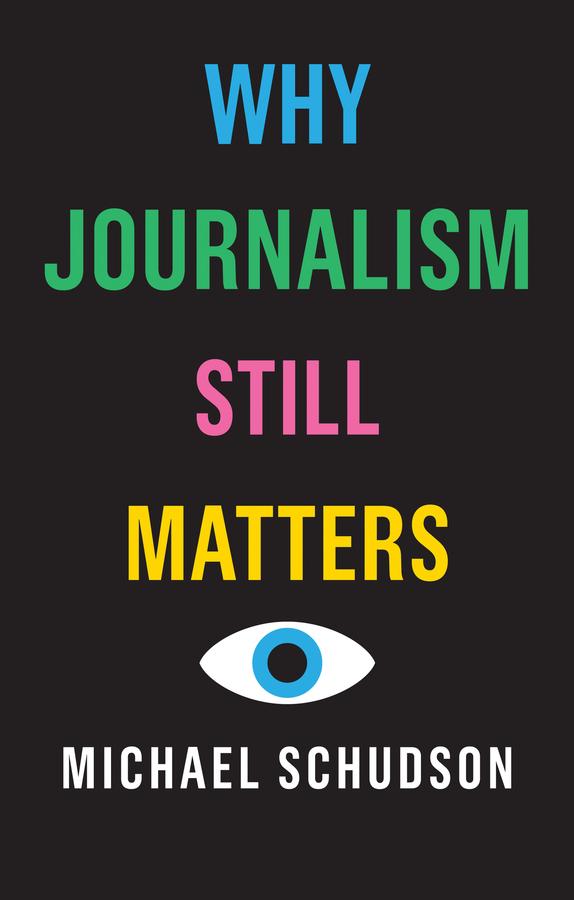
Can we talk about the news media without proclaiming journalism either our savior or the source of all evil? It is not easy to do so, but it gets easier if we put the problems and prospects of journalism in historical and comparative perspective, view them with a sociological knowledge of how newsmaking operates, and see them in a political context that examines how political institutions shape news as well as how news shapes political attitudes and institutions.
Adopting this approach, Michael Schudson examines news and news institutions in relation to democratic theory and practice, in relation to the economic crisis that affects so many news organizations today and in relation to recent discussions of “fake news.” In contrast to those who suggest that journalism has had its day, Schudson argues that journalism has become more important than ever for liberal democracies as the keystone institution in a web of accountability for a governmental system that invites public attention, public monitoring and public participation. For the public to be swayed from positions people have already staked out, and for government officials to respond to charges that they have behaved corruptly or unconstitutionally or simply rashly and unwisely, the source of information has to come from organizations that hold themselves to the highest standards of verification, fact-checking, and independent and original research, and that is exactly what professional journalism aspires to do.
This timely and important defense of journalism will be of great value to anyone concerned about the future of news and of democracy.
Adopting this approach, Michael Schudson examines news and news institutions in relation to democratic theory and practice, in relation to the economic crisis that affects so many news organizations today and in relation to recent discussions of “fake news.” In contrast to those who suggest that journalism has had its day, Schudson argues that journalism has become more important than ever for liberal democracies as the keystone institution in a web of accountability for a governmental system that invites public attention, public monitoring and public participation. For the public to be swayed from positions people have already staked out, and for government officials to respond to charges that they have behaved corruptly or unconstitutionally or simply rashly and unwisely, the source of information has to come from organizations that hold themselves to the highest standards of verification, fact-checking, and independent and original research, and that is exactly what professional journalism aspires to do.
This timely and important defense of journalism will be of great value to anyone concerned about the future of news and of democracy.
Betal nemt med kort, Klarna, Apple Pay eller Google Pay. Ikke tilfreds? Du har altid 14 dages fortrydelsesret. Læs mere i vores vilkår. Har du spørgsmål, så send os en mail på hello@memmo.org.
Memmo gør det nemmere at studere – uanset hvor du er i verden. Hos os samler du dine kursusbøger og smarte studieværktøjer ét sted: resuméer, quizzer, podcasts og flashcards. Og så er der Ted, din studieven, der svarer på alt, du undrer dig over. Over 50 000 studerende studerer allerede her – bygget til at hjælpe dig med at lære hurtigere og stresse mindre.
Du kan måske også lide
Køb bogen0