
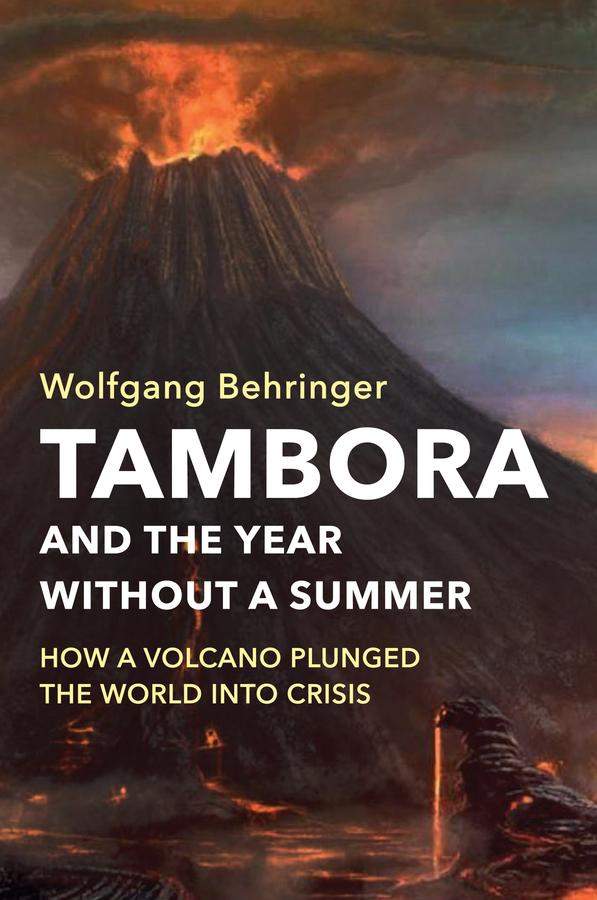
In 1816, the climate went berserk. The winter brought extreme cold, and torrential rains unleashed massive flooding in Asia. Western Europe and North America experienced a 'year without a summer', while failed harvests in 1817 led to the 'year of famine'. At the time, nobody knew that all these disturbances were the result of a single event: the eruption of Mount Tambora in what is now Indonesia – the greatest volcanic eruption in recorded history.
In this book, leading climate historian Wolfgang Behringer provides the first globally comprehensive account of a climate catastrophe that would cast the world into political and social crises for years to come. Concentrating on the period between 1815 and 1820, Behringer shows how this natural occurrence led to worldwide unrest. Analysing events as diverse as the persecution of Jews in Germany, the Peterloo Massacre in the United Kingdom, witch hunts in South Africa and anti-colonial uprisings in Asia, Behringer demonstrates that no region on earth was untouched by the effects of the eruption. Drawing parallels with our world today, Tambora and its aftermath become a case study for how societies and individuals respond to climate change, what risks emerge and how they might be overcome.
This comprehensive account of the impact of one of the greatest environmental disasters in human history will be of interest to a wide readership and to anyone seeking to understand better how we might mitigate the effects of climate change.
Betal nemt med kort, Klarna, Apple Pay eller Google Pay. Ikke tilfreds? Du har altid 14 dages fortrydelsesret. Læs mere i vores vilkår. Har du spørgsmål, så send os en mail på hello@memmo.org.
Memmo gør det nemmere at studere – uanset hvor du er i verden. Hos os samler du dine kursusbøger og smarte studieværktøjer ét sted: resuméer, quizzer, podcasts og flashcards. Og så er der Ted, din studieven, der svarer på alt, du undrer dig over. Over 50 000 studerende studerer allerede her – bygget til at hjælpe dig med at lære hurtigere og stresse mindre.