
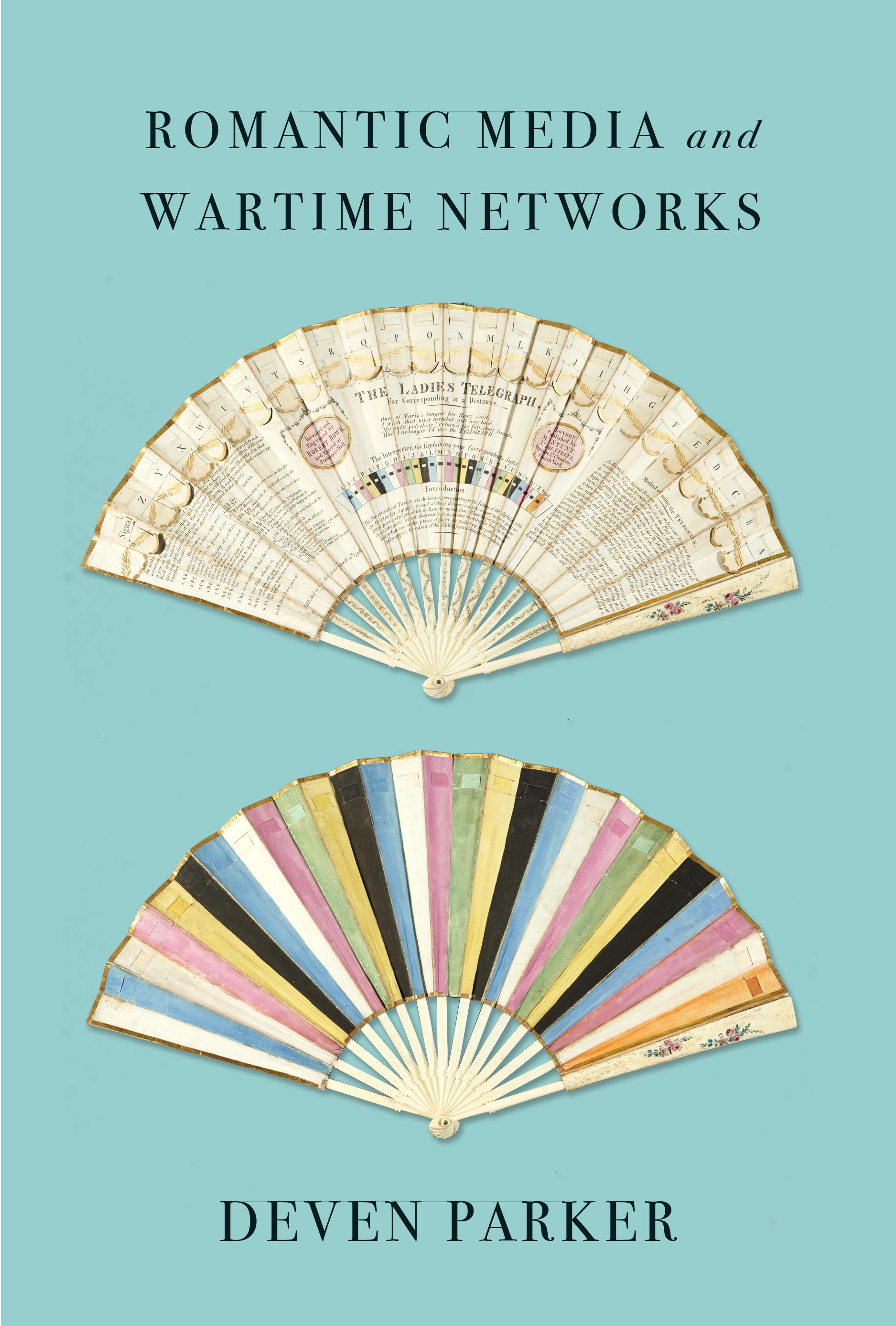
This book tells the story of how Britain revolutionized its state communication networks on an unprecedented scale during the French Revolution and the Napoleonic Wars, setting the stage for our modern infrastructure state where connectivity and surveillance go hand in hand. Deven Parker argues that Romantic literary representations of this state communications network managed to reveal—and, on occasion, to resist—its ideological functions.
In a wide-ranging study drawing upon an archive of military surveys, spy reports, trial records, and even ladies' hand fans, Parker reveals the scope and impact of the British government's investments in shutter telegraphs, mapping projects, and postal routes across two decades of war with France. The writers of the Romantic period, meanwhile, were cognizant of the political motivations undergirding the state's overhauled networks, which were designed to facilitate and speed up but also to more easily control communications. Taking up familiar writers including Lord Byron, Mary Wollstonecraft, William Godwin, Charlotte Smith, Charles Lamb, William Hazlitt, and Thomas De Quincey—as well as lesser-known figures such as radical playwright John Dent, inventor Richard Lovell Edgeworth, and the proto-science fiction novelist Jane Loudon—Parker reads Romantic literature for its astute chronicling and interrogation of the material hardware of the state's media ecology.
Betal nemt med kort, Klarna, Apple Pay eller Google Pay. Ikke tilfreds? Du har altid 14 dages fortrydelsesret. Læs mere i vores vilkår. Har du spørgsmål, så send os en mail på hello@memmo.org.
Memmo gør det nemmere at studere – uanset hvor du er i verden. Hos os samler du dine kursusbøger og smarte studieværktøjer ét sted: resuméer, quizzer, podcasts og flashcards. Og så er der Ted, din studieven, der svarer på alt, du undrer dig over. Over 50 000 studerende studerer allerede her – bygget til at hjælpe dig med at lære hurtigere og stresse mindre.