
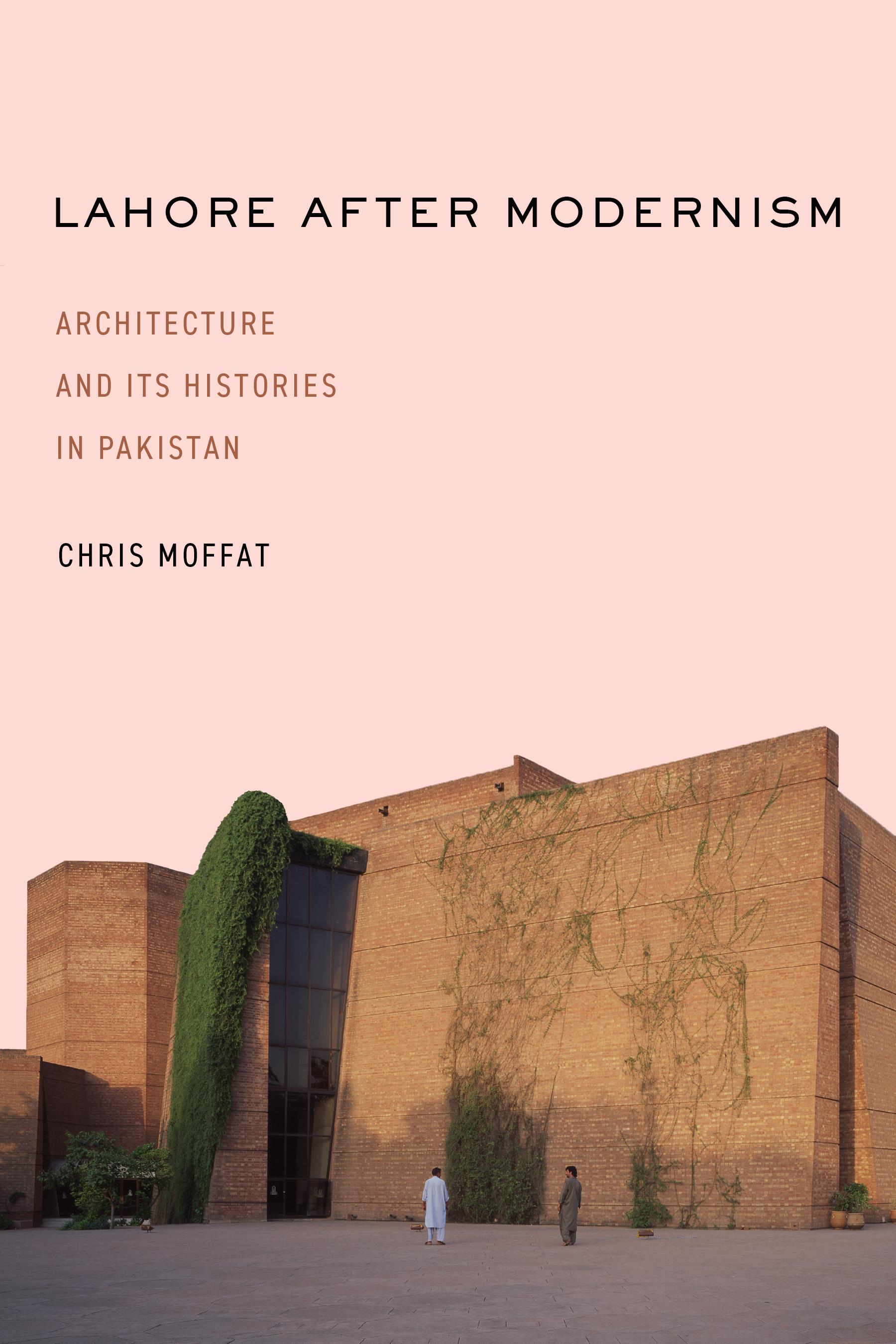
In the decades after independence in 1947, architects in Pakistan were enlisted to build a postcolonial future—a new world after empire. But the debris of the past could not be so easily swept aside. The recalcitrance of local and regional histories was fiercely evident in Lahore, the centuries-old capital of Punjab and a city scarred by the partition of British India. Studying its streets, neighborhoods and historic buildings, Pakistani architects came to challenge the global consensus around "development" and its close association with modernist architecture. Their designs and structures became opportunities for thinking anew about the power of history, the boundaries of the nation, and the constitution of community in a postcolonial polity.
This book is a pioneering study of architecture and the politics of construction, destruction and conservation in urban Pakistan. Chris Moffat introduces Pakistan's first postcolonial generation of architects—figures born around the time of partition, who began practicing in the 1960s and whose early careers navigated popular rebellions, military coups and emergent, pan-Islamic alignments. Moving from housing schemes to monuments, shrines to shopping malls, Moffat forges a new conversation between histories of architecture and the history of ideas in South Asia, and locates Lahore at the center of debates around contemporary urbanization, postcolonial aesthetics, and the ethics of dwelling in the modern world.
Betal nemt med kort, Klarna, Apple Pay eller Google Pay. Ikke tilfreds? Du har altid 14 dages fortrydelsesret. Læs mere i vores vilkår. Har du spørgsmål, så send os en mail på hello@memmo.org.
Memmo gør det nemmere at studere – uanset hvor du er i verden. Hos os samler du dine kursusbøger og smarte studieværktøjer ét sted: resuméer, quizzer, podcasts og flashcards. Og så er der Ted, din studieven, der svarer på alt, du undrer dig over. Over 50 000 studerende studerer allerede her – bygget til at hjælpe dig med at lære hurtigere og stresse mindre.