
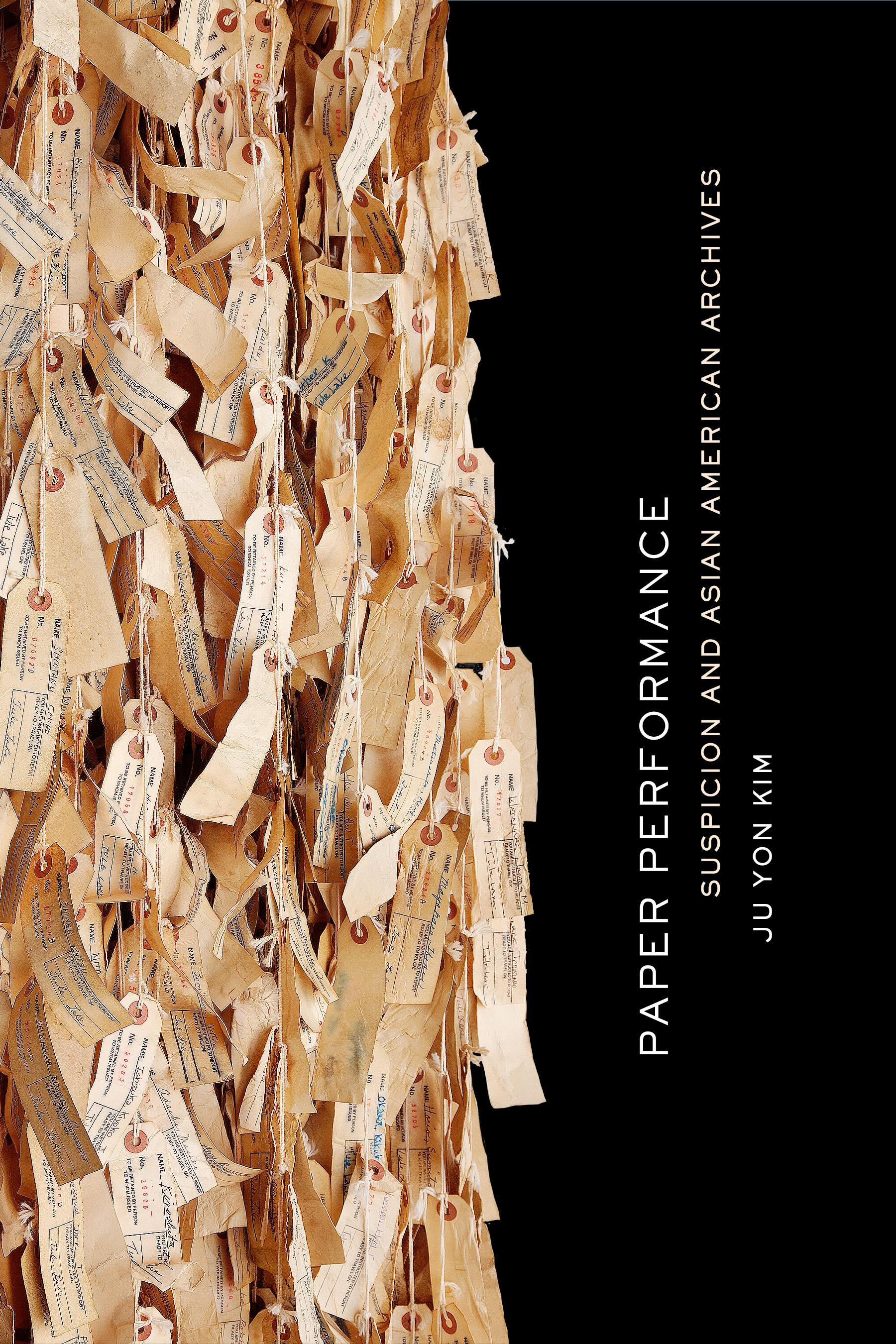
Since the late nineteenth century, various agencies of the U.S. government have developed elaborate bureaucratic procedures to manage "suspect" Asian groups. Ju Yon Kim explores the modes of engagement and contestation available to those who are subjected by the state to both relentless documentation and demands to perform—whether as lawful immigrants, obedient colonial subjects, or loyal Americans. Even as paper documentation has been critical to authorizing exclusion, surveillance, and incarceration by the state, it has also enabled performances with paper that have facilitated transnational passage, mobilized resistance to administration, and troubled the logic of racial and national classifications.
Linking histories of Chinese immigration exclusion, the U.S. colonization of the Philippines, the internment of Japanese Americans, and FBI surveillance of political groups, Kim brings together studies of paperwork and performance to demonstrate their continued, intertwined impact on Asian American history and culture.
Betal nemt med kort, Klarna, Apple Pay eller Google Pay. Ikke tilfreds? Du har altid 14 dages fortrydelsesret. Læs mere i vores vilkår. Har du spørgsmål, så send os en mail på hello@memmo.org.
Memmo gør det nemmere at studere – uanset hvor du er i verden. Hos os samler du dine kursusbøger og smarte studieværktøjer ét sted: resuméer, quizzer, podcasts og flashcards. Og så er der Ted, din studieven, der svarer på alt, du undrer dig over. Over 50 000 studerende studerer allerede her – bygget til at hjælpe dig med at lære hurtigere og stresse mindre.