
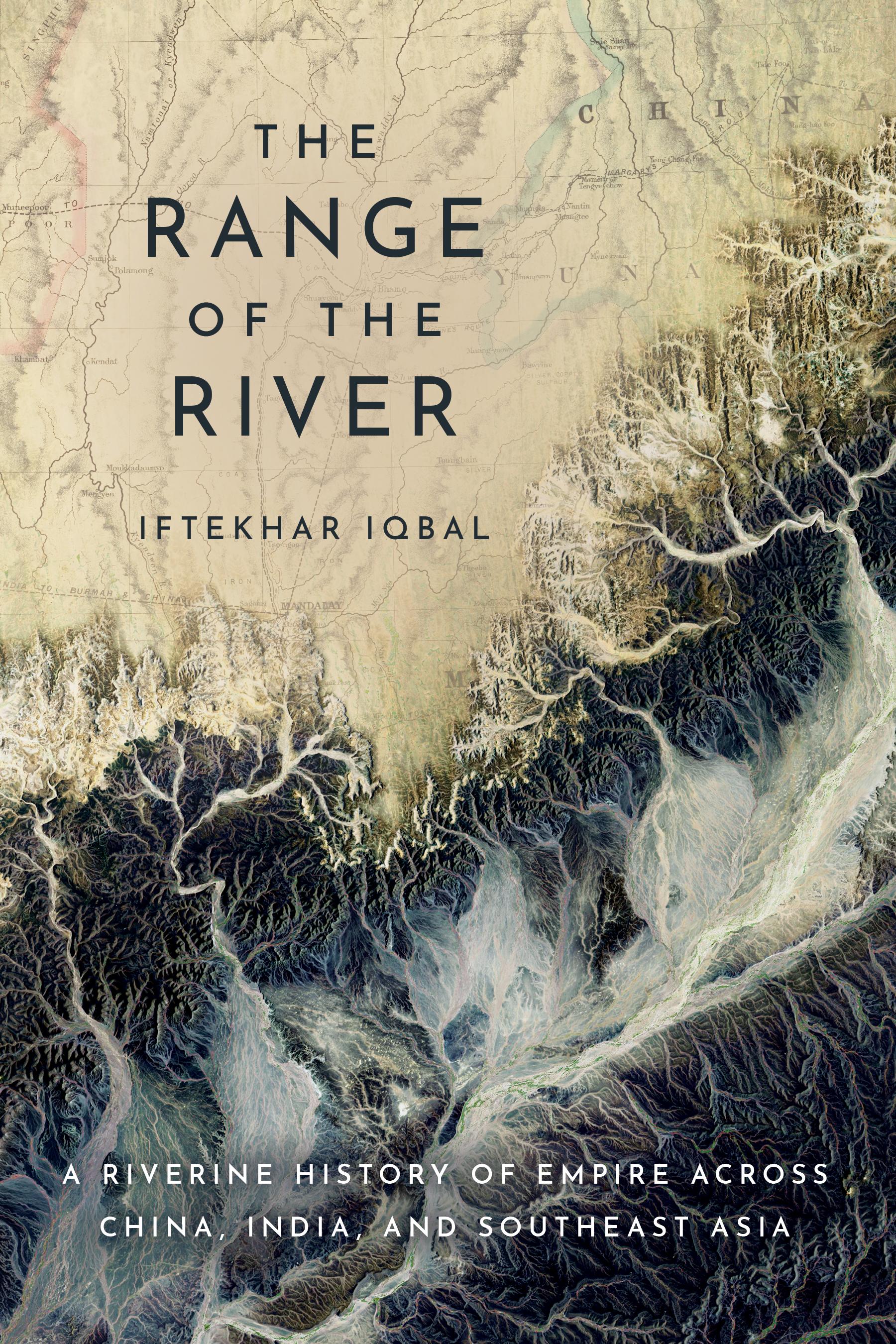
Spanning nearly 4 million square kilometers, the Tibetan river system—including the Brahmaputra, Irrawaddy, Salween, Mekong, Red, and Yangzi—forms the largest contiguous network of rivers on the planet, stretching across eastern South Asia, mainland Southeast Asia, and southern China. The Range of the River uncovers the entwined histories of these vast waterways and the empires, human actors, and other-than-human forces that have shaped Asia since the 1850s. Both ethnodiverse and biodiverse, these rivers were more than contested imperial spaces—they were also channels of communal and material exchange, linking near and distant contact zones. They fostered connections across Asia, driving commerce, mobility, and cultural encounters that transformed them into shared, living commons bridging societies, political powers, and economic interests.
Tracing six major rivers across eight countries, Iftekhar Iqbal argues that these river systems formed the core of a discursive space where empires, regional political forces, ethnic groups, boaters, peddlers, explorers, merchants, and mules encountered each other in layered meanings and movements. This groundbreaking book reimagines the river not as merely a tool of empire but as a dynamic force in itself, shaping a truly transregional Asia. By weaving together diverse riverine life-worlds, The Range of the River invites us to rethink Asia's spatial history.
Betal nemt med kort, Klarna, Apple Pay eller Google Pay. Ikke tilfreds? Du har altid 14 dages fortrydelsesret. Læs mere i vores vilkår. Har du spørgsmål, så send os en mail på hello@memmo.org.
Memmo gør det nemmere at studere – uanset hvor du er i verden. Hos os samler du dine kursusbøger og smarte studieværktøjer ét sted: resuméer, quizzer, podcasts og flashcards. Og så er der Ted, din studieven, der svarer på alt, du undrer dig over. Over 50 000 studerende studerer allerede her – bygget til at hjælpe dig med at lære hurtigere og stresse mindre.