
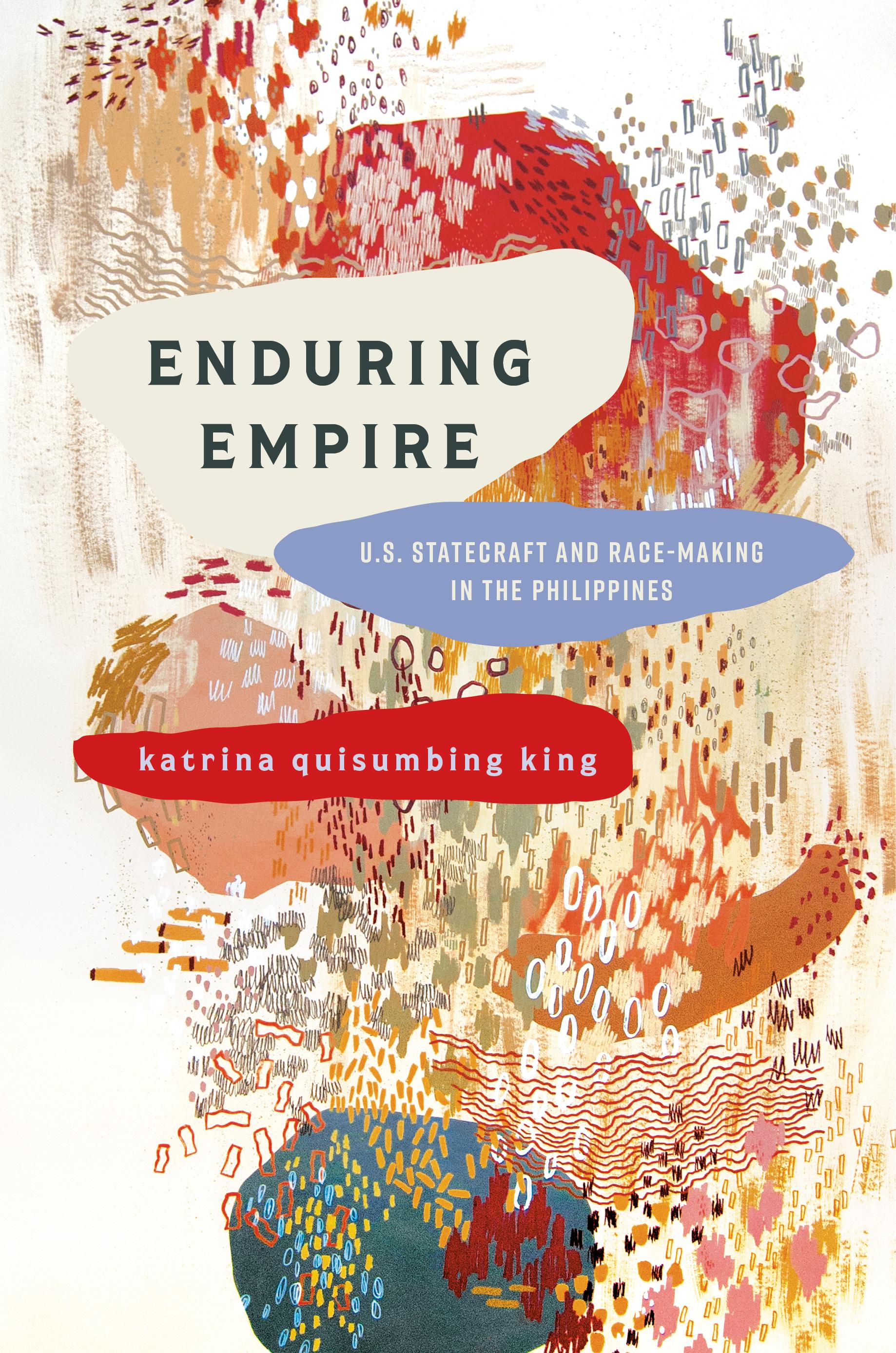
In 1898 the United States became a formal overseas empire and claimed sovereignty over the Philippine islands, justifying its rule in explicitly racial terms. Less than fifty years later, in 1946, Philippine independence was recognized by the United States, even as it continued to exert influence over the domestic and foreign affairs of the newly decolonized Republic. Despite some differences, U.S. control remained racial and imperial.
Enduring Empire shows how U.S. federal state actors translated their ideas of race into state structures. Through innovating constitutional law, bureaucratic administration, and legislation, state actors built a durable and flexible system of racial-imperial rule that not only lasted beyond the period of formal empire but continues to this day. katrina quisumbing king traces debates among U.S. presidents, federal legislators, administrators, and justices about what kind of state the United States should be, the place of nonwhite people in the polity, and the best way to maintain U.S. white hegemony. In charting how state actors' positions—some nativist, isolationist, and protectionist and others expansionist, interventionist, and imperialist—evolved, quisumbing king identifies key moments when they cemented racial ideas into law and reshaped the terms of U.S. racial-imperial formation.
Betal nemt med kort, Klarna, Apple Pay eller Google Pay. Ikke tilfreds? Du har altid 14 dages fortrydelsesret. Læs mere i vores vilkår. Har du spørgsmål, så send os en mail på hello@memmo.org.
Memmo gør det nemmere at studere – uanset hvor du er i verden. Hos os samler du dine kursusbøger og smarte studieværktøjer ét sted: resuméer, quizzer, podcasts og flashcards. Og så er der Ted, din studieven, der svarer på alt, du undrer dig over. Over 50 000 studerende studerer allerede her – bygget til at hjælpe dig med at lære hurtigere og stresse mindre.