
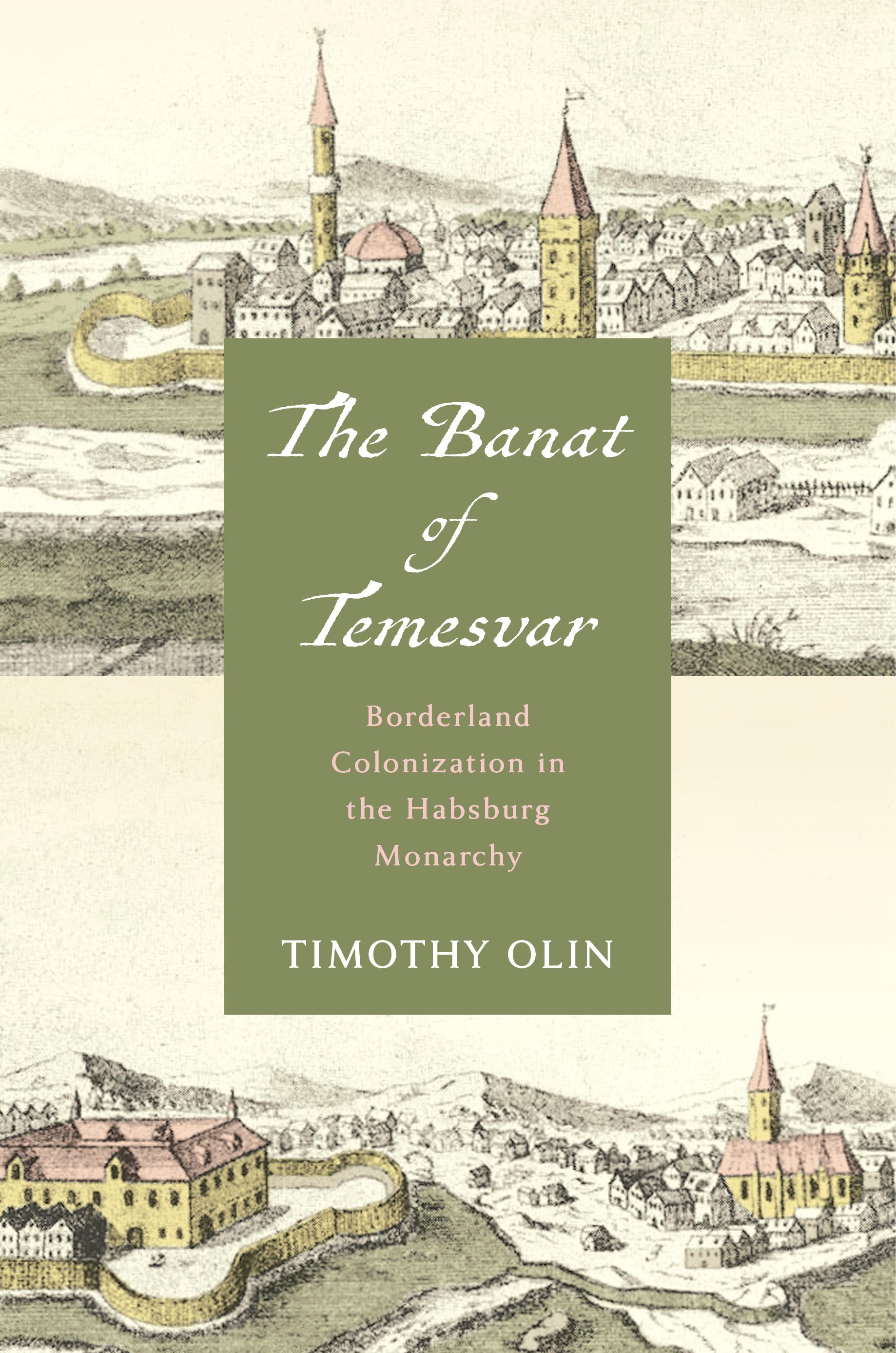
This book explores the establishment and development of a multi-ethnic frontier society on the Habsburg–Ottoman border, in the historic region of the Banat (today divided between Romania, Serbia, and Hungary). After it passed from Ottoman to Habsburg control in the early eighteenth century, the Habsburgs sought to settle the region with Western and Central European migrants, mainly though not exclusively German-speakers from the Holy Roman Empire. Historian Timothy Olin argues that this policy led to destabilizing demographic changes and laid the foundations for the ethno-religious tensions that characterized the region through the twentieth century and beyond.
Imperial authorities used colonists as a means to ensure the loyalty and stability of the province and to prevent Hungarian–Ottoman collusion. Their settlement, beginning in the 1710s and lasting until the 1820s, led to government-sponsored displacement and resettlement of many local villages. In the process of narrating the history of the region, Olin argues that the land empires of Europe engaged in forms of settlement that fit the larger patterns of colonial rule in other parts of Europe and the world, and demonstrates that the movement of settlers and the culture they brought with them began a process of Europeanization in the borderlands of the continent and helped solidify Europe's boundaries.
Betal nemt med kort, Klarna, Apple Pay eller Google Pay. Ikke tilfreds? Du har altid 14 dages fortrydelsesret. Læs mere i vores vilkår. Har du spørgsmål, så send os en mail på hello@memmo.org.
Memmo gør det nemmere at studere – uanset hvor du er i verden. Hos os samler du dine kursusbøger og smarte studieværktøjer ét sted: resuméer, quizzer, podcasts og flashcards. Og så er der Ted, din studieven, der svarer på alt, du undrer dig over. Over 50 000 studerende studerer allerede her – bygget til at hjælpe dig med at lære hurtigere og stresse mindre.