
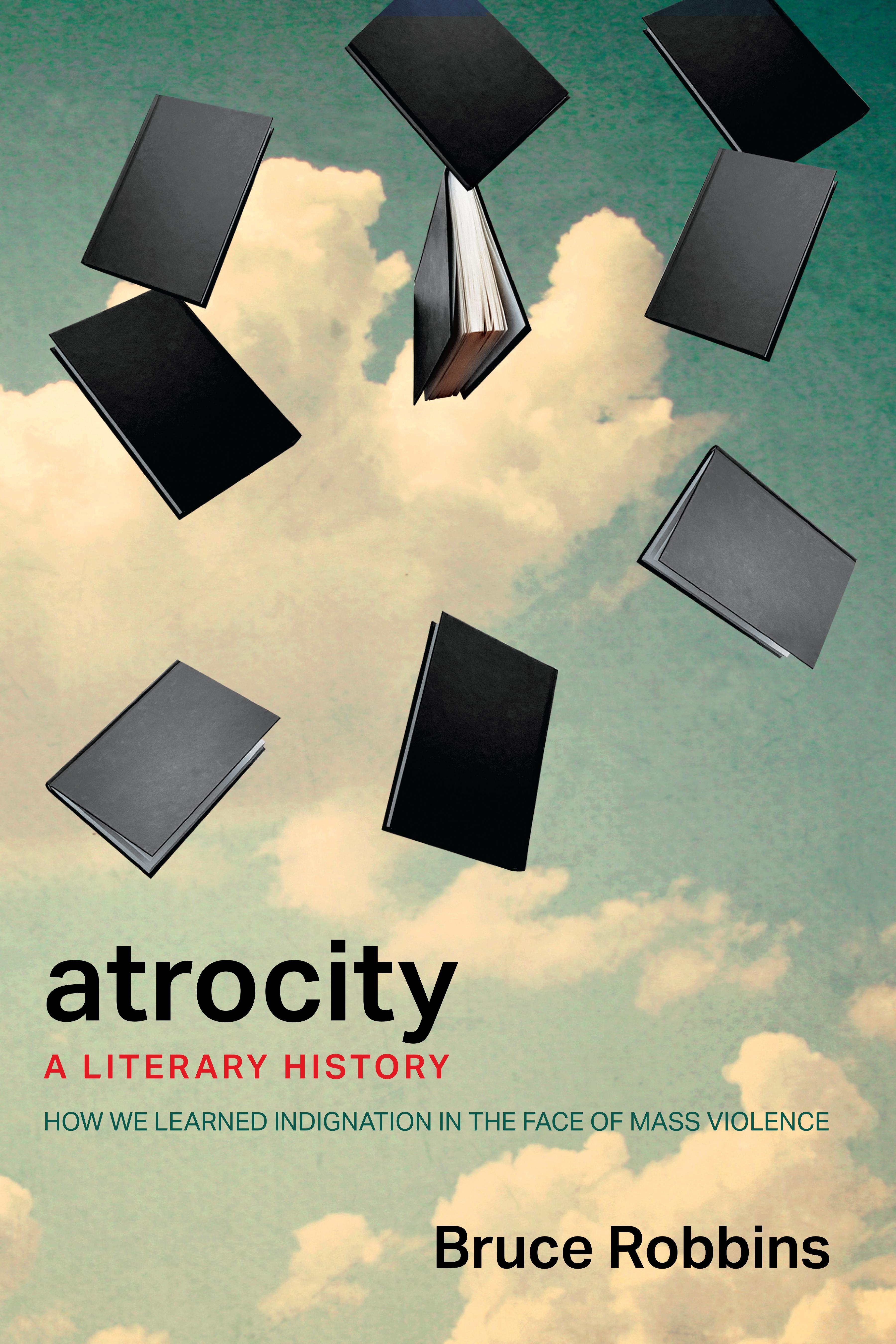
Exploring literary representations of mass violence, Bruce Robbins traces the emergence of a cosmopolitan recognition of atrocity.
Mass violence did not always have a name. Like conquest, what we think of now as atrocities have not always invited indignation or been seen to violate moral norms. Venturing from the Bible to Zadie Smith, Robbins explores the literature of suffering, to show how, over time, abhorrence of mass violence takes shape. With it comes the emergence of a necessary element of cosmopolitanism: the ability to look at one's own nation with the critical eyes of a stranger.
Drawing on a vast written archive and with penetrating insight, Robbins takes up such literary representations of violence as Bartolomé de las Casas's account of his fellow Spaniards' atrocities, Kurt Vonnegut's Slaughterhouse-Five, Grimmelshausen's 1668 novel Simplicissimus, David Mitchell's Cloud Atlas, Gabriel García Márquez's One Hundred Years of Solitude, Homero Aridjis's short novel Smyrna in Flames, and Tolstoy's Hadji Murat. These essential texts do more than simply testify to atrocious acts. In their literariness, they take the risk of contextualizing and relativizing, thereby extending beyond the legal paradigm of accusation. They recognize atrocity as a moral scandal about which something should be done and can be done, while they also place that scandal within a larger and more uncertain history.
Betal nemt med kort, Klarna, Apple Pay eller Google Pay. Ikke tilfreds? Du har altid 14 dages fortrydelsesret. Læs mere i vores vilkår. Har du spørgsmål, så send os en mail på hello@memmo.org.
Memmo gør det nemmere at studere – uanset hvor du er i verden. Hos os samler du dine kursusbøger og smarte studieværktøjer ét sted: resuméer, quizzer, podcasts og flashcards. Og så er der Ted, din studieven, der svarer på alt, du undrer dig over. Over 50 000 studerende studerer allerede her – bygget til at hjælpe dig med at lære hurtigere og stresse mindre.