
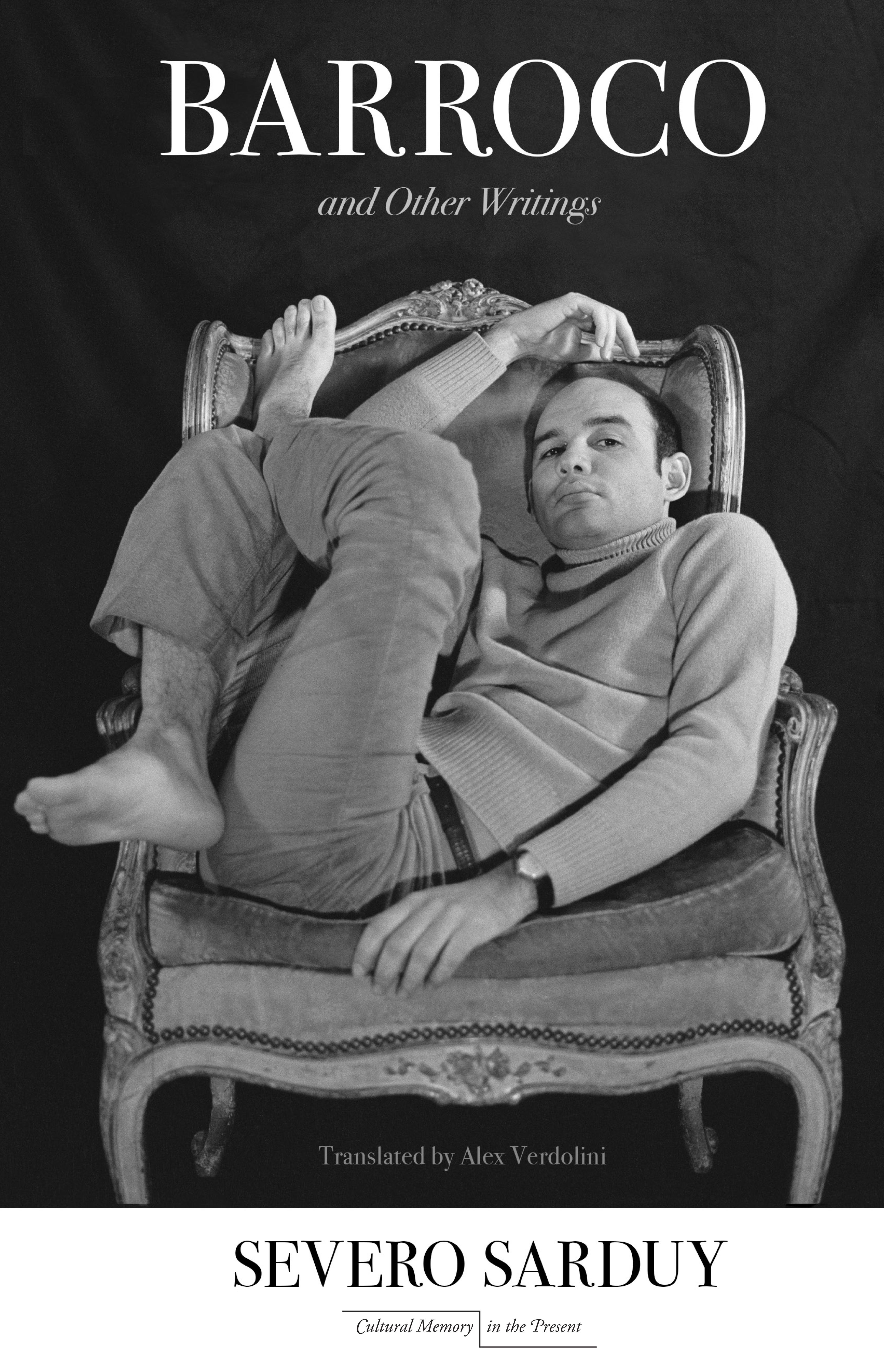
Severo Sarduy was among the most important figures in twentieth-century Latin American fiction and a major representative of the literary tendency to which he gave the name Neobaroque. While most of Sarduy's literary work is available in English, his theoretical writings have largely remained untranslated. This volume—presenting Sarduy's central theoretical contribution, Barroco (1974), alongside other related works—remedies that oversight.
Barroco marks a watershed in postwar thought on the Baroque, both in French post-structuralism and in the Latin American context. Sarduy traces a double history, reading events in the history of science alongside developments in the history of art, architecture, and literature. What emerges is a theory of the Baroque as decentering and displacement, as supplement and excess, a theory capacious enough to account for the old European Baroque as well as its queer, Latin American and global futures.
In addition to Barroco, this volume includes texts spanning Sarduy's career, from 1960s essays published originally in Tel Quel to late works from the 1980s and '90s. It thus offers a complete picture of Sarduy's thinking on the Baroque.
Betal nemt med kort, Klarna, Apple Pay eller Google Pay. Ikke tilfreds? Du har altid 14 dages fortrydelsesret. Læs mere i vores vilkår. Har du spørgsmål, så send os en mail på hello@memmo.org.
Memmo gør det nemmere at studere – uanset hvor du er i verden. Hos os samler du dine kursusbøger og smarte studieværktøjer ét sted: resuméer, quizzer, podcasts og flashcards. Og så er der Ted, din studieven, der svarer på alt, du undrer dig over. Over 50 000 studerende studerer allerede her – bygget til at hjælpe dig med at lære hurtigere og stresse mindre.