
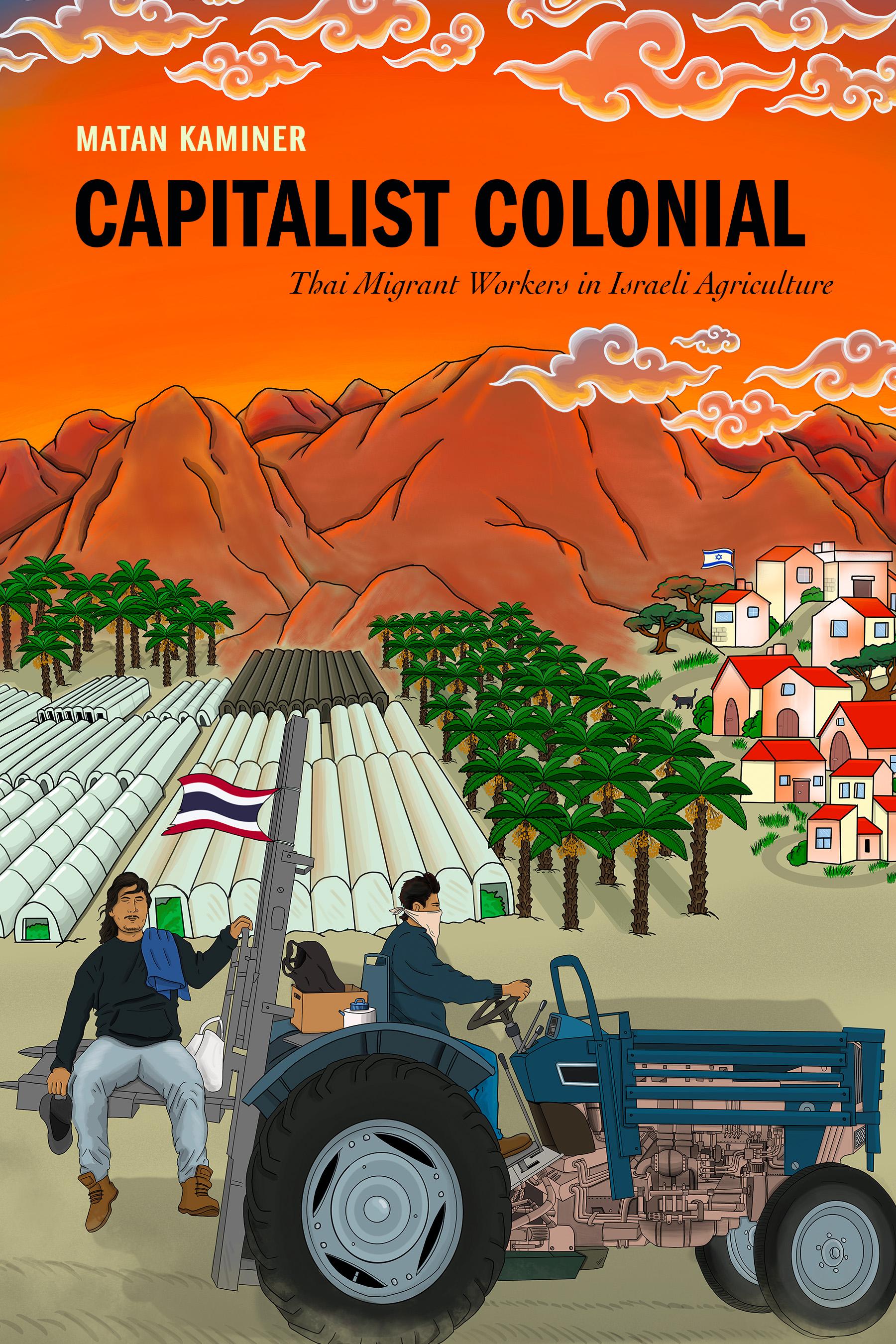
For decades, the agricultural settlements of Israel's arid Central Arabah prided themselves on their labor-Zionist commitment to abstaining from hiring outside labor. But beginning in the late 1980s, the region's agrarian economy was rapidly transformed by the removal of state protections, a shift to export-oriented monoculture, and an influx of disenfranchised, ill-paid migrants from northeast Thailand (Isaan). Capitalist Colonial, Matan Kaminer's ethnography of the region and its people, argues that the paid and unpaid labor of Thai migrants has been essential to resolving the clashing demands of the bottom line and Zionist ideology here as elsewhere in Israel's farm sector.
Kaminer's account mobilizes capitalism and colonialism as a combined analytical frame to comprehend the forms of domination prevailing in the Arabah. Placing the findings of fieldwork as a farm laborer within the ecological, economic, and political histories of the Arabah and Isaan, Kaminer draws surprising connections between the violent takeover of peripheral regions, the imposition of agrarian commodity production, and the emergence of transnational labor flows. Insisting on the liberatory possibilities immanent in the "interaction ideologies" found among both migrant workers and settler employers, and raising the question of the place of migrants who are neither Jewish nor Arab in visions of decolonization, this book demonstrates anthropology's ongoing relevance to the struggle for local and global transformations.
Betal nemt med kort, Klarna, Apple Pay eller Google Pay. Ikke tilfreds? Du har altid 14 dages fortrydelsesret. Læs mere i vores vilkår. Har du spørgsmål, så send os en mail på hello@memmo.org.
Memmo gør det nemmere at studere – uanset hvor du er i verden. Hos os samler du dine kursusbøger og smarte studieværktøjer ét sted: resuméer, quizzer, podcasts og flashcards. Og så er der Ted, din studieven, der svarer på alt, du undrer dig over. Over 50 000 studerende studerer allerede her – bygget til at hjælpe dig med at lære hurtigere og stresse mindre.