
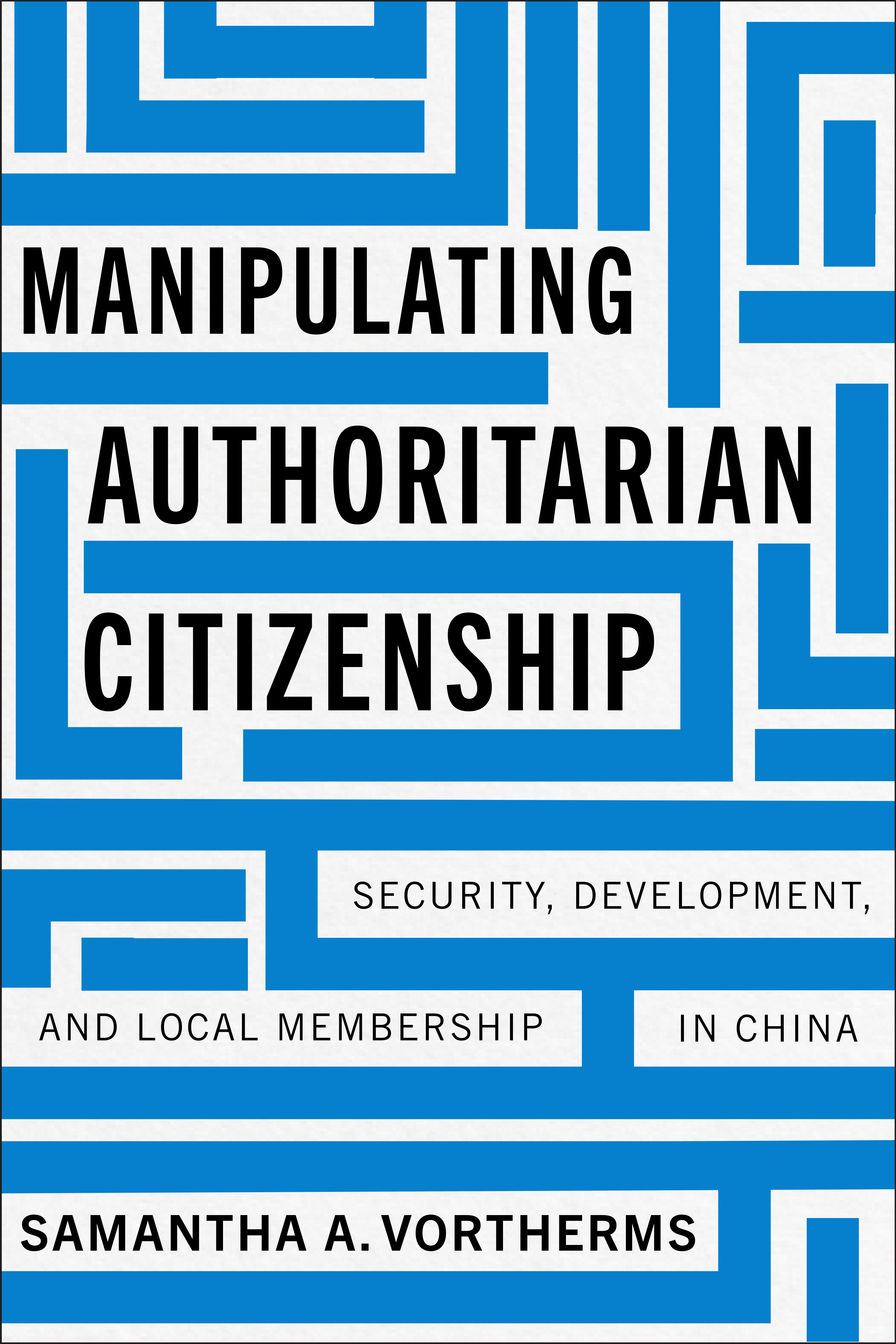
The redistribution of political and economic rights is inherently unequal in autocratic societies. Autocrats routinely divide their populations into included and excluded groups, creating particularistic citizenship through granting some groups access to rights and redistribution while restricting or denying access to others. This book asks: why would a government with powerful tools of exclusion expand access to socioeconomic citizenship rights? And when autocratic systems expand redistribution, whom do they choose to include?
In Manipulating Authoritarian Citizenship, Samantha A. Vortherms examines the crucial case of China—where internal citizenship regimes control who can and cannot become a local citizen through the household registration system (hukou)—and uncovers how autocrats use such institutions to create particularistic membership in citizenship. Vortherms shows how local governments explicitly manipulate local citizenship membership not only to ensure political security and stability, but also, crucially, to advance economic development. Vortherms demonstrates how autocrats use differentiated citizenship to control degrees of access to rights and thus fulfill the authoritarian bargain and balance security and economic incentives. This book expands our understanding of individual-state relations in both autocratic contexts and across a variety of regime types.
Betal nemt med kort, Klarna, Apple Pay eller Google Pay. Ikke tilfreds? Du har altid 14 dages fortrydelsesret. Læs mere i vores vilkår. Har du spørgsmål, så send os en mail på hello@memmo.org.
Memmo gør det nemmere at studere – uanset hvor du er i verden. Hos os samler du dine kursusbøger og smarte studieværktøjer ét sted: resuméer, quizzer, podcasts og flashcards. Og så er der Ted, din studieven, der svarer på alt, du undrer dig over. Over 50 000 studerende studerer allerede her – bygget til at hjælpe dig med at lære hurtigere og stresse mindre.