
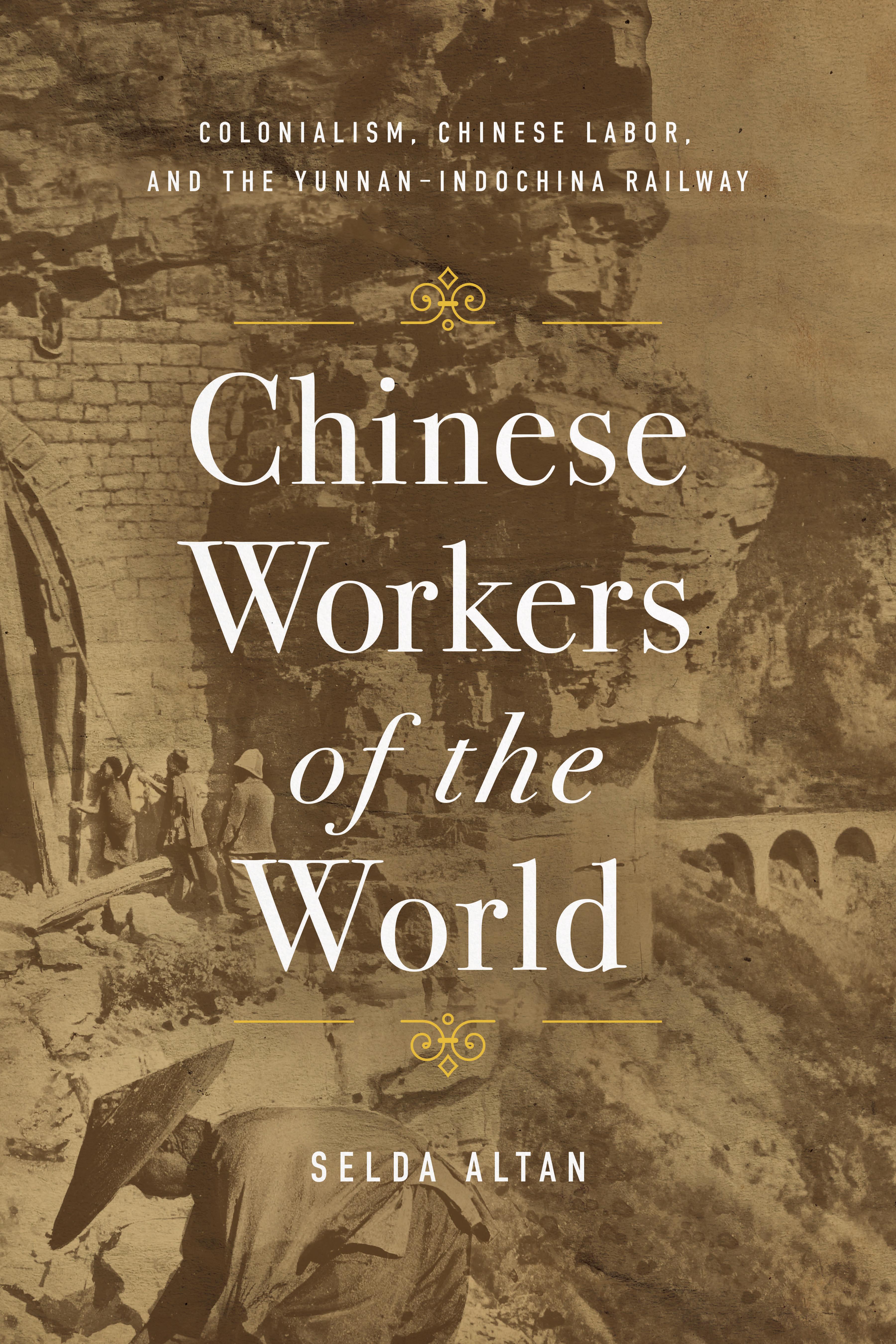
Chinese workers helped build the modern world. They labored on New World plantations, worked in South African mines, and toiled through the construction of the Panama Canal, among many other projects. While most investigations of Chinese workers focus on migrant labor, Chinese Workers of the World explores Chinese labor under colonial regimes within China through an examination of the Yunnan-Indochina Railway, constructed between 1898–1910. The Yunnan railway—a French investment in imperial China during the age of "railroad colonialism"—connected French-colonized Indochina to Chinese markets with a promise of cross-border trade in tin, silk, tea, and opium. However, this ambitious project resulted in fiasco. Thousands of Chinese workers died during the horrid construction process, and costs exceeded original estimates by 74%.
Drawing on Chinese, French, and British archival accounts of day-to-day worker struggles and labor conflicts along the railway, Selda Altan argues that long before the Chinese Communist Party defined Chinese workers as the vanguard of a revolutionary movement in the 1920s, the modern figure of the Chinese worker was born in the crosscurrents of empire and nation in the late nineteenth century. Yunnan railway workers contested the conditions of their employment with the knowledge of a globalizing capitalist market, fundamentally reshaping Chinese ideas of free labor, national sovereignty, and regional leadership in East and Southeast Asia.
Betal nemt med kort, Klarna, Apple Pay eller Google Pay. Ikke tilfreds? Du har altid 14 dages fortrydelsesret. Læs mere i vores vilkår. Har du spørgsmål, så send os en mail på hello@memmo.org.
Memmo gør det nemmere at studere – uanset hvor du er i verden. Hos os samler du dine kursusbøger og smarte studieværktøjer ét sted: resuméer, quizzer, podcasts og flashcards. Og så er der Ted, din studieven, der svarer på alt, du undrer dig over. Over 50 000 studerende studerer allerede her – bygget til at hjælpe dig med at lære hurtigere og stresse mindre.