
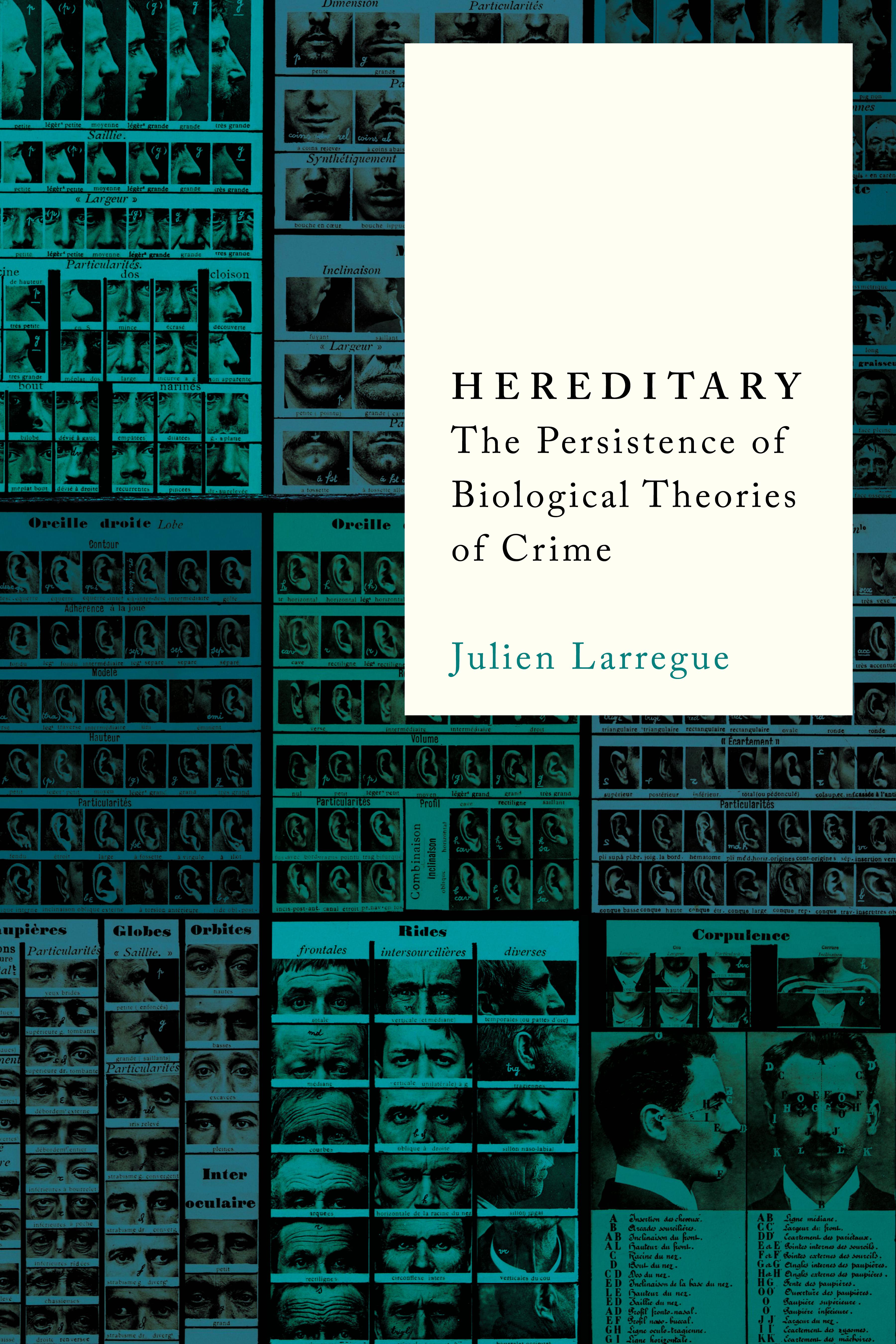
Since the 1990s, a growing number of criminal courts around the world have been using expert assessments based on behavioral genetics and neuroscience to evaluate the responsibility and dangerousness of offenders. Despite this rapid circulation, however, we still know very little about the scientific knowledge underlying these expert evaluations. Hereditary traces the historical development of biosocial criminology in the United States from the 1960s to the present, showing how the fate of this movement is intimately linked to that of the field of criminology as a whole. In claiming to identify the biological and environmental causes of so-called "antisocial" behaviors, biosocial criminologists are redefining the boundary between the normal and the pathological. Julien Larregue examines what is at stake in the development of biosocial criminology. Beyond the origins of delinquency, Larregue addresses the reconfiguration of expertise in contemporary societies, and in particular the territorial struggles between the medical and legal professions. For if the causes of crime are both biological and social, its treatment may call for medical as well as legal solutions.
Betal nemt med kort, Klarna, Apple Pay eller Google Pay. Ikke tilfreds? Du har altid 14 dages fortrydelsesret. Læs mere i vores vilkår. Har du spørgsmål, så send os en mail på hello@memmo.org.
Memmo gør det nemmere at studere – uanset hvor du er i verden. Hos os samler du dine kursusbøger og smarte studieværktøjer ét sted: resuméer, quizzer, podcasts og flashcards. Og så er der Ted, din studieven, der svarer på alt, du undrer dig over. Over 50 000 studerende studerer allerede her – bygget til at hjælpe dig med at lære hurtigere og stresse mindre.