
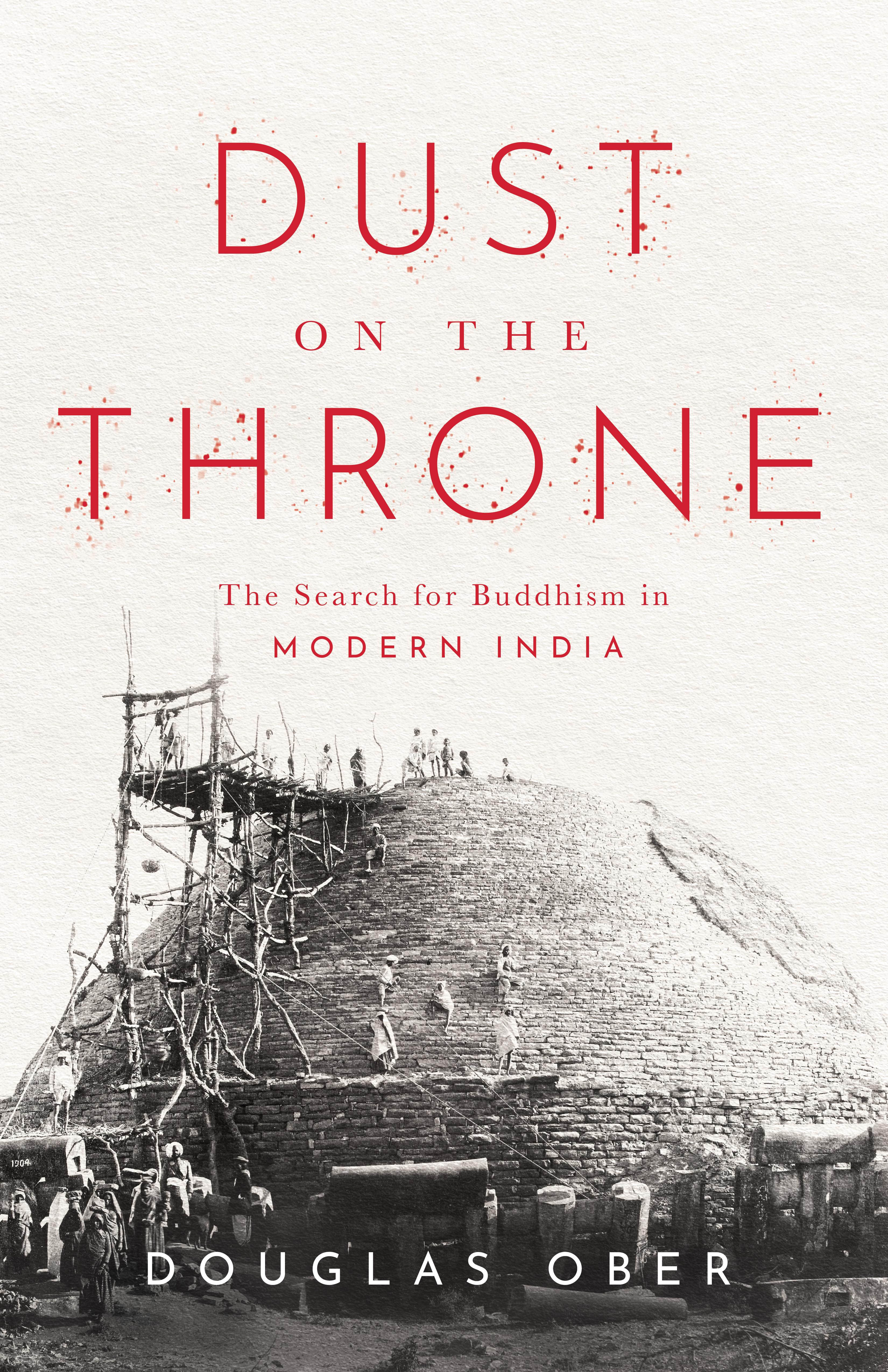
Received wisdom has it that Buddhism disappeared from India, the land of its birth, between the thirteenth and fourteenth centuries, long forgotten until British colonial scholars re-discovered it in the early 1800s. Its full-fledged revival, so the story goes, only occurred in 1956, when the Indian civil rights pioneer Dr. B.R. Ambedkar converted to Buddhism along with half a million of his Dalit (formerly "untouchable") followers. This, however, is only part of the story. Dust on the Throne reframes discussions about the place of Buddhism in the subcontinent from the early nineteenth century onwards, uncovering the integral, yet unacknowledged, role that Indians played in the making of modern global Buddhism in the century prior to Ambedkar's conversion, and the numerous ways that Buddhism gave powerful shape to modern Indian history.
Through an extensive examination of disparate materials held at archives and temples across South Asia, Douglas Ober explores Buddhist religious dynamics in an age of expanding colonial empires, intra-Asian connectivity, and the histories of Buddhism produced by nineteenth and twentieth century Indian thinkers. While Buddhism in contemporary India is often disparaged as being little more than tattered manuscripts and crumbling ruins, this book opens new avenues for understanding its substantial socio-political impact and intellectual legacy.
Betal nemt med kort, Klarna, Apple Pay eller Google Pay. Ikke tilfreds? Du har altid 14 dages fortrydelsesret. Læs mere i vores vilkår. Har du spørgsmål, så send os en mail på hello@memmo.org.
Memmo gør det nemmere at studere – uanset hvor du er i verden. Hos os samler du dine kursusbøger og smarte studieværktøjer ét sted: resuméer, quizzer, podcasts og flashcards. Og så er der Ted, din studieven, der svarer på alt, du undrer dig over. Over 50 000 studerende studerer allerede her – bygget til at hjælpe dig med at lære hurtigere og stresse mindre.