
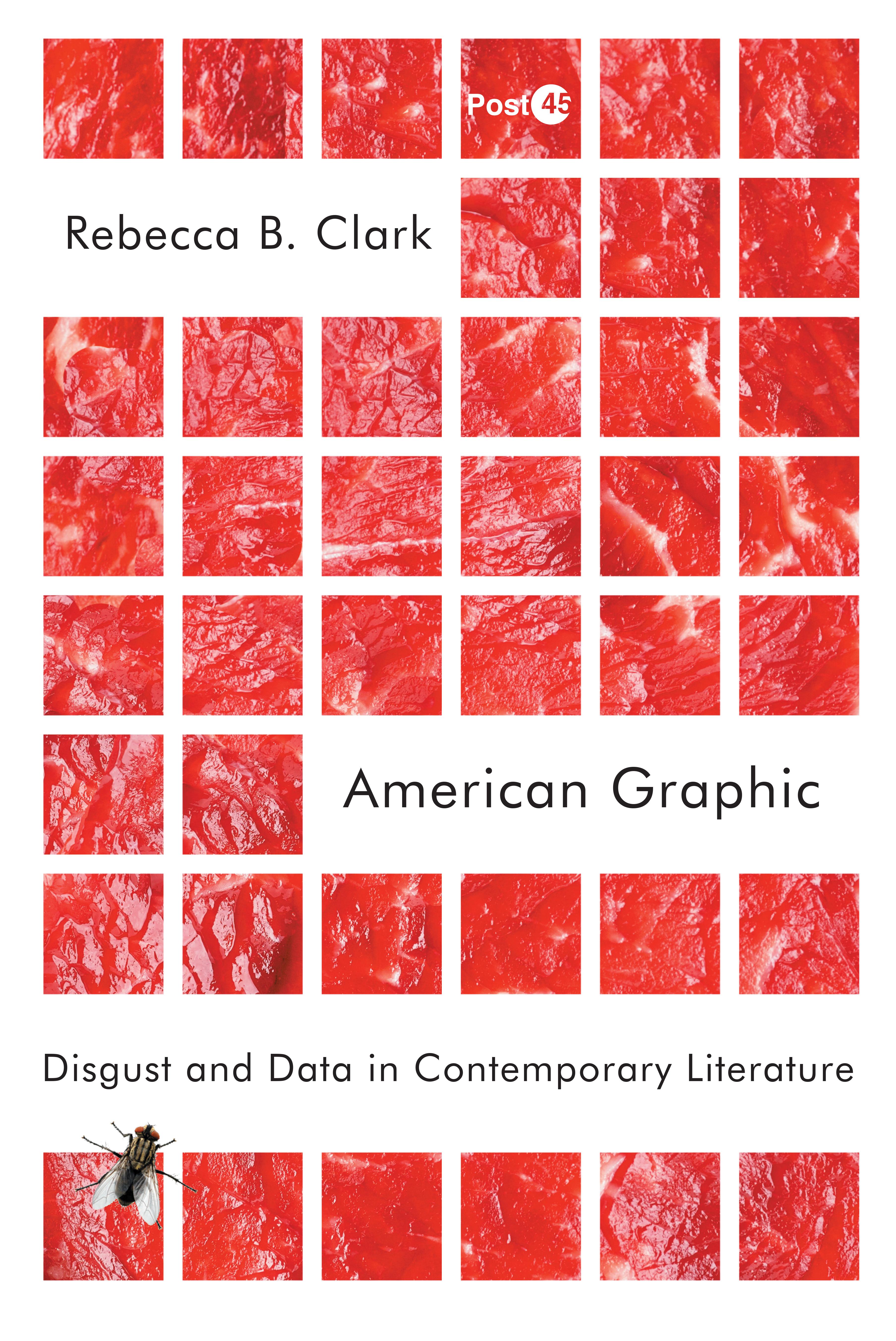
What do we really mean when we call something "graphic"? In American Graphic, Rebecca Clark examines the "graphic" as a term tellingly at odds with itself. On the one hand, it seems to evoke the grotesque; on the other hand, it promises the geometrically streamlined in the form of graphs, diagrams, and user interfaces. Clark's innovation is to ask what happens when the same moment in a work of literature is graphic in both ways at once. Her answer suggests the graphic turn in contemporary literature is intimately implicated in the fraught dynamics of identification. As Clark reveals, this double graphic indexes the unseemliness of a lust—in our current culture of information—for cool epistemological mastery over the bodies of others.
Clark analyzes the contemporary graphic along three specific axes: the ethnographic, the pornographic, and the infographic. In each chapter, Clark's explication of the double graphic reads a canonical author against literary, visual and/or performance works by Black and/or female creators. Pairing works by Edgar Allan Poe, Vladimir Nabokov, and Thomas Pynchon with pieces by Mat Johnson, Kara Walker, Fran Ross, Narcissister, and Teju Cole, Clark tests the effects and affects of the double graphic across racialized and gendered axes of differences. American Graphic forces us to face how closely and uncomfortably yoked together disgust and data have become in our increasingly graph-ick world.
Betal nemt med kort, Klarna, Apple Pay eller Google Pay. Ikke tilfreds? Du har altid 14 dages fortrydelsesret. Læs mere i vores vilkår. Har du spørgsmål, så send os en mail på hello@memmo.org.
Memmo gør det nemmere at studere – uanset hvor du er i verden. Hos os samler du dine kursusbøger og smarte studieværktøjer ét sted: resuméer, quizzer, podcasts og flashcards. Og så er der Ted, din studieven, der svarer på alt, du undrer dig over. Over 50 000 studerende studerer allerede her – bygget til at hjælpe dig med at lære hurtigere og stresse mindre.