
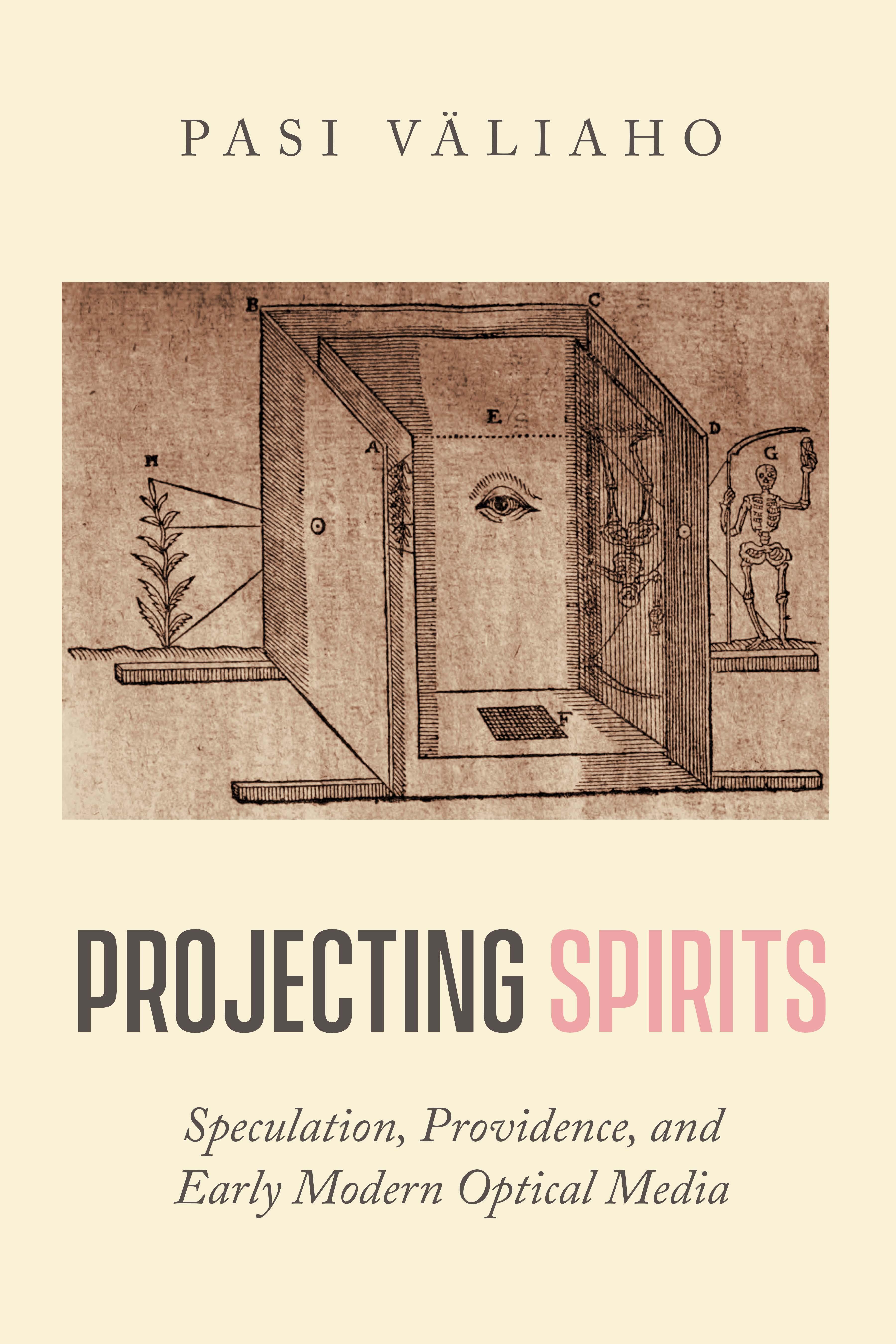
The history of projected images at the turn of the seventeenth century reveals a changing perception of chance and order, contingency and form. In Projecting Spirits, Pasi Väliaho maps how the leading optical media of the period—the camera obscura and the magic lantern—developed in response to, and framed, the era's key intellectual dilemma of whether the world fell under God's providential care, or was subject to chance and open to speculating.
As Väliaho shows, camera obscuras and magic lanterns were variously employed to give the world an intelligible and manageable design. Jesuit scholars embraced devices of projection as part of their pursuit of divine government, whilst the Royal Society fellows enlisted them in their quest for empirical knowledge as well as colonial expansion. Projections of light and shadow grew into critical metaphors in early responses to the turbulences of finance. In such instances, Väliaho argues, "projection" became an indispensable cognitive form to both assert providence, and to make sense of an economic reality that was gradually escaping from divine guidance. Drawing on a range of materials—philosophical, scientific and religious literature, visual arts, correspondence, poems, pamphlets, and illustrations—this provocative and inventive work expands our concept of the early media of projection, revealing how they spoke to early modern thinkers, and shaped a new, speculative concept of the world.
Betal nemt med kort, Klarna, Apple Pay eller Google Pay. Ikke tilfreds? Du har altid 14 dages fortrydelsesret. Læs mere i vores vilkår. Har du spørgsmål, så send os en mail på hello@memmo.org.
Memmo gør det nemmere at studere – uanset hvor du er i verden. Hos os samler du dine kursusbøger og smarte studieværktøjer ét sted: resuméer, quizzer, podcasts og flashcards. Og så er der Ted, din studieven, der svarer på alt, du undrer dig over. Over 50 000 studerende studerer allerede her – bygget til at hjælpe dig med at lære hurtigere og stresse mindre.