
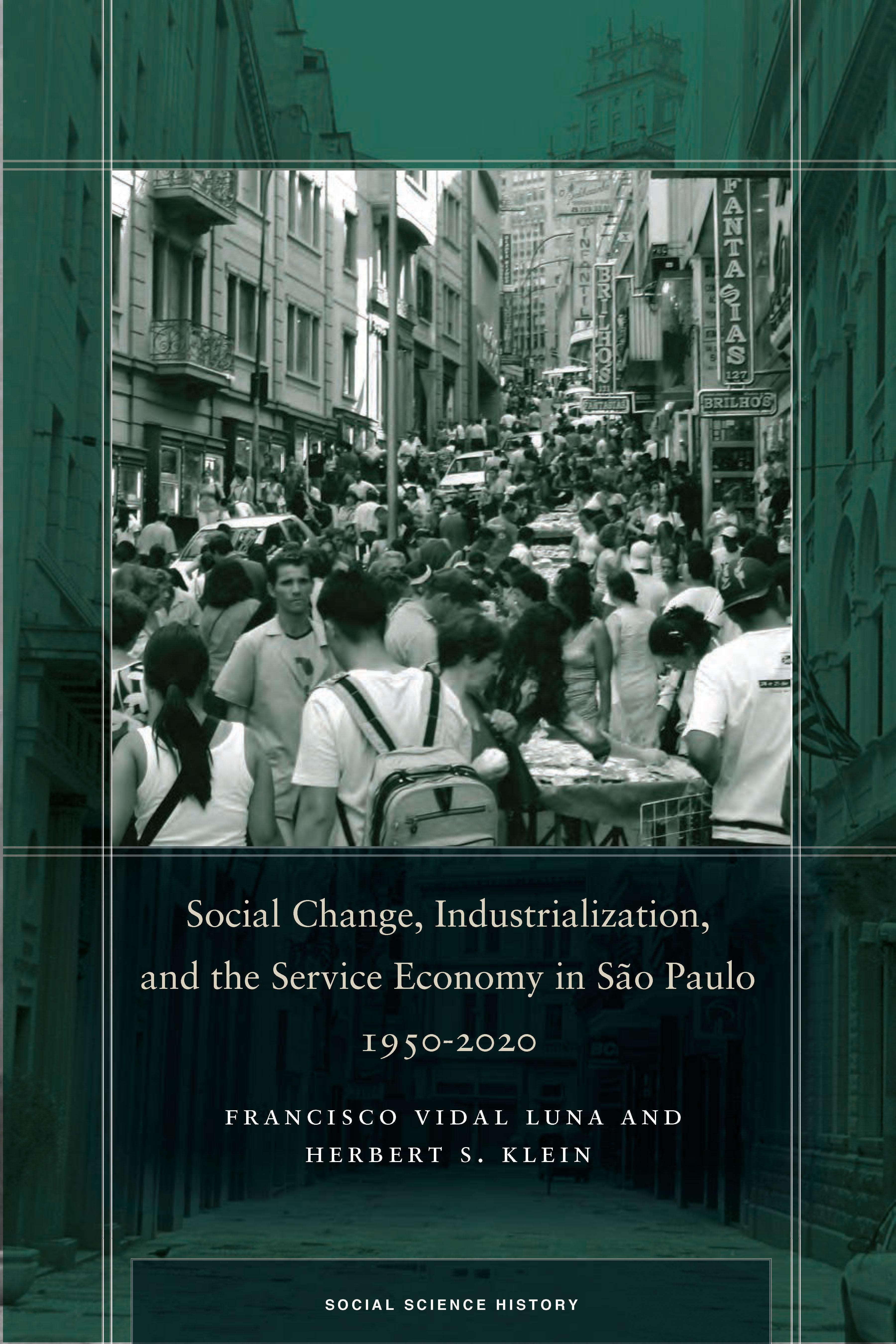
In the 1950s–80s, Brazil built one of the most advanced industrial networks among the "developing" countries, initially concentrated in the state of São Paulo. But from the 1980s, decentralization of industry spread to other states reducing São Paulo's relative importance in the country's industrial product. This volume draws on social, economic, and demographic data to document the accelerated industrialization of the state and its subsequent shift to a service economy amidst worsening social and economic inequality.
Through its cultural institutions, universities, banking, and corporate sectors, the municipality of São Paulo would become a world metropolis. At the same time, given its rapid growth from 2 million to 12 million residents in this period, São Paulo dealt with problems of distribution, housing, and governance. This significant volume elucidates these and other trends during the late twentieth and early twenty-first centuries, and will be an invaluable reference for scholars of history, policy, and the economy in Latin America.
Betal nemt med kort, Klarna, Apple Pay eller Google Pay. Ikke tilfreds? Du har altid 14 dages fortrydelsesret. Læs mere i vores vilkår. Har du spørgsmål, så send os en mail på hello@memmo.org.
Memmo gør det nemmere at studere – uanset hvor du er i verden. Hos os samler du dine kursusbøger og smarte studieværktøjer ét sted: resuméer, quizzer, podcasts og flashcards. Og så er der Ted, din studieven, der svarer på alt, du undrer dig over. Over 50 000 studerende studerer allerede her – bygget til at hjælpe dig med at lære hurtigere og stresse mindre.