
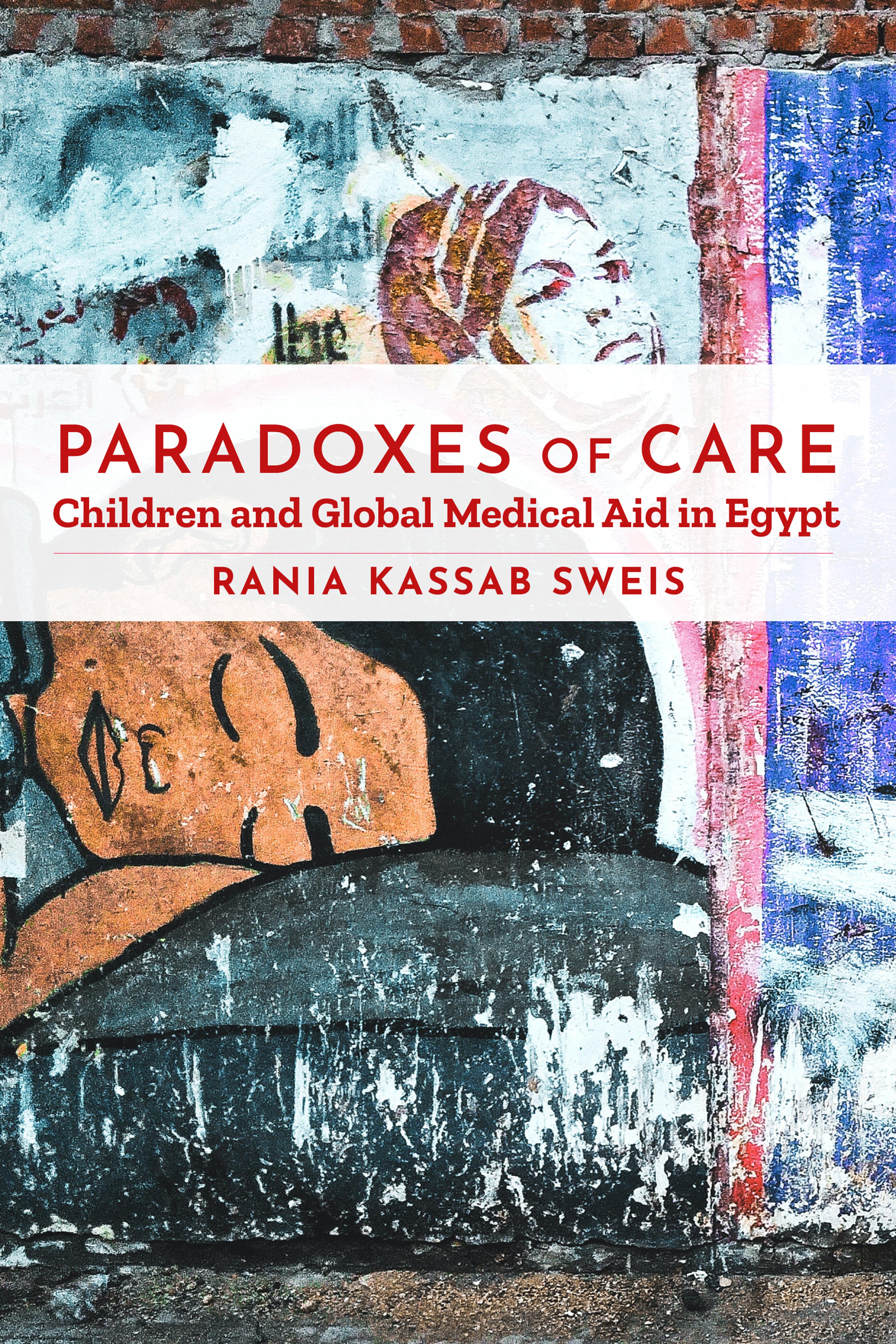
Each year, billions of dollars are spent on global humanitarian health initiatives. These efforts are intended to care for suffering bodies, especially those of distressed children living in poverty. But as global medical aid can often overlook the local economic and political systems that cause bodily suffering, it can also unintentionally prolong the very conditions that hurt children and undermine local aid givers. Investigating medical humanitarian encounters in Egypt, Paradoxes of Care illustrates how child aid recipients and local aid experts grapple with global aid's shortcomings and its paradoxical outcomes.
Rania Kassab Sweis examines how some of the world's largest aid organizations care for vulnerable children in Egypt, focusing on medical efforts with street children and out-of-school village girls. Her in-depth ethnographic study reveals how global medical aid fails to "save" these children according to its stated aims, and often maintains—or produces new—social disparities in children's lives. Foregrounding vulnerable children's responses to medical aid, Sweis moves past the unquestioned benevolence of global health to demonstrate how children must manage their own bodies and lives in the absence of adult care. With this book, she challenges readers to engage with the question of what medical caregivers and donors alike gain from such global humanitarian transactions.
Betal nemt med kort, Klarna, Apple Pay eller Google Pay. Ikke tilfreds? Du har altid 14 dages fortrydelsesret. Læs mere i vores vilkår. Har du spørgsmål, så send os en mail på hello@memmo.org.
Memmo gør det nemmere at studere – uanset hvor du er i verden. Hos os samler du dine kursusbøger og smarte studieværktøjer ét sted: resuméer, quizzer, podcasts og flashcards. Og så er der Ted, din studieven, der svarer på alt, du undrer dig over. Over 50 000 studerende studerer allerede her – bygget til at hjælpe dig med at lære hurtigere og stresse mindre.