
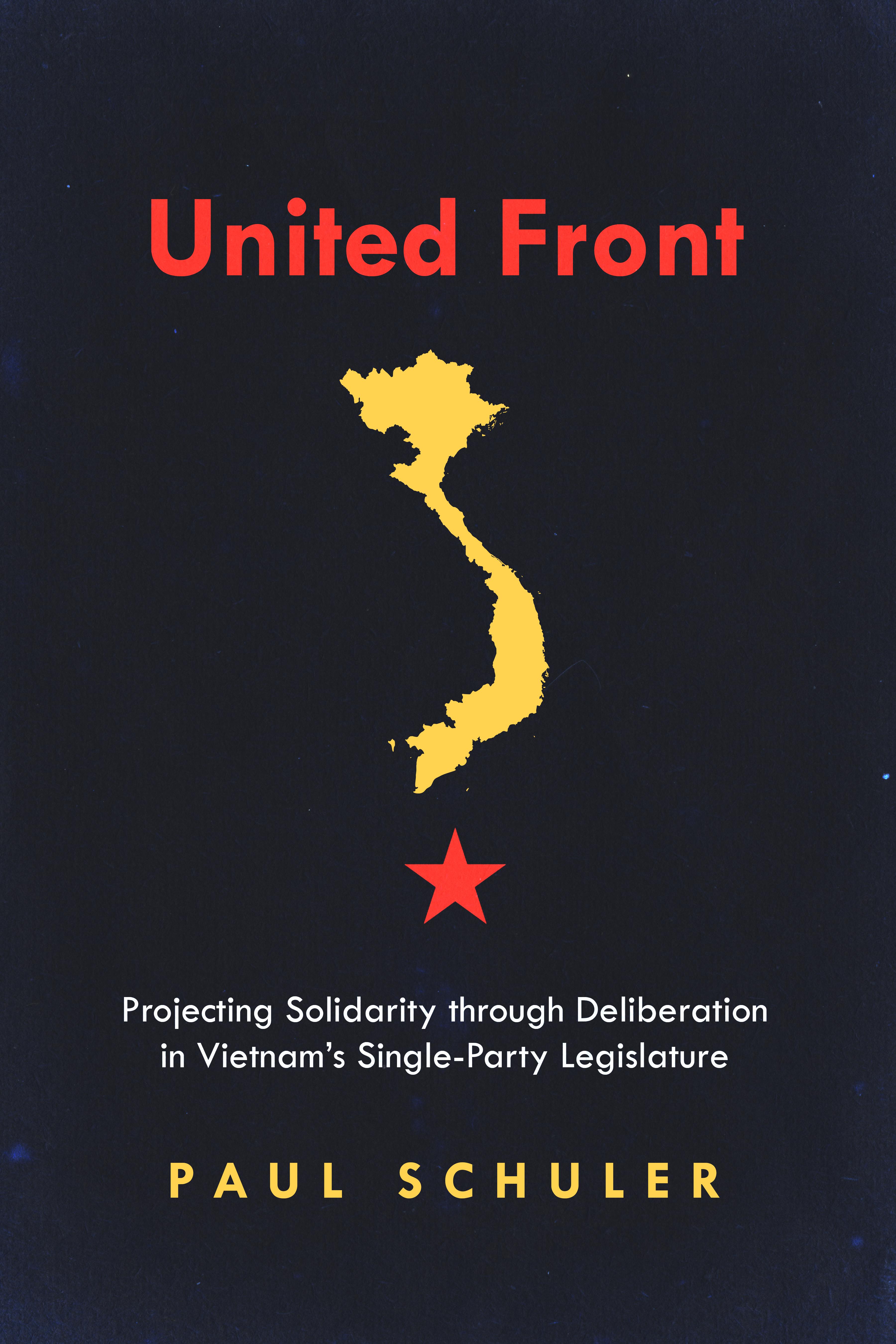
Conventional wisdom emerging from China and other autocracies claims that single-party legislatures and elections are mutually beneficial for citizens and autocrats. This line of thought reasons that these institutions can serve multiple functions, like constraining political leaders or providing information about citizens. In United Front, Paul Schuler challenges these views through his examination of the past and present functioning of the Vietnam National Assembly (VNA), arguing that the legislature's primary role is to signal strength to the public. When active, the critical behavior from delegates in the legislature represents cross fire within the regime rather than genuine citizen feedback. In making these arguments, Schuler counters a growing scholarly trend to see democratic institutions within single-party settings like China and Vietnam as useful for citizens or regime performance. His argument also suggests that there are limits to generating genuinely "consultative authoritarianism" through quasi-democratic institutions. Applying a diverse range of cutting-edge social science methods on a wealth of original data such as legislative speeches, election returns, and surveys, Schuler shows that even in a seemingly vociferous legislature like the VNA, the ultimate purpose of the institution is not to reflect the views of citizens, but rather to signal the regime's preferences while taking down rivals.
Betal nemt med kort, Klarna, Apple Pay eller Google Pay. Ikke tilfreds? Du har altid 14 dages fortrydelsesret. Læs mere i vores vilkår. Har du spørgsmål, så send os en mail på hello@memmo.org.
Memmo gør det nemmere at studere – uanset hvor du er i verden. Hos os samler du dine kursusbøger og smarte studieværktøjer ét sted: resuméer, quizzer, podcasts og flashcards. Og så er der Ted, din studieven, der svarer på alt, du undrer dig over. Over 50 000 studerende studerer allerede her – bygget til at hjælpe dig med at lære hurtigere og stresse mindre.