
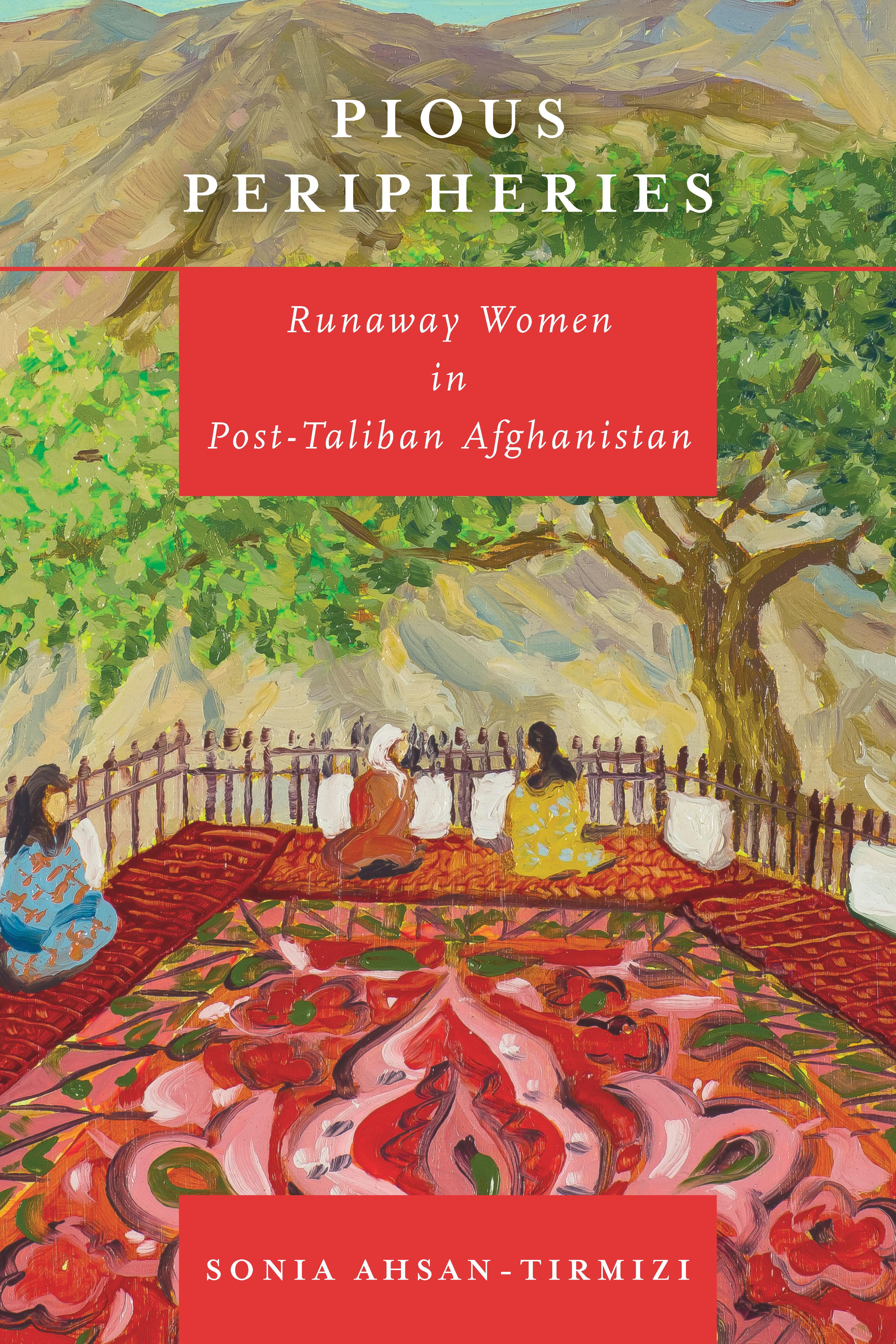
The Taliban made piety a business of the state, and thereby intervened in the daily lives and social interactions of Afghan women. Pious Peripheries examines women's resistance through groundbreaking fieldwork at a women's shelter in Kabul, home to runaway wives, daughters, mothers, and sisters of the Taliban. Whether running to seek marriage or divorce, enduring or escaping abuse, or even accused of singing sexually explicit songs in public, "promiscuous" women challenge the status quo—and once marked as promiscuous, women have few resources. This book provides a window into the everyday struggles of Afghan women as they develop new ways to challenge historical patriarchal practices.
Sonia Ahsan-Tirmizi explores how women negotiate gendered power mechanisms, notably those of Islam and Pashtunwali. Sometimes defined as an honor code, Pashtunwali is a discursive and material practice that women embody through praying, fasting, oral and written poetry, and participation in rituals of hospitality and refuge. In taking ownership of Pashtunwali and Islamic knowledge, in both textual and oral forms, women create a new supportive community, finding friendship and solidarity in the margins of Afghan society. So doing, these women redefine the meanings of equality, honor, piety, and promiscuity in Afghanistan.
Betal nemt med kort, Klarna, Apple Pay eller Google Pay. Ikke tilfreds? Du har altid 14 dages fortrydelsesret. Læs mere i vores vilkår. Har du spørgsmål, så send os en mail på hello@memmo.org.
Memmo gør det nemmere at studere – uanset hvor du er i verden. Hos os samler du dine kursusbøger og smarte studieværktøjer ét sted: resuméer, quizzer, podcasts og flashcards. Og så er der Ted, din studieven, der svarer på alt, du undrer dig over. Over 50 000 studerende studerer allerede her – bygget til at hjælpe dig med at lære hurtigere og stresse mindre.