
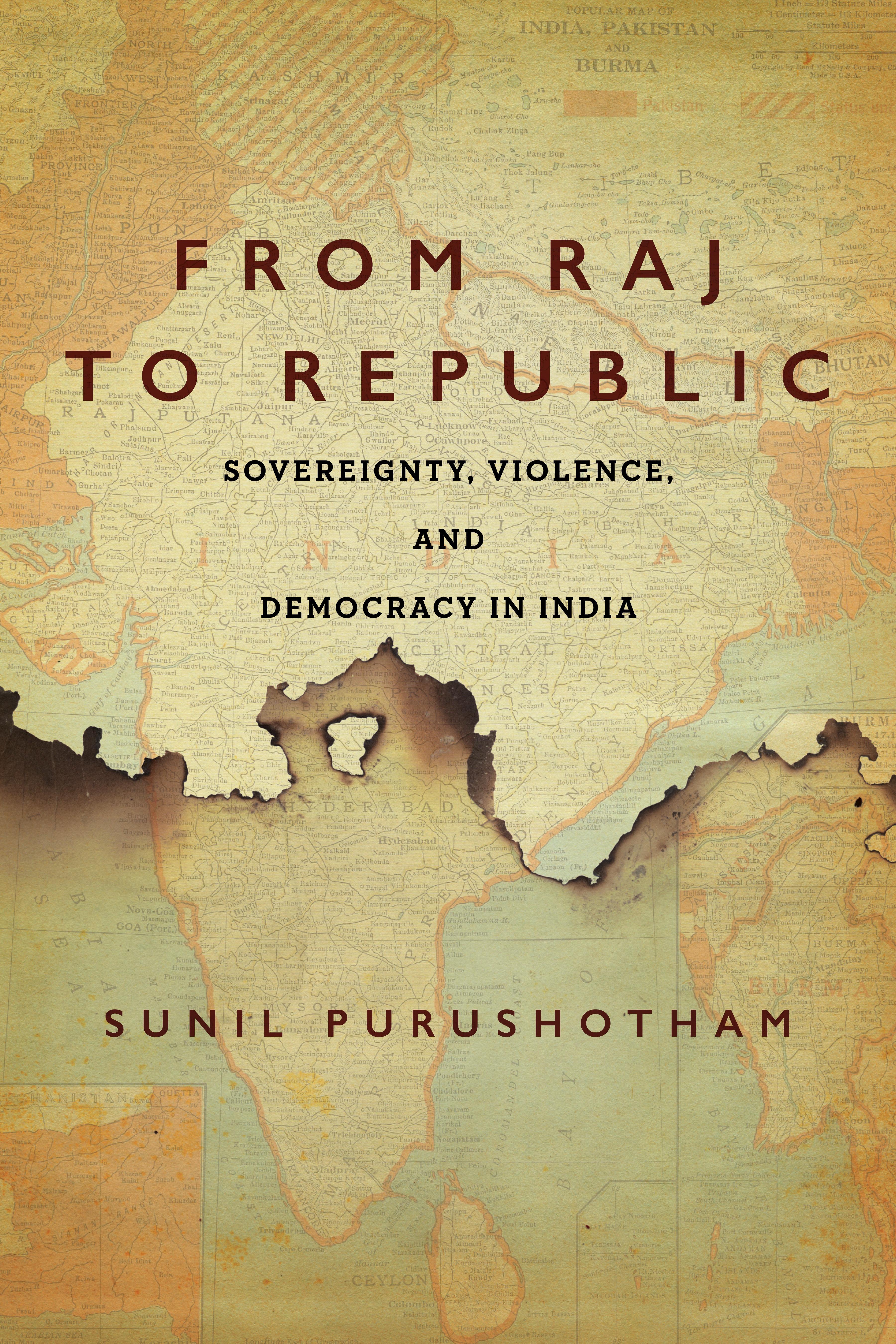
Between 1946 and 1952, the British Raj, the world's largest colony, was transformed into the Republic of India, the world's largest democracy. Independence, the Constituent Assembly Debates, the founding of the Republic, and India's first universal franchise general election occurred amidst the violence and displacement of the Partition, the uncertain and contested integration of the princely states, and the forceful quelling of internal dissent. This book investigates the ways in which these violent conjunctures constituted a postcolonial regime of sovereignty and shaped the historical development of democracy in India at the foundational moment of decolonization and national independence. From Raj to Republic presents a multifaceted history of sovereignty and democracy in India by linking together the princely state of Hyderabad's attempt to establish itself as an independent sovereign state, the partitioning of Punjab, and the communist-led revolutionary movement in the southern Indian region of Telangana. A national, territorial, republican, and liberal polity in India emerged out of a violent and contested process that forged new power relations and opened up historical trajectories with lasting consequences for modern India.
Betal nemt med kort, Klarna, Apple Pay eller Google Pay. Ikke tilfreds? Du har altid 14 dages fortrydelsesret. Læs mere i vores vilkår. Har du spørgsmål, så send os en mail på hello@memmo.org.
Memmo gør det nemmere at studere – uanset hvor du er i verden. Hos os samler du dine kursusbøger og smarte studieværktøjer ét sted: resuméer, quizzer, podcasts og flashcards. Og så er der Ted, din studieven, der svarer på alt, du undrer dig over. Over 50 000 studerende studerer allerede her – bygget til at hjælpe dig med at lære hurtigere og stresse mindre.