
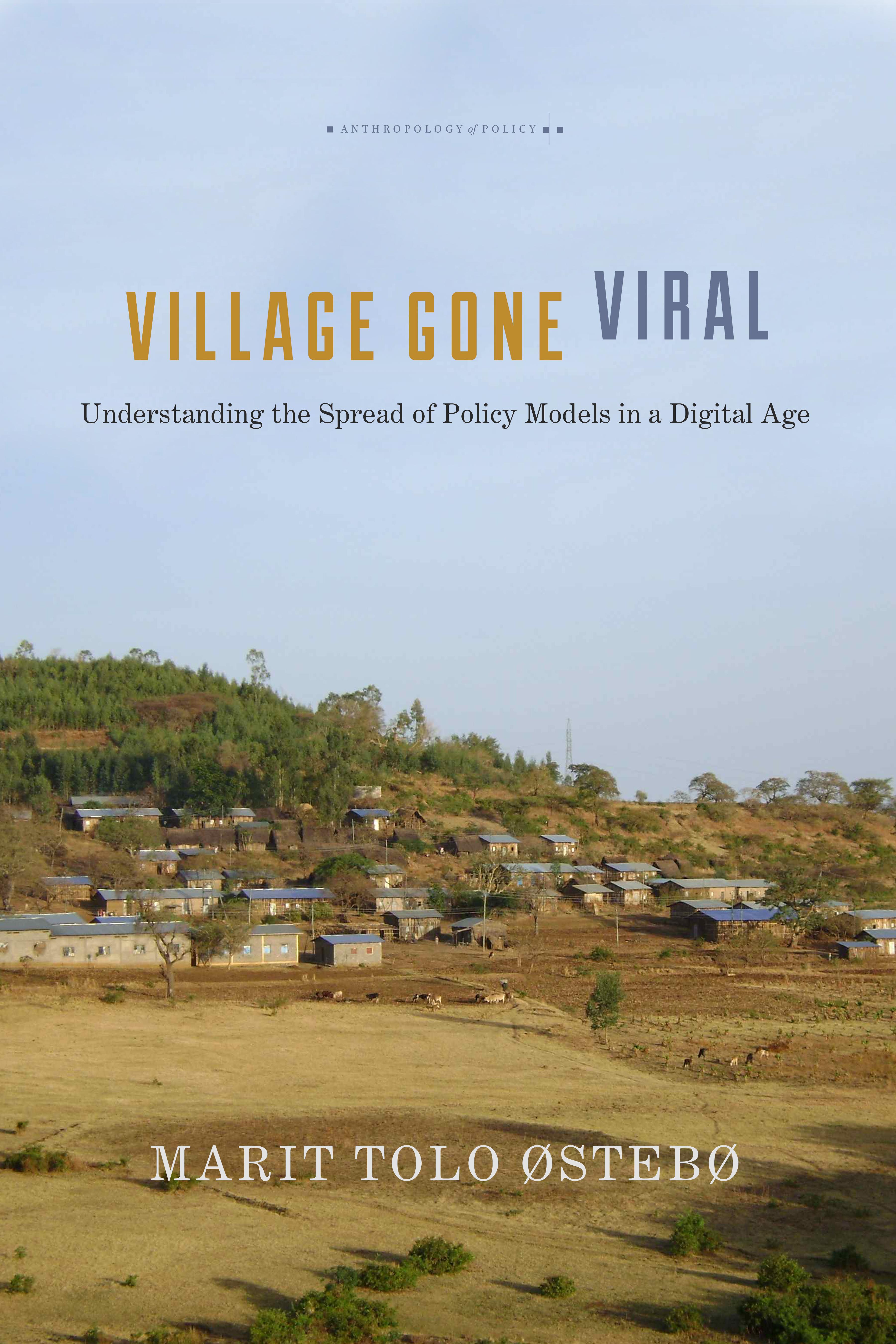
In 2001, Ethiopian Television aired a documentary about a small, rural village called Awra Amba, where women ploughed, men worked in the kitchen, and so-called harmful traditional practices did not exist. The documentary radically challenged prevailing images of Ethiopia as a gender-conservative and aid-dependent place, and Awra Amba became a symbol of gender equality and sustainable development in Ethiopia and beyond.
Village Gone Viral uses the example of Awra Amba to consider the widespread circulation and use of modeling practices in an increasingly transnational and digital policy world. With a particular focus on traveling models—policy models that become "viral" through various vectors, ranging from NGOs and multilateral organizations to the Internet—Marit Tolo Østebø critically examines the hidden dimensions of models and model making. While a policy model may be presented as a "best practice," one that can be scaled up and successfully applied to other places, the local impacts of the model paradigm are far more ambivalent—potentially increasing social inequalities, reinforcing social stratification, and concealing injustice. With this book, Østebø ultimately calls for a reflexive critical anthropology of the production, circulation, and use of models as instruments for social change.
Betal nemt med kort, Klarna, Apple Pay eller Google Pay. Ikke tilfreds? Du har altid 14 dages fortrydelsesret. Læs mere i vores vilkår. Har du spørgsmål, så send os en mail på hello@memmo.org.
Memmo gør det nemmere at studere – uanset hvor du er i verden. Hos os samler du dine kursusbøger og smarte studieværktøjer ét sted: resuméer, quizzer, podcasts og flashcards. Og så er der Ted, din studieven, der svarer på alt, du undrer dig over. Over 50 000 studerende studerer allerede her – bygget til at hjælpe dig med at lære hurtigere og stresse mindre.