
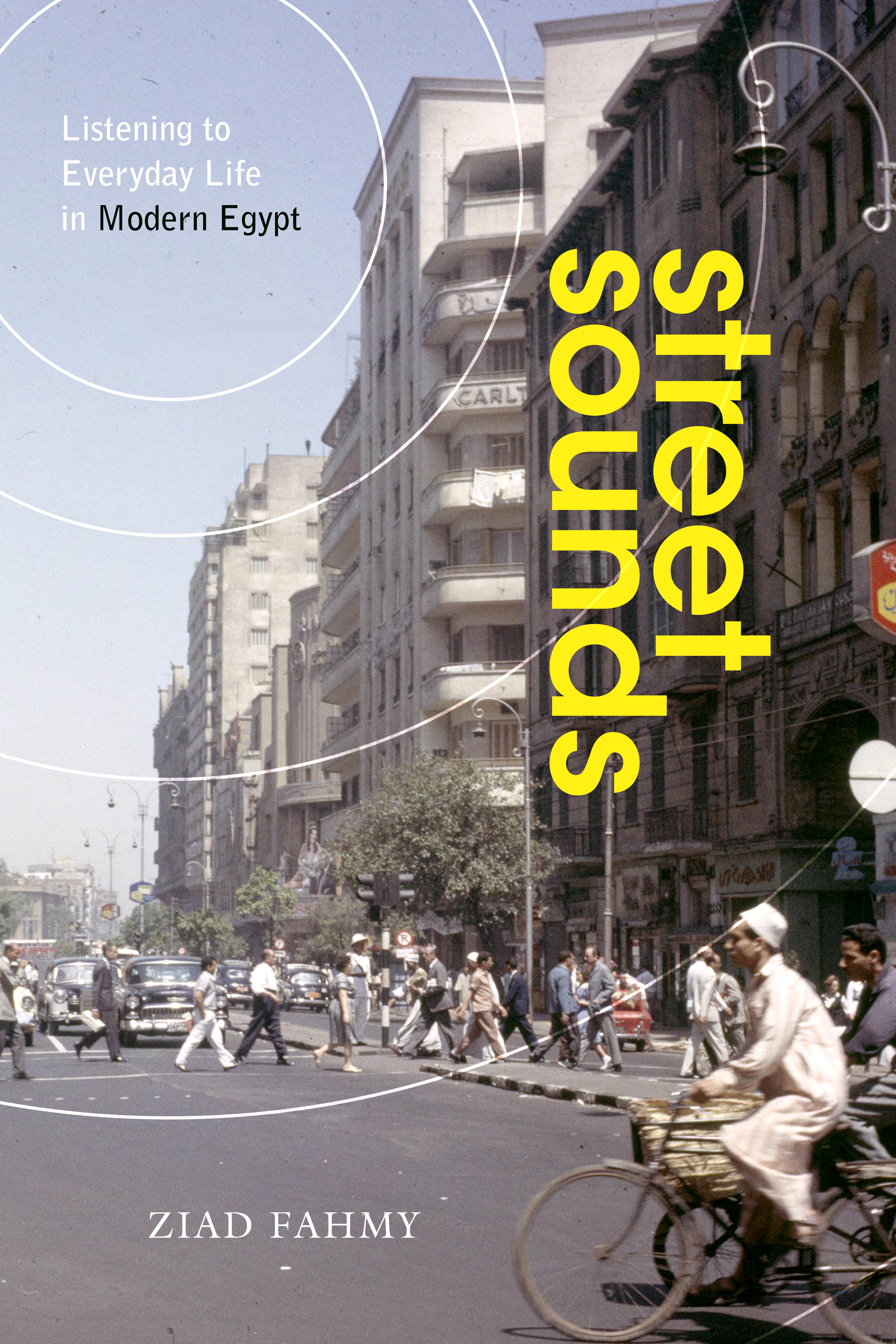
As the twentieth century roared on, transformative technologies—from trains, trams, and automobiles to radios and loudspeakers—fundamentally changed the sounds of the Egyptian streets. The cacophony of everyday life grew louder, and the Egyptian press featured editorials calling for the regulation of not only mechanized and amplified sounds, but also the voices of street vendors, the music of wedding processions, and even the traditional funerary wails. Ziad Fahmy offers the first historical examination of the changing soundscapes of urban Egypt, highlighting the mundane sounds of street life, while "listening" to the voices of ordinary people as they struggle with state authorities for ownership of the streets.
Interweaving infrastructural, cultural, and social history, Fahmy analyzes the sounds of modernity, using sounded sources as an analytical tool for examining the past. Street Sounds also reveals a political dimension of noise by demonstrating how the growing middle classes used sound to distinguish themselves from the Egyptian masses. This book contextualizes sound, layering historical analysis with a sensory dimension, bringing us closer to the Egyptian streets as lived and embodied by everyday people.
Betal nemt med kort, Klarna, Apple Pay eller Google Pay. Ikke tilfreds? Du har altid 14 dages fortrydelsesret. Læs mere i vores vilkår. Har du spørgsmål, så send os en mail på hello@memmo.org.
Memmo gør det nemmere at studere – uanset hvor du er i verden. Hos os samler du dine kursusbøger og smarte studieværktøjer ét sted: resuméer, quizzer, podcasts og flashcards. Og så er der Ted, din studieven, der svarer på alt, du undrer dig over. Over 50 000 studerende studerer allerede her – bygget til at hjælpe dig med at lære hurtigere og stresse mindre.