
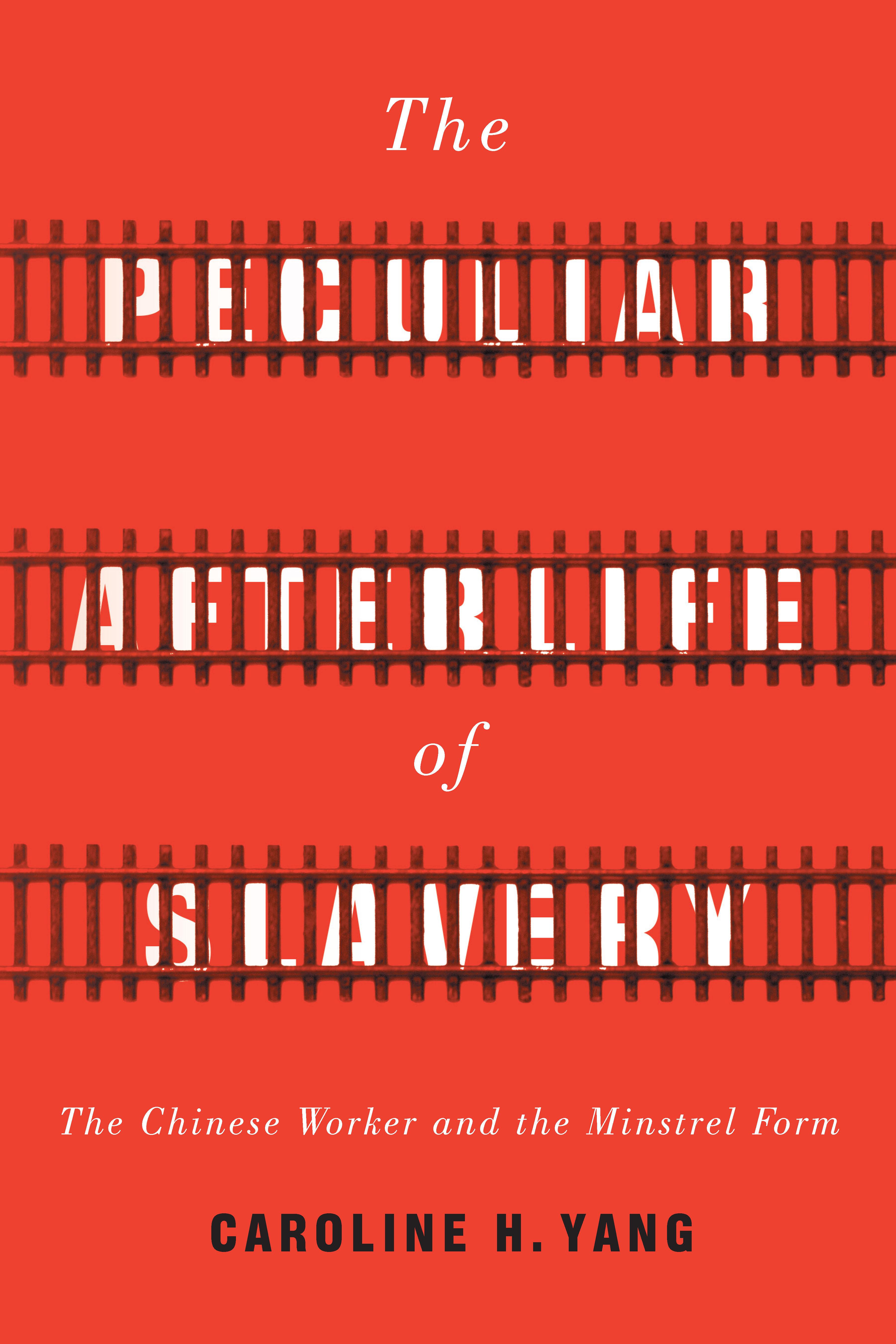
The Peculiar Afterlife of Slavery explores how antiblack racism lived on through the figure of the Chinese worker in US literature after emancipation. Drawing out the connections between this liminal figure and the formal aesthetics of blackface minstrelsy in literature of the Reconstruction and post-Reconstruction eras, Caroline H. Yang reveals the ways antiblackness structured US cultural production during a crucial moment of reconstructing and re-narrating US empire after the Civil War.
Examining texts by major American writers in the late nineteenth and early twentieth centuries—including Harriet Beecher Stowe, Bret Harte, Mark Twain, Ambrose Bierce, Sui Sin Far, and Charles Chesnutt—Yang traces the intertwined histories of blackface minstrelsy and Chinese labor. Her bold rereading of these authors' contradictory positions on race and labor sees the figure of the Chinese worker as both hiding and making visible the legacy of slavery and antiblackness. Ultimately, The Peculiar Afterlife of Slavery shows how the Chinese worker manifests the inextricable links between US literature, slavery, and empire, as well as the indispensable role of antiblackness as a cultural form in the United States.
Betal nemt med kort, Klarna, Apple Pay eller Google Pay. Ikke tilfreds? Du har altid 14 dages fortrydelsesret. Læs mere i vores vilkår. Har du spørgsmål, så send os en mail på hello@memmo.org.
Memmo gør det nemmere at studere – uanset hvor du er i verden. Hos os samler du dine kursusbøger og smarte studieværktøjer ét sted: resuméer, quizzer, podcasts og flashcards. Og så er der Ted, din studieven, der svarer på alt, du undrer dig over. Over 50 000 studerende studerer allerede her – bygget til at hjælpe dig med at lære hurtigere og stresse mindre.