
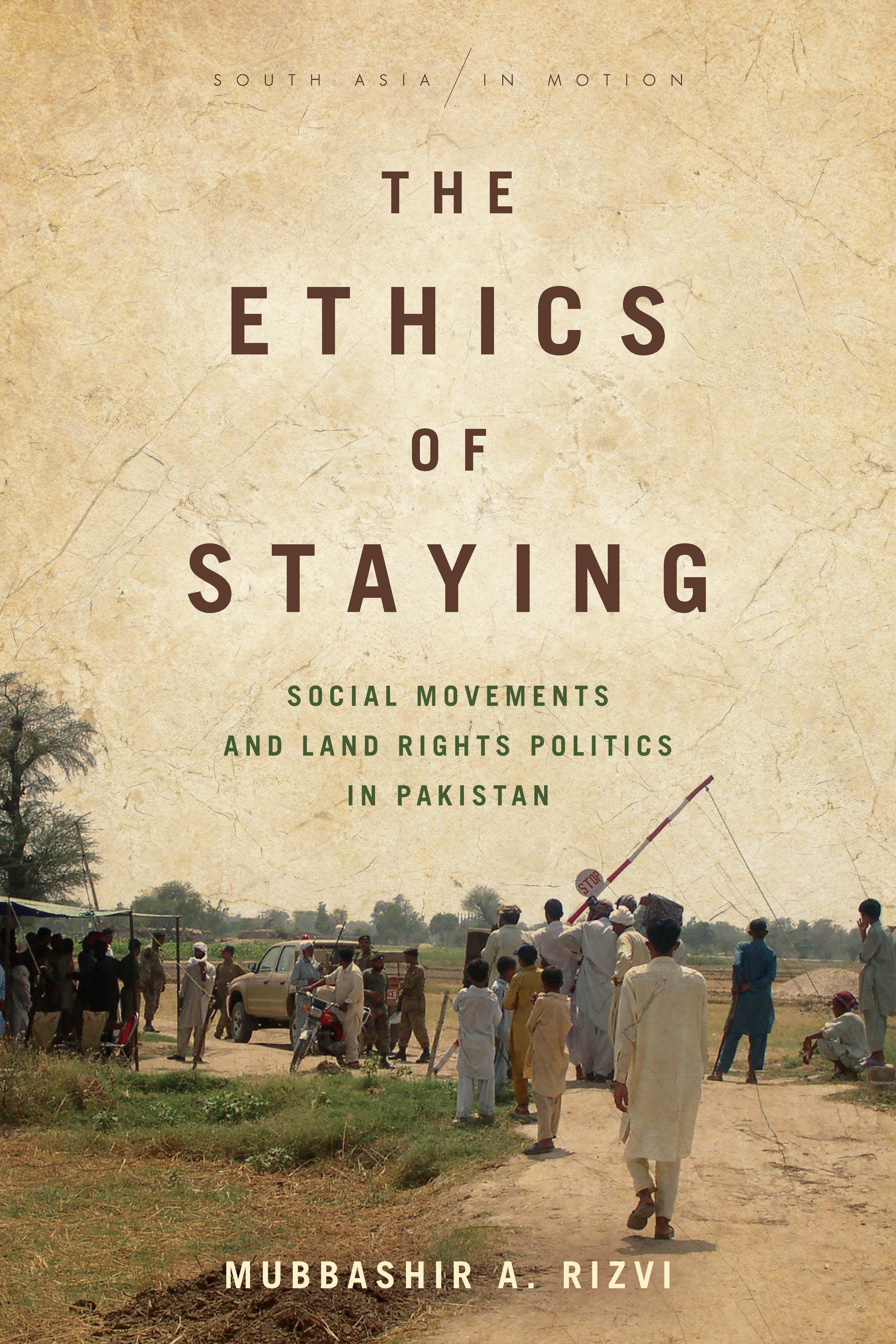
The military coup that brought General Pervez Musharraf to power as Pakistan's tenth president resulted in the abolition of a century-old sharecropping system that was rife with corruption. In its place the military regime implemented a market reform policy of cash contract farming. Ostensibly meant to improve living conditions for tenant farmers, the new system, instead, mobilized one of the largest, most successful land rights movements in South Asia—still active today.
In The Ethics of Staying, Mubbashir A. Rizvi presents an original framework for understanding this major social movement, called the Anjuman Mazarin Punjab (AMP). This group of Christian and Muslim tenant sharecroppers, against all odds, successfully resisted Pakistan military's bid to monetize state-owned land, making a powerful moral case for land rights by invoking local claims to land and a broader vision for subsistence rights. The case of AMP provides a unique lens through which to examine state and society relations in Pakistan, one that bridges literatures from subaltern studies, military and colonial power, and the language of claim-making. Rizvi also offers a glimpse of Pakistan that challenges its standard framing as a hub of radical militancy, by opening a window into to the everyday struggles that are often obscured in the West's terror discourse.
Betal nemt med kort, Klarna, Apple Pay eller Google Pay. Ikke tilfreds? Du har altid 14 dages fortrydelsesret. Læs mere i vores vilkår. Har du spørgsmål, så send os en mail på hello@memmo.org.
Memmo gør det nemmere at studere – uanset hvor du er i verden. Hos os samler du dine kursusbøger og smarte studieværktøjer ét sted: resuméer, quizzer, podcasts og flashcards. Og så er der Ted, din studieven, der svarer på alt, du undrer dig over. Over 50 000 studerende studerer allerede her – bygget til at hjælpe dig med at lære hurtigere og stresse mindre.