
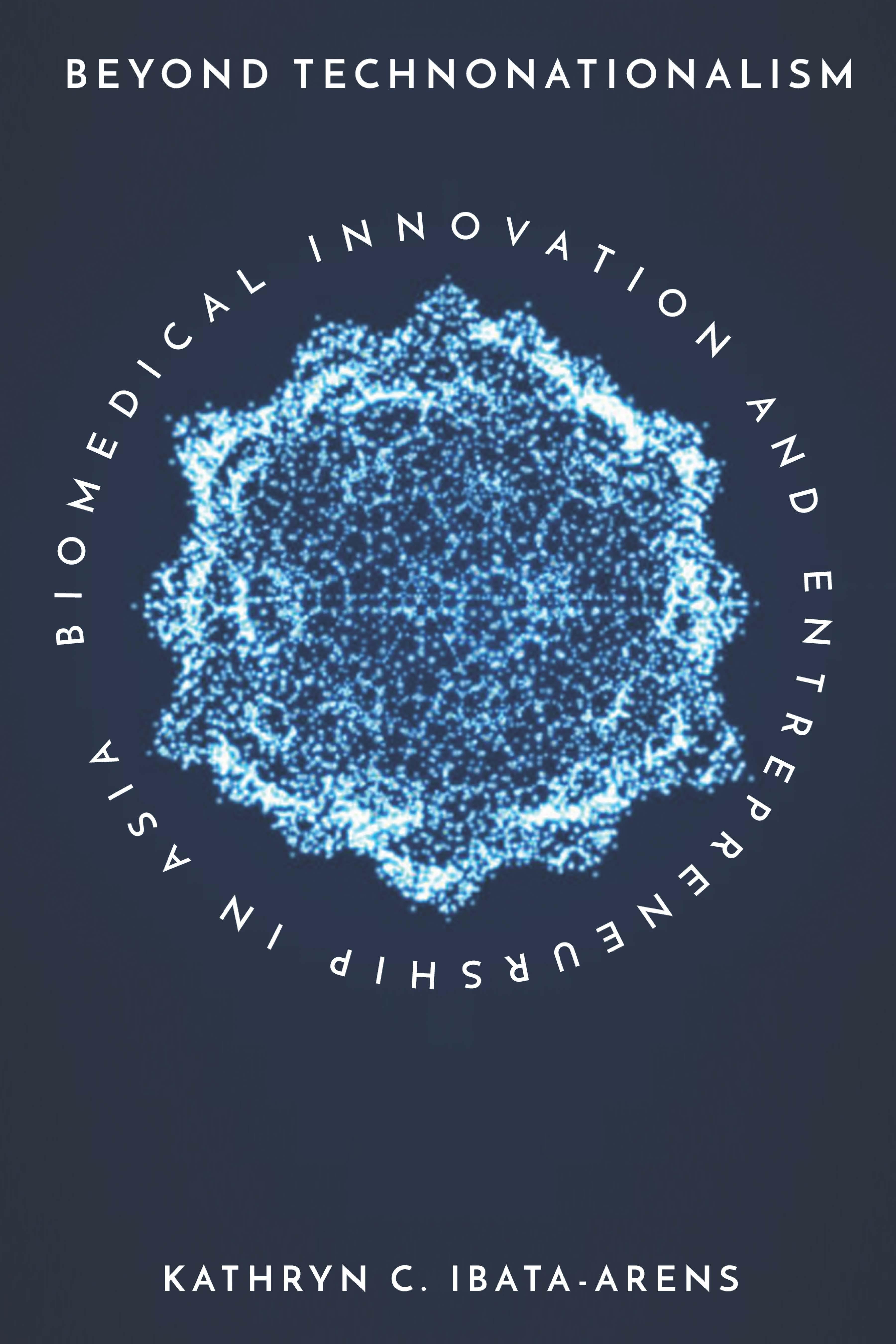
The biomedical industry, which includes biopharmaceuticals, genomics and stem cell therapies, and medical devices, is among the fastest growing worldwide. While it has been an economic development target of many national governments, Asia is currently on track to reach the epicenter of this growth. What accounts for the rapid and sustained economic growth of biomedicals in Asia?
To answer this question, Kathryn Ibata-Arens integrates global and national data with original fieldwork to present a conceptual framework that considers how national governments have managed key factors, like innovative capacity, government policy, and firm-level strategies. Taking China, India, Japan, and Singapore in turn, she compares each country's underlying competitive advantages. What emerges is an argument that countries pursuing networked technonationalism (NTN) effectively upgrade their capacity for innovation and encourage entrepreneurial activity in targeted industries. In contrast to countries that engage in classic technonationalism—like Japan's developmental state approach—networked technonationalists are global minded to outside markets, while remaining nationalistic within the domestic economy.
By bringing together aggregate data at the global and national level with original fieldwork and drawing on rich cases, Ibata-Arens telegraphs implications for innovation policy and entrepreneurship strategy in Asia—and beyond.
Betal nemt med kort, Klarna, Apple Pay eller Google Pay. Ikke tilfreds? Du har altid 14 dages fortrydelsesret. Læs mere i vores vilkår. Har du spørgsmål, så send os en mail på hello@memmo.org.
Memmo gør det nemmere at studere – uanset hvor du er i verden. Hos os samler du dine kursusbøger og smarte studieværktøjer ét sted: resuméer, quizzer, podcasts og flashcards. Og så er der Ted, din studieven, der svarer på alt, du undrer dig over. Over 50 000 studerende studerer allerede her – bygget til at hjælpe dig med at lære hurtigere og stresse mindre.