
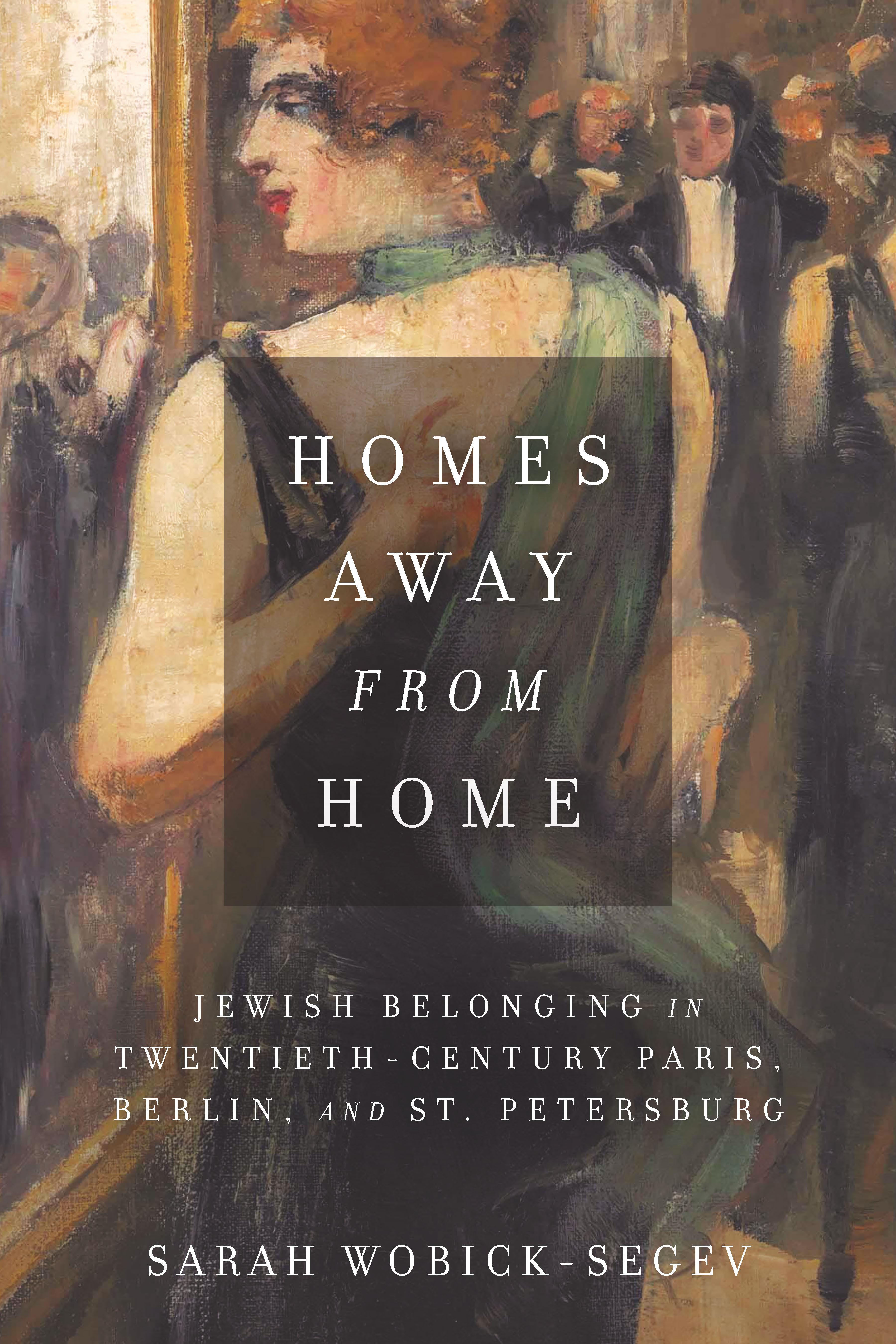
How did Jews go from lives organized by synagogues, shul, and mikvehs to lives that—if explicitly Jewish at all—were conducted in Hillel houses, JCCs, Katz's, and even Chabad? In pre-emancipation Europe, most Jews followed Jewish law most of the time, but by the turn of the twentieth century, a new secular Jewish identity had begun to take shape.
Homes Away From Home tells the story of Ashkenazi Jews as they made their way in European society in the late nineteenth and twentieth centuries, focusing on the Jewish communities of Paris, Berlin, and St. Petersburg. At a time of growing political enfranchisement for Jews within European nations, membership in the official Jewish community became increasingly optional, and Jews in turn created spaces and programs to meet new social needs. The contexts of Jewish life expanded beyond the confines of "traditional" Jewish spaces into sites of consumption and leisure, sometimes to the consternation of Jewish authorities. Sarah Wobick-Segev argues that the social practices that developed between 1890 and the 1930s—such as celebrating holydays at hotels and restaurants, or sending children to summer camp—fundamentally reshaped Jewish community, redefining and extending the boundaries of where Jewishness happened.
Betal nemt med kort, Klarna, Apple Pay eller Google Pay. Ikke tilfreds? Du har altid 14 dages fortrydelsesret. Læs mere i vores vilkår. Har du spørgsmål, så send os en mail på hello@memmo.org.
Memmo gør det nemmere at studere – uanset hvor du er i verden. Hos os samler du dine kursusbøger og smarte studieværktøjer ét sted: resuméer, quizzer, podcasts og flashcards. Og så er der Ted, din studieven, der svarer på alt, du undrer dig over. Over 50 000 studerende studerer allerede her – bygget til at hjælpe dig med at lære hurtigere og stresse mindre.