
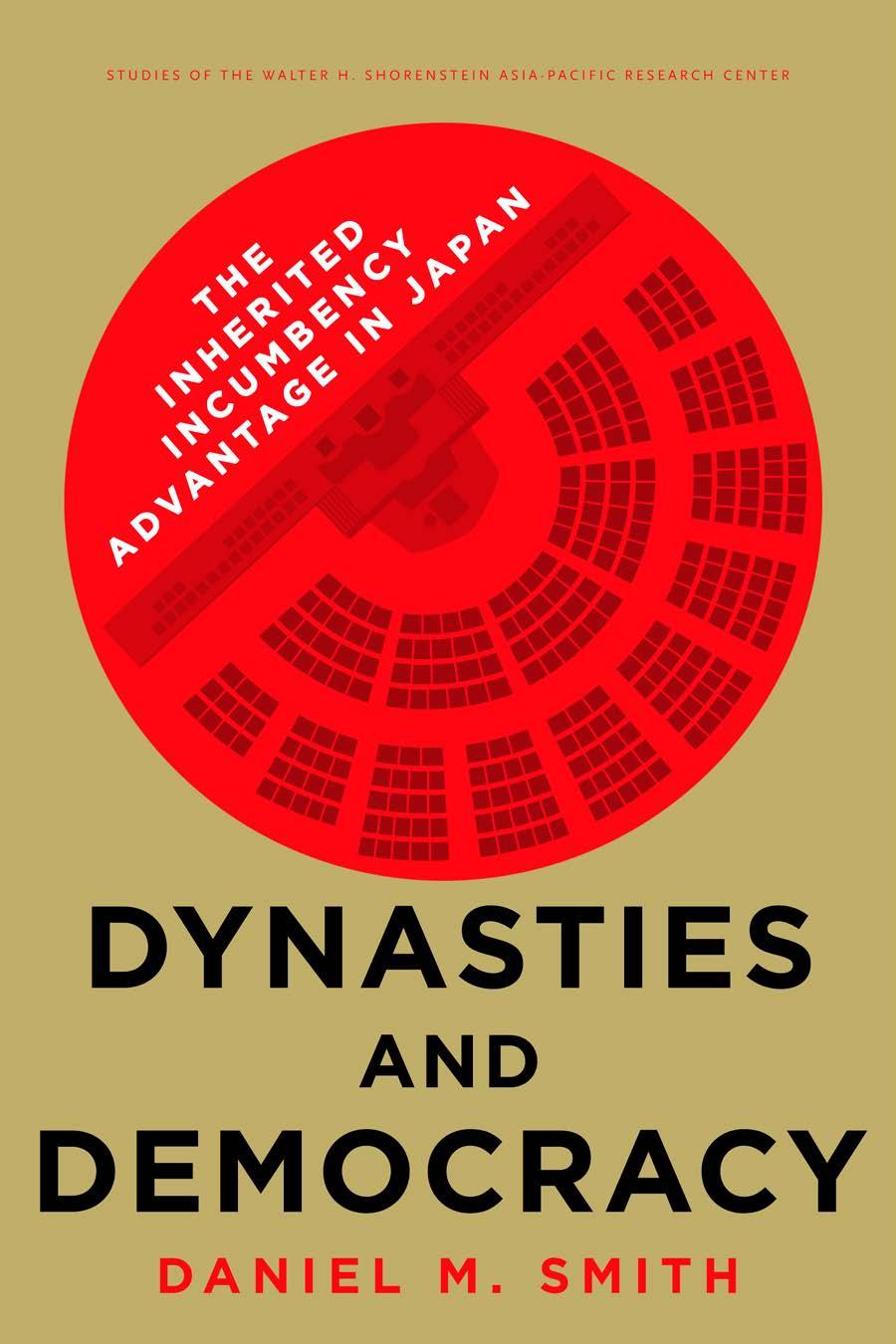
Although democracy is, in principle, the antithesis of dynastic rule, families with multiple members in elective office continue to be common around the world. In most democracies, the proportion of such "democratic dynasties" declines over time, and rarely exceeds ten percent of all legislators. Japan is a startling exception, with over a quarter of all legislators in recent years being dynastic. In Dynasties and Democracy, Daniel M. Smith sets out to explain when and why dynasties persist in democracies, and why their numbers are only now beginning to wane in Japan—questions that have long perplexed regional experts.
Smith introduces a compelling comparative theory to explain variation in the presence of dynasties across democracies and political parties. Drawing on extensive legislator-level data from twelve democracies and detailed candidate-level data from Japan, he examines the inherited advantage that members of dynasties reap throughout their political careers—from candidate selection, to election, to promotion into cabinet. Smith shows how the nature and extent of this advantage, as well as its consequences for representation, vary significantly with the institutional context of electoral rules and features of party organization. His findings extend far beyond Japan, shedding light on the causes and consequences of dynastic politics for democracies around the world.
Betal nemt med kort, Klarna, Apple Pay eller Google Pay. Ikke tilfreds? Du har altid 14 dages fortrydelsesret. Læs mere i vores vilkår. Har du spørgsmål, så send os en mail på hello@memmo.org.
Memmo gør det nemmere at studere – uanset hvor du er i verden. Hos os samler du dine kursusbøger og smarte studieværktøjer ét sted: resuméer, quizzer, podcasts og flashcards. Og så er der Ted, din studieven, der svarer på alt, du undrer dig over. Over 50 000 studerende studerer allerede her – bygget til at hjælpe dig med at lære hurtigere og stresse mindre.