
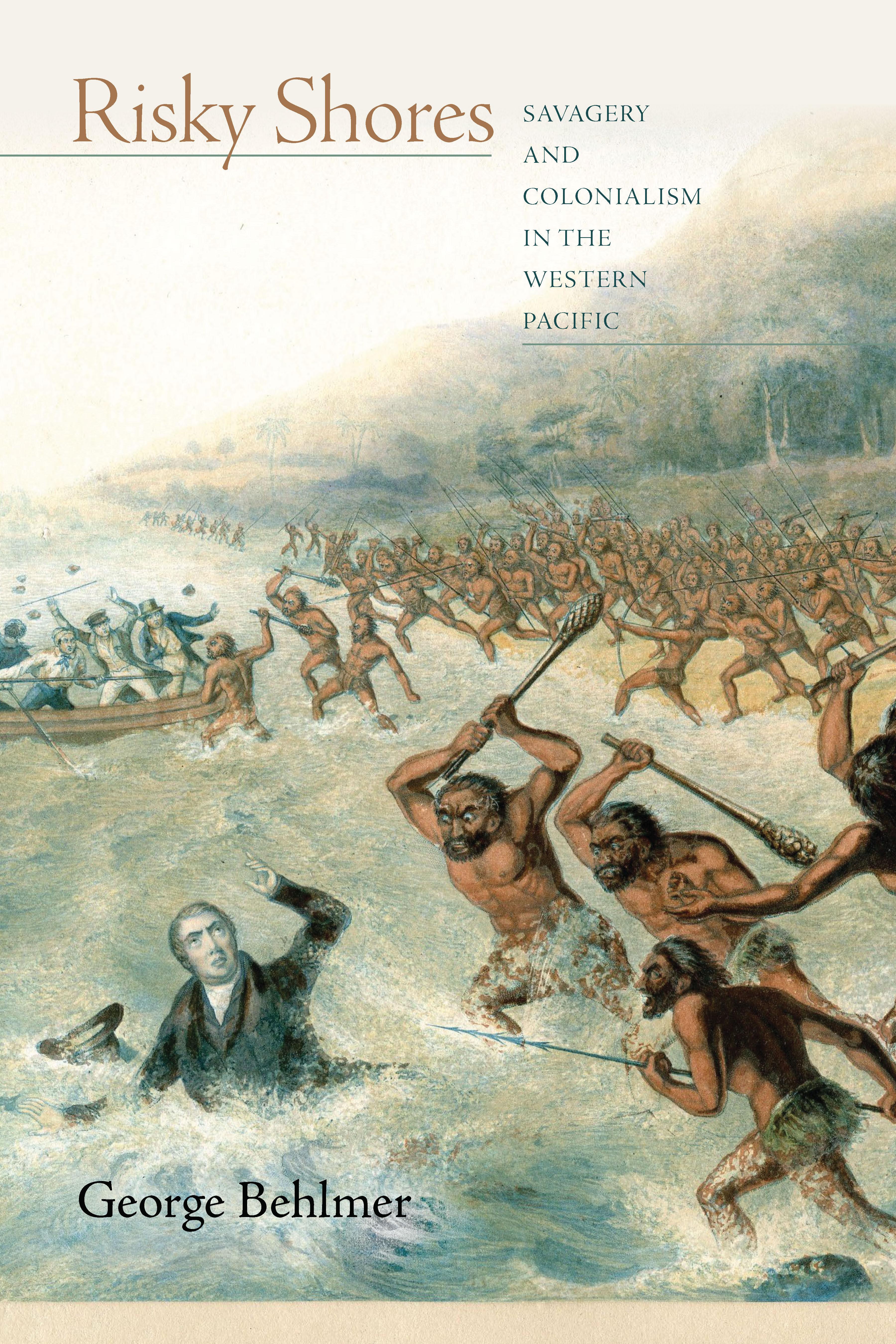
Why did the so-called "Cannibal Isles" of the Western Pacific fascinate Europeans for so long? Spanning three centuries—from Captain James Cook's death on a Hawaiian beach in 1779 to the end of World War II in 1945—this book considers the category of "the savage" in the context of British Empire in the Western Pacific, reassessing the conduct of Islanders and the English-speaking strangers who encountered them. Sensationalized depictions of Melanesian "savages" as cannibals and headhunters created a unifying sense of Britishness during the nineteenth and early twentieth centuries. These exotic people inhabited the edges of empire—and precisely because they did, Britons who never had and never would leave the home islands could imagine their nation's imperial reach.
George Behlmer argues that Britain's early visitors to the Pacific—mainly cartographers and missionaries—wielded the notion of savagery to justify their own interests. But savage talk was not simply a way to objectify and marginalize native populations: it would later serve also to emphasize the fragility of indigenous cultures. Behlmer by turns considers cannibalism, headhunting, missionary activity, the labor trade, and Westerners' preoccupation with the perceived "primitiveness" of indigenous cultures, arguing that British representations of savagery were not merely straightforward expressions of colonial power, but also belied home-grown fears of social disorder.
Betal nemt med kort, Klarna, Apple Pay eller Google Pay. Ikke tilfreds? Du har altid 14 dages fortrydelsesret. Læs mere i vores vilkår. Har du spørgsmål, så send os en mail på hello@memmo.org.
Memmo gør det nemmere at studere – uanset hvor du er i verden. Hos os samler du dine kursusbøger og smarte studieværktøjer ét sted: resuméer, quizzer, podcasts og flashcards. Og så er der Ted, din studieven, der svarer på alt, du undrer dig over. Over 50 000 studerende studerer allerede her – bygget til at hjælpe dig med at lære hurtigere og stresse mindre.