
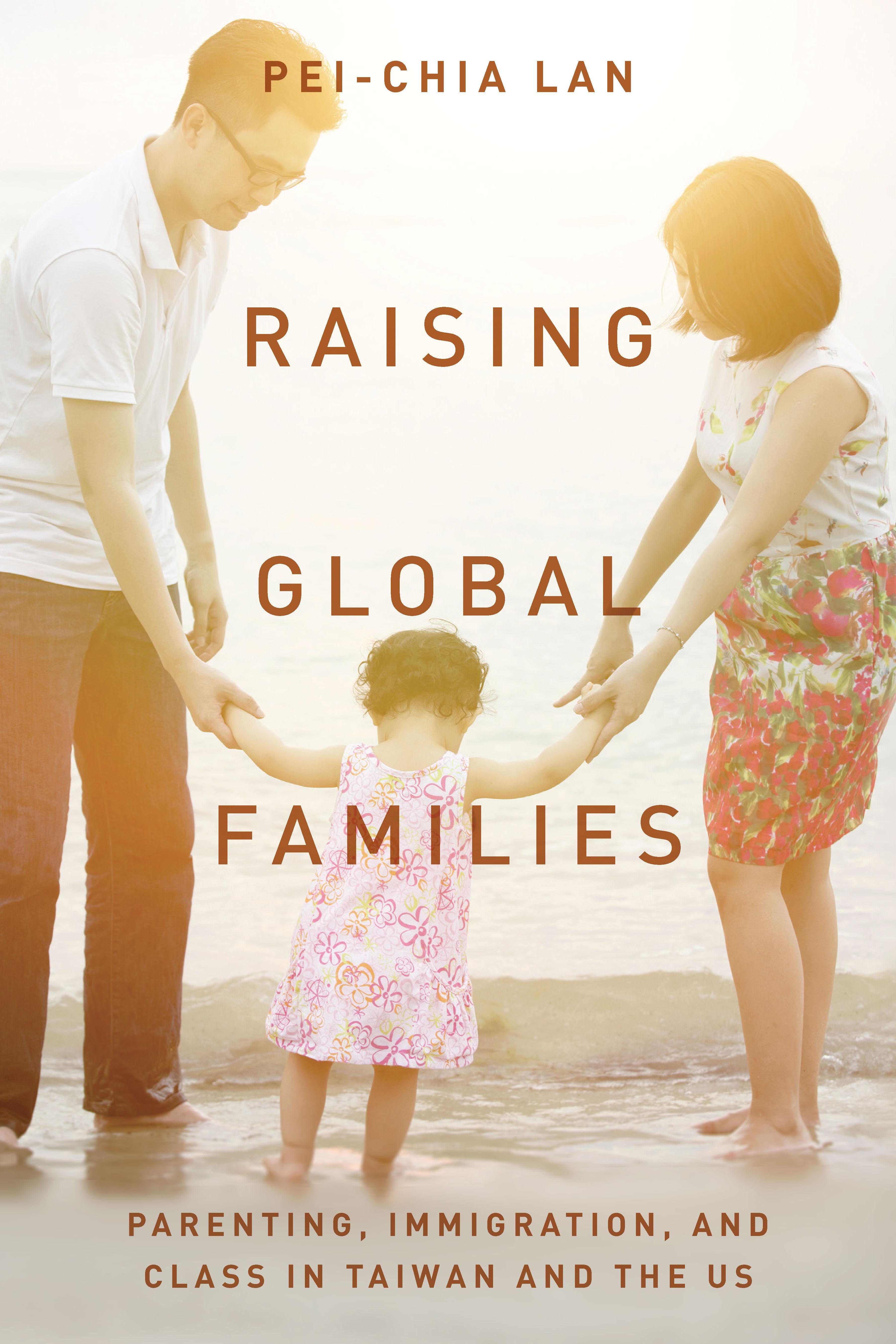
Public discourse on Asian parenting tends to fixate on ethnic culture as a static value set, disguising the fluidity and diversity of Chinese parenting. Such stereotypes also fail to account for the challenges of raising children in a rapidly modernizing world, full of globalizing values. In Raising Global Families, Pei-Chia Lan examines how ethnic Chinese parents in Taiwan and the United States negotiate cultural differences and class inequality to raise children in the contexts of globalization and immigration. She draws on a uniquely comparative, multisited research model with four groups of parents: middle-class and working-class parents in Taiwan, and middle-class and working-class Chinese immigrants in the Boston area. Despite sharing a similar ethnic cultural background, these parents develop class-specific, context-sensitive strategies for arranging their children's education, care, and discipline, and for coping with uncertainties provoked by their changing surroundings. Lan's cross-Pacific comparison demonstrates that class inequality permeates the fabric of family life, even as it takes shape in different ways across national contexts.
Betal nemt med kort, Klarna, Apple Pay eller Google Pay. Ikke tilfreds? Du har altid 14 dages fortrydelsesret. Læs mere i vores vilkår. Har du spørgsmål, så send os en mail på hello@memmo.org.
Memmo gør det nemmere at studere – uanset hvor du er i verden. Hos os samler du dine kursusbøger og smarte studieværktøjer ét sted: resuméer, quizzer, podcasts og flashcards. Og så er der Ted, din studieven, der svarer på alt, du undrer dig over. Over 50 000 studerende studerer allerede her – bygget til at hjælpe dig med at lære hurtigere og stresse mindre.