
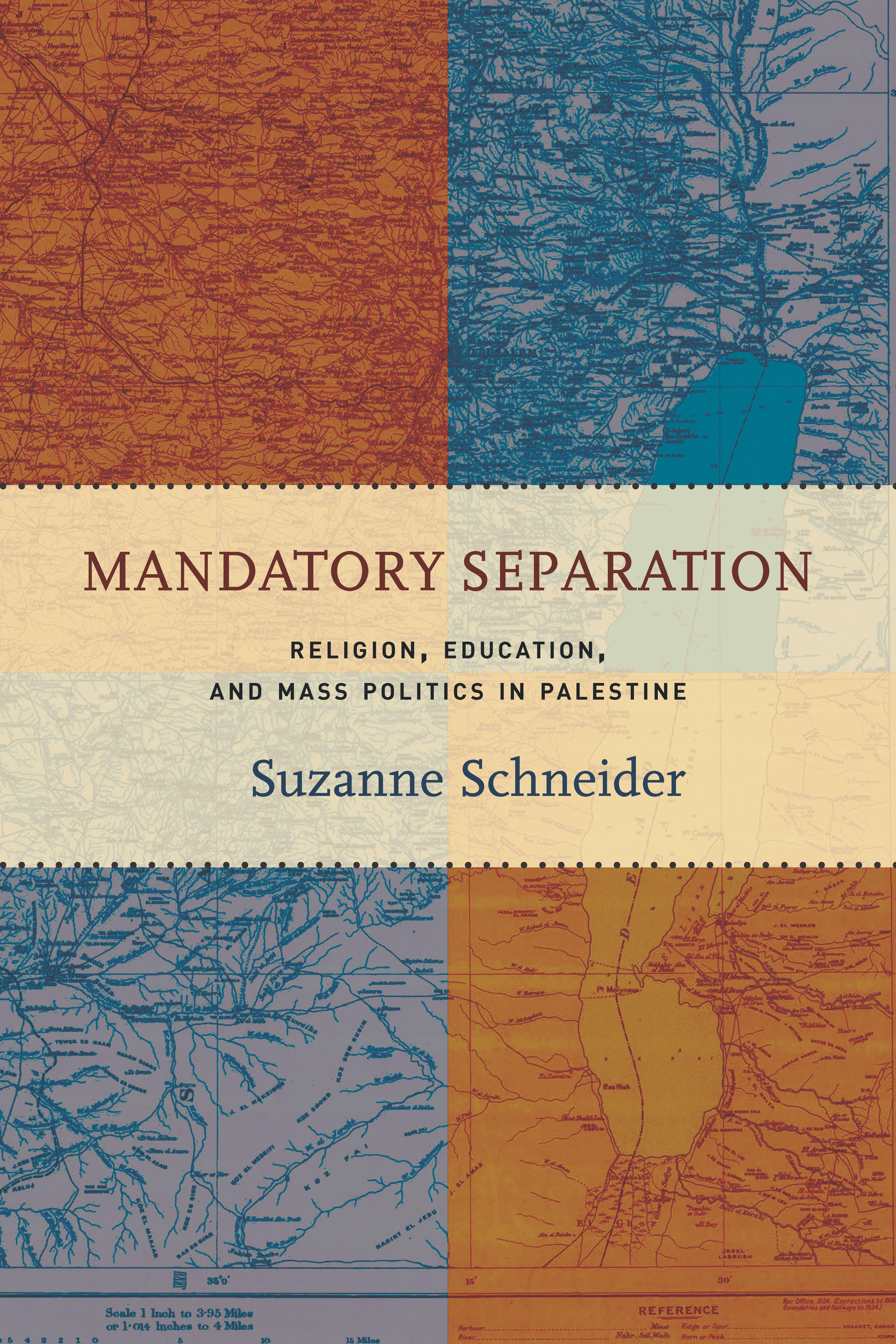
Is religion a source of political stability and social continuity, or an agent of radical change? This question, so central to contemporary conversations about religion and extremism, has generated varied responses over the last century. Taking Jewish and Islamic education as its objects of inquiry, Mandatory Separation sheds light on the contours of this debate in Palestine during the formative period of British rule, detailing how colonial, Zionist, and Palestinian-Muslim leaders developed competing views of the form and function of religious education in an age of mass politics.
Drawing from archival records, school syllabi, textbooks, newspapers, and personal narratives, Suzanne Schneider argues that the British Mandatory government supported religious education as a supposed antidote to nationalist passions at the precise moment when the administrative, pedagogic, and curricular transformation of religious schooling rendered it a vital tool for Zionist and Palestinian leaders. This study of their policies and practices illuminates the tensions, similarities, and differences among these diverse educational and political philosophies, revealing the lasting significance of these debates for thinking about religion and political identity in the modern Middle East.
Betal nemt med kort, Klarna, Apple Pay eller Google Pay. Ikke tilfreds? Du har altid 14 dages fortrydelsesret. Læs mere i vores vilkår. Har du spørgsmål, så send os en mail på hello@memmo.org.
Memmo gør det nemmere at studere – uanset hvor du er i verden. Hos os samler du dine kursusbøger og smarte studieværktøjer ét sted: resuméer, quizzer, podcasts og flashcards. Og så er der Ted, din studieven, der svarer på alt, du undrer dig over. Over 50 000 studerende studerer allerede her – bygget til at hjælpe dig med at lære hurtigere og stresse mindre.