
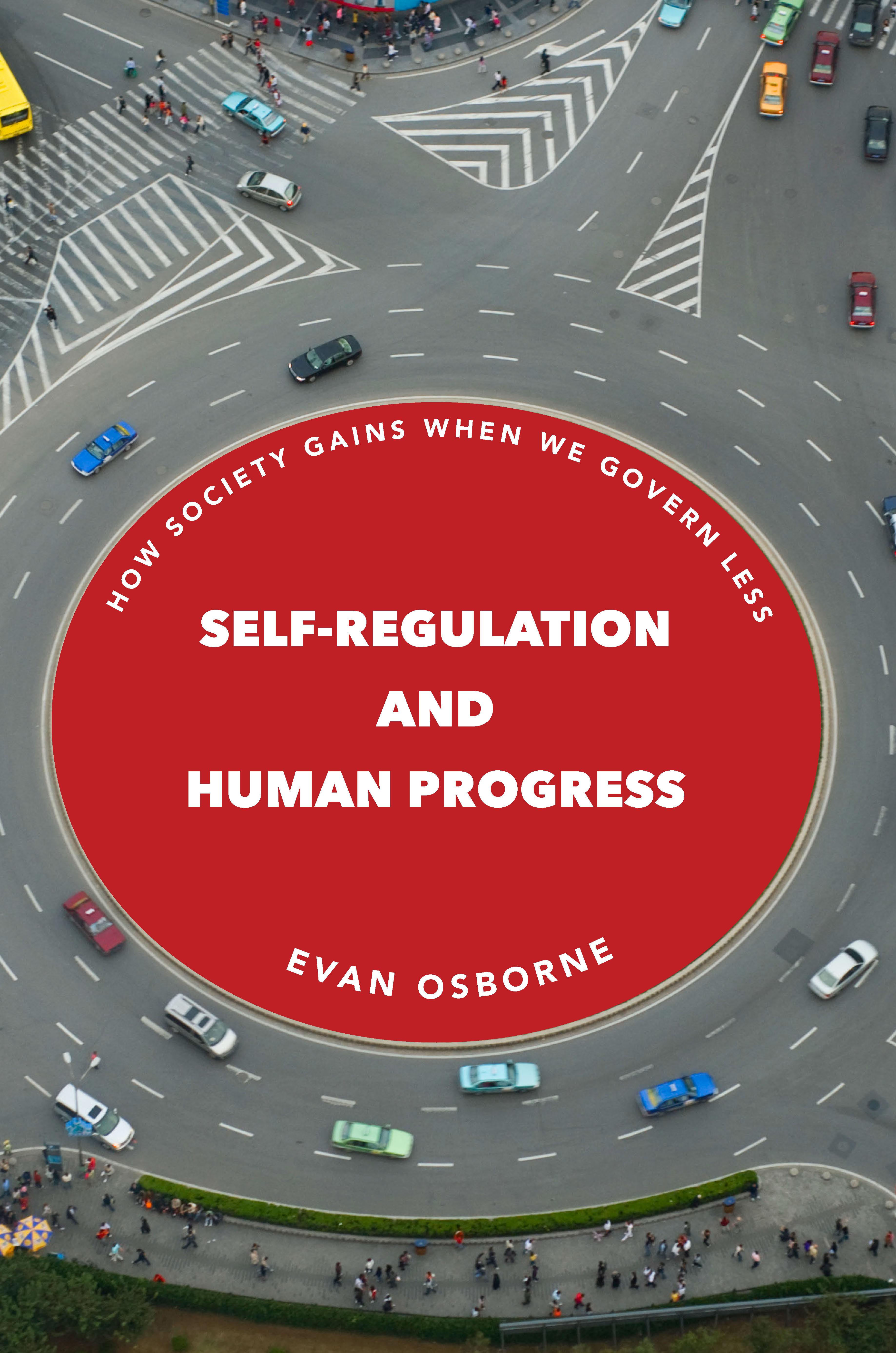
Most of us are familiar with free-market competition: the idea that society and the economy benefit when people are left to self-regulate, testing new ideas in pursuit of profit. Less known is the fact that this theory arose after arguments for the scientific method and freedom of speech had gone mainstream—and that all three share a common basis.
Proponents of self-regulation in the realm of free speech have argued that unhindered public expression causes true ideas to gain strength through scrutiny. Similarly, scientific inquiry has been regarded as a self-correcting system, one in which competing hypotheses are verified by multiple independent researchers. It was long thought that society was better left to organize itself through free markets as opposed to political institutions. But, over the twentieth century, we became less confident in the notion of a self-regulating socioeconomy. Evan Osborne traces the rise and fall of this once-popular concept. He argues that—as society becomes more complex—self-regulation becomes more efficient and can once again serve our economy well.
Betal nemt med kort, Klarna, Apple Pay eller Google Pay. Ikke tilfreds? Du har altid 14 dages fortrydelsesret. Læs mere i vores vilkår. Har du spørgsmål, så send os en mail på hello@memmo.org.
Memmo gør det nemmere at studere – uanset hvor du er i verden. Hos os samler du dine kursusbøger og smarte studieværktøjer ét sted: resuméer, quizzer, podcasts og flashcards. Og så er der Ted, din studieven, der svarer på alt, du undrer dig over. Over 50 000 studerende studerer allerede her – bygget til at hjælpe dig med at lære hurtigere og stresse mindre.