
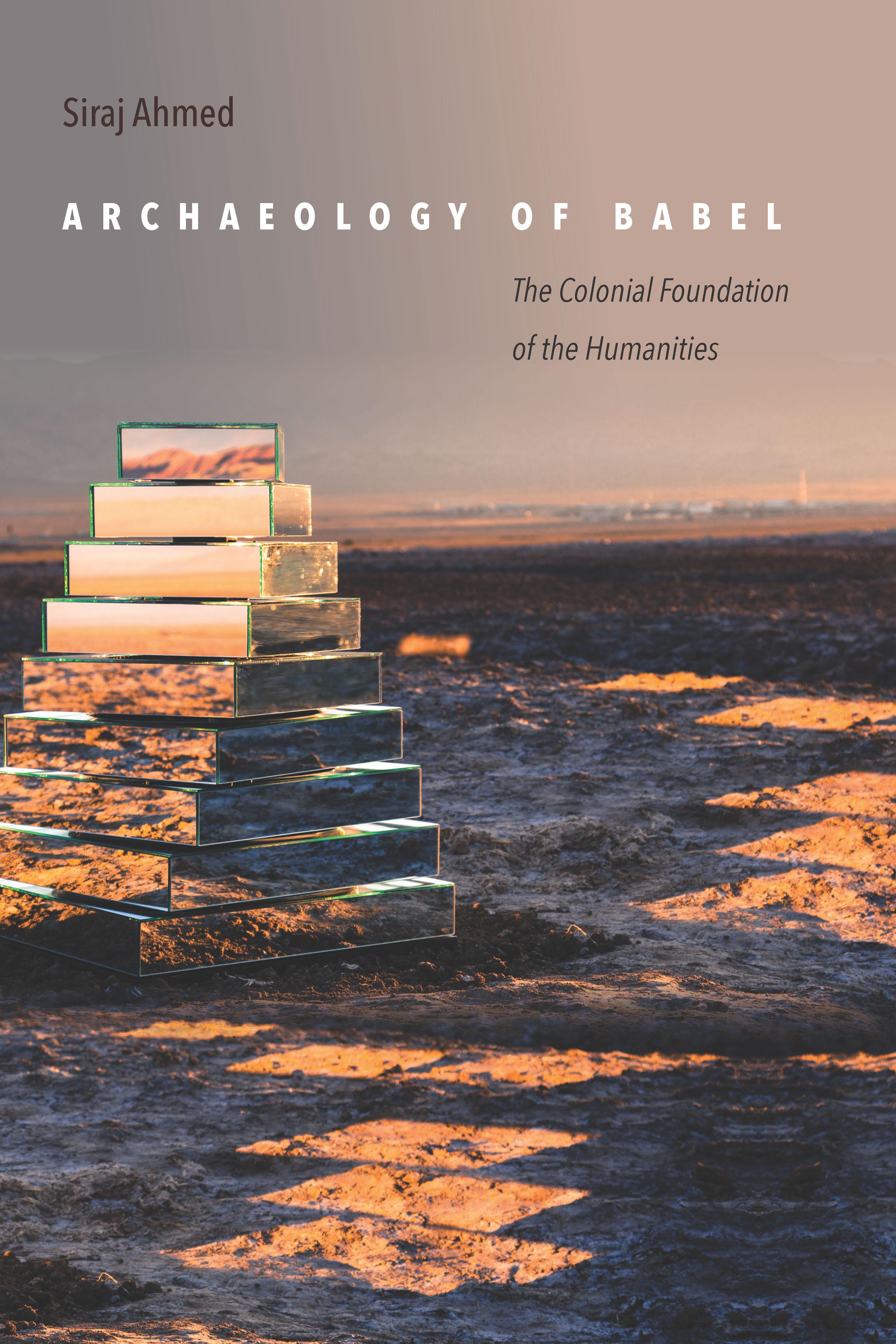
For more than three decades, preeminent scholars in comparative literature and postcolonial studies have called for a return to philology as the indispensable basis of critical method in the humanities. Against such calls, this book argues that the privilege philology has always enjoyed within the modern humanities silently reinforces a colonial hierarchy. In fact, each of philology's foundational innovations originally served British rule in India.
Tracing an unacknowledged history that extends from British Orientalist Sir William Jones to Palestinian American intellectual Edward Said and beyond, Archaeology of Babel excavates the epistemic transformation that was engendered on a global scale by the colonial reconstruction of native languages, literatures, and law. In the process, it reveals the extent to which even postcolonial studies and European philosophy—not to mention discourses as disparate as Islamic fundamentalism, Hindu nationalism, and global environmentalism—are the progeny of colonial rule. Going further, it unearths the alternate concepts of language and literature that were lost along the way and issues its own call for humanists to reckon with the politics of the philological practices to which they now return.
Betal nemt med kort, Klarna, Apple Pay eller Google Pay. Ikke tilfreds? Du har altid 14 dages fortrydelsesret. Læs mere i vores vilkår. Har du spørgsmål, så send os en mail på hello@memmo.org.
Memmo gør det nemmere at studere – uanset hvor du er i verden. Hos os samler du dine kursusbøger og smarte studieværktøjer ét sted: resuméer, quizzer, podcasts og flashcards. Og så er der Ted, din studieven, der svarer på alt, du undrer dig over. Over 50 000 studerende studerer allerede her – bygget til at hjælpe dig med at lære hurtigere og stresse mindre.