
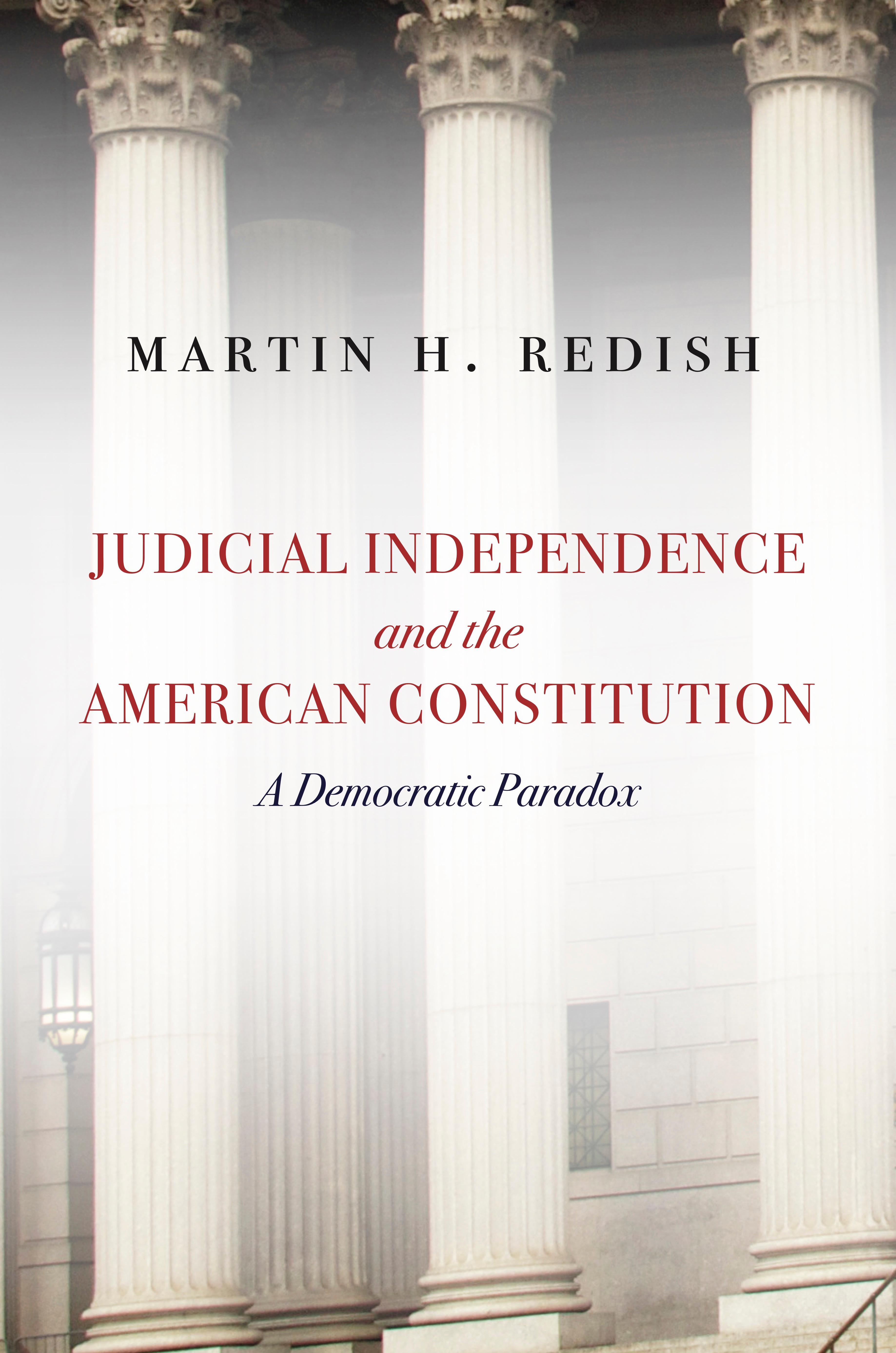
The Framers of the American Constitution took special pains to ensure that the governing principles of the republic were insulated from the reach of simple majorities. Only super-majoritarian amendments could modify these fundamental constitutional dictates. The Framers established a judicial branch shielded from direct majoritarian political accountability to protect and enforce these constitutional limits. Paradoxically, only a counter-majoritarian judicial branch could ensure the continued vitality of our representational form of government.
This important lesson of the paradox of American democracy has been challenged and often ignored by office holders and legal scholars. Judicial Independence and the American Constitution provocatively defends the centrality of these special protections of judicial independence. Martin H. Redish explains how the nation's system of counter-majoritarian constitutionalism cannot survive absent the vesting of final powers of constitutional interpretation and enforcement in the one branch of government expressly protected by the Constitution from direct political accountability: the judicial branch. He uncovers how the current framework of American constitutional law has been unwisely allowed to threaten or undermine these core precepts of judicial independence.
Betal nemt med kort, Klarna, Apple Pay eller Google Pay. Ikke tilfreds? Du har altid 14 dages fortrydelsesret. Læs mere i vores vilkår. Har du spørgsmål, så send os en mail på hello@memmo.org.
Memmo gør det nemmere at studere – uanset hvor du er i verden. Hos os samler du dine kursusbøger og smarte studieværktøjer ét sted: resuméer, quizzer, podcasts og flashcards. Og så er der Ted, din studieven, der svarer på alt, du undrer dig over. Over 50 000 studerende studerer allerede her – bygget til at hjælpe dig med at lære hurtigere og stresse mindre.