
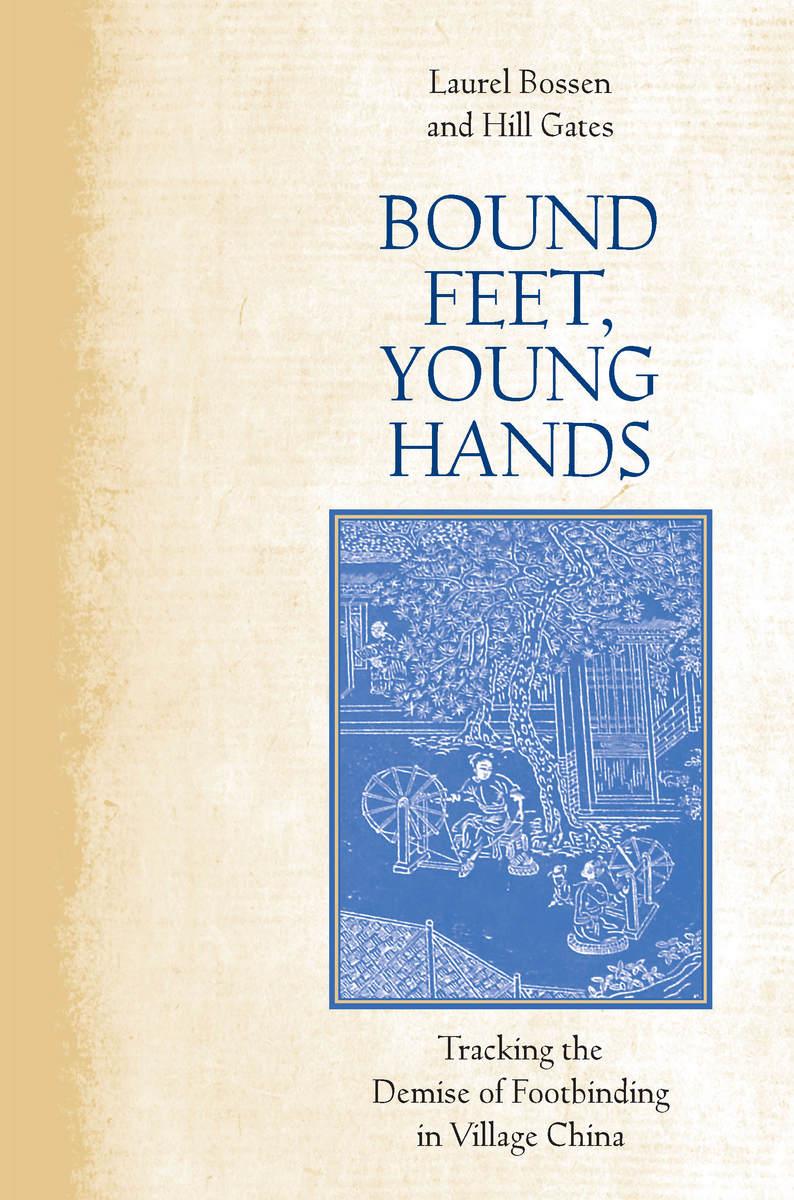
Footbinding was common in China until the early twentieth century, when most Chinese were family farmers. Why did these families bind young girls' feet? And why did footbinding stop? In this groundbreaking work, Laurel Bossen and Hill Gates upend the popular view of footbinding as a status, or even sexual, symbol by showing that it was an undeniably effective way to get even very young girls to sit still and work with their hands.
Interviews with 1,800 elderly women, many with bound feet, reveal the reality of girls' hand labor across the North China Plain, Northwest China, and Southwest China. As binding reshaped their feet, mothers disciplined girls to spin, weave, and do other handwork because many village families depended on selling such goods. When factories eliminated the economic value of handwork, footbinding died out. As the last generation of footbound women passes away, Bound Feet, Young Hands presents a data-driven examination of the social and economic aspects of this misunderstood custom.
Betal nemt med kort, Klarna, Apple Pay eller Google Pay. Ikke tilfreds? Du har altid 14 dages fortrydelsesret. Læs mere i vores vilkår. Har du spørgsmål, så send os en mail på hello@memmo.org.
Memmo gør det nemmere at studere – uanset hvor du er i verden. Hos os samler du dine kursusbøger og smarte studieværktøjer ét sted: resuméer, quizzer, podcasts og flashcards. Og så er der Ted, din studieven, der svarer på alt, du undrer dig over. Over 50 000 studerende studerer allerede her – bygget til at hjælpe dig med at lære hurtigere og stresse mindre.