
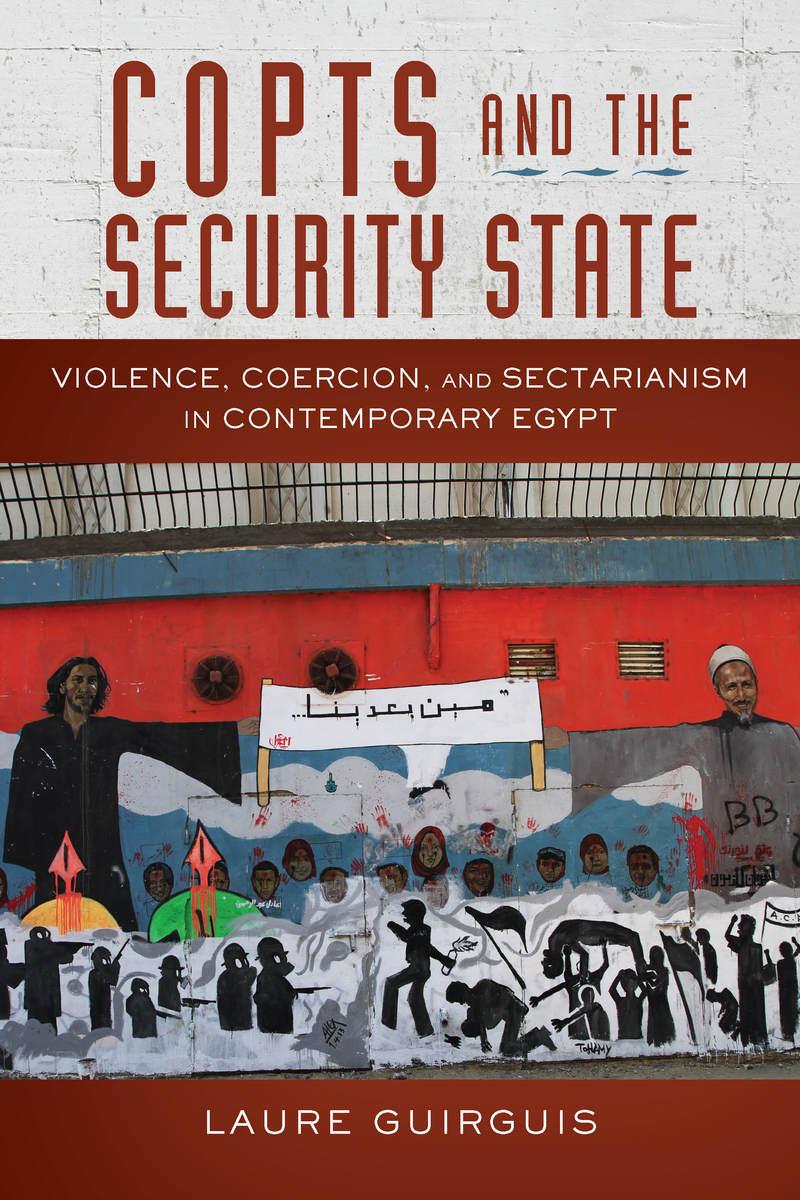
Copts and the Security State combines political, anthropological, and social history to analyze the practices of the Egyptian state and the political acts of the Egyptian Coptic minority. Laure Guirguis considers how the state, through its subjugation of Coptic citizens, reproduces a political order based on religious identity and difference. The leadership of the Coptic Church, in turn, has taken more political stances, thus foreclosing opportunities for secularization or common ground. In each instance, the underlying logics of authoritarianism and sectarianism articulate a fear of the Other, and, as Guirguis argues, are ultimately put to use to justify the expanding Egyptian security state.
In outlining the development of the security state, Guirguis focuses on state discourses and practices, with particular emphasis on the period of Hosni Mubarak's rule, and shows the transformation of the Orthodox Coptic Church under the leadership of Pope Chenouda III. She also considers what could be done to counter the growing tensions and violence in Egypt. The 2011 Egyptian uprising constitutes the most radical recent attempt to subvert the predominant order. Still, the revolutionary discourses and practices have not yet brought forward a new system to counter the sectarian rhetoric, and the ongoing counter-revolution continues to repress political dissent.
Betal nemt med kort, Klarna, Apple Pay eller Google Pay. Ikke tilfreds? Du har altid 14 dages fortrydelsesret. Læs mere i vores vilkår. Har du spørgsmål, så send os en mail på hello@memmo.org.
Memmo gør det nemmere at studere – uanset hvor du er i verden. Hos os samler du dine kursusbøger og smarte studieværktøjer ét sted: resuméer, quizzer, podcasts og flashcards. Og så er der Ted, din studieven, der svarer på alt, du undrer dig over. Over 50 000 studerende studerer allerede her – bygget til at hjælpe dig med at lære hurtigere og stresse mindre.