
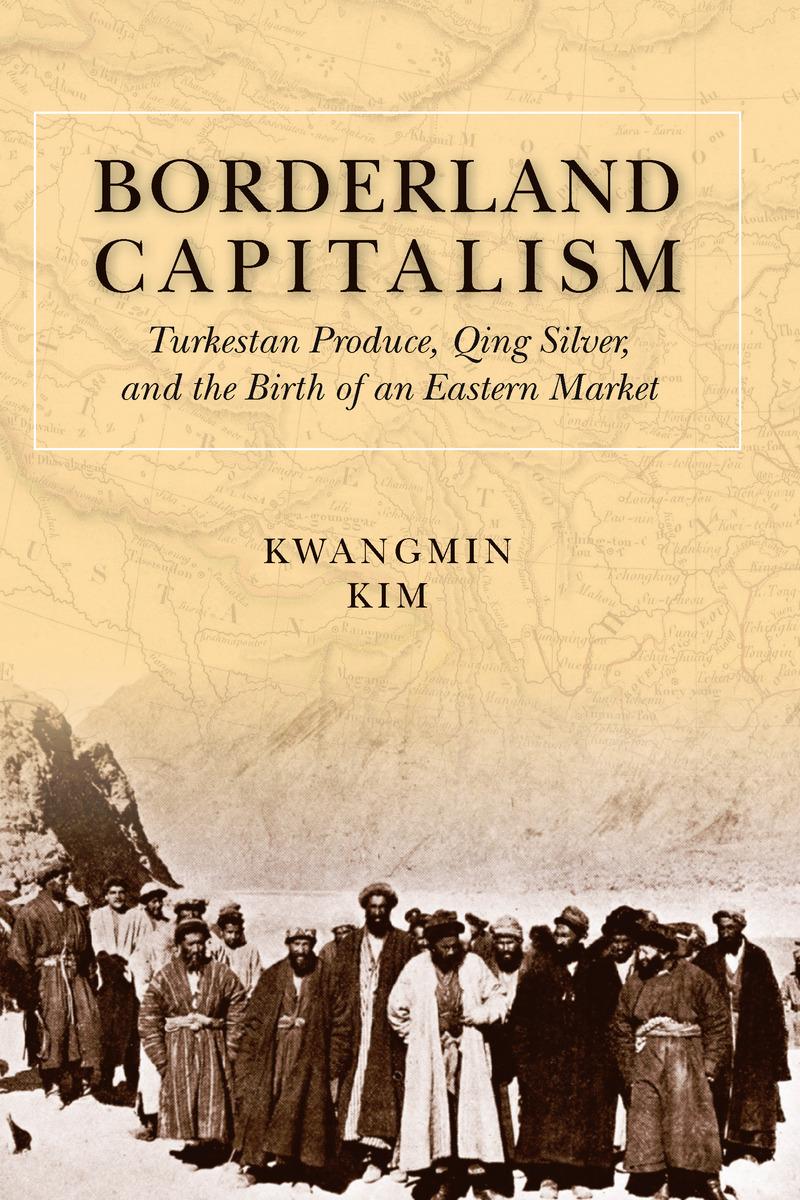
Scholars have long been puzzled by why Muslim landowners in Central Asia, called begs, stayed loyal to the Qing empire when its political legitimacy and military power were routinely challenged. Borderland Capitalism argues that converging interests held them together: the local Qing administration needed the Turkic begs to develop resources and raise military revenue while the begs needed access to the Chinese market.
Drawing upon multilingual sources and archival material, Kwangmin Kim shows how the begs aligned themselves with the Qing to strengthen their own plantation-like economic system. As controllers of food supplies, commercial goods, and human resources, the begs had the political power to dictate the fortunes of governments in the region. Their political choice to cooperate with the Qing promoted an expansion of the Qing's emerging international trade at the same time that Europe was developing global capitalism and imperialism. Borderland Capitalism shows the Qing empire as a quintessentially early modern empire and points the way toward a new understanding of the rise of a global economy.
Betal nemt med kort, Klarna, Apple Pay eller Google Pay. Ikke tilfreds? Du har altid 14 dages fortrydelsesret. Læs mere i vores vilkår. Har du spørgsmål, så send os en mail på hello@memmo.org.
Memmo gør det nemmere at studere – uanset hvor du er i verden. Hos os samler du dine kursusbøger og smarte studieværktøjer ét sted: resuméer, quizzer, podcasts og flashcards. Og så er der Ted, din studieven, der svarer på alt, du undrer dig over. Over 50 000 studerende studerer allerede her – bygget til at hjælpe dig med at lære hurtigere og stresse mindre.