
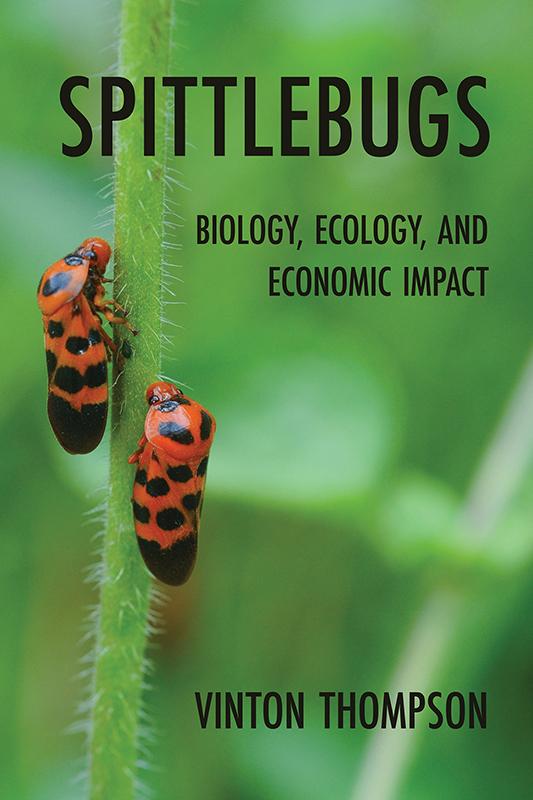
Spittlebugs is a comprehensive introduction to an economically important but relatively little-known group of insects of the superfamily Cercopoidea. Spittlebugs are found across all continents except Antarctica. Although harmless to a majority of their host plants, several species have become significant pests of sugarcane and pasture grasses in Latin America, and others carry a disease deadly to olive trees in Italy, leading to increasing interest in understanding these fascinating organisms and their unique biological and ecological traits.
There are approximately 2,500 known species of spittlebugs, so named for the protective "spittles" made by spittlebug nymphs. Living on leaves, stems, or roots, these immature insects suck and excrete plant sap that they then fill with tiny bubbles to create a foamy goo. Nymphs and adults excrete hundreds of times their body weight of spittle each day, but this isn't their only talent. They're incredible jumpers relative to their size, and some species excrete a smelly liquid when attacked. They also exhibit aposematism, or warning coloration—a trait generously illustrated in a sixteen-page color gallery.
With its rich mix of detailed biology and natural history, Spittlebugs is a valuable resource for anyone looking to know more about these unique bugs and their widespread influences.
Betal nemt med kort, Klarna, Apple Pay eller Google Pay. Ikke tilfreds? Du har altid 14 dages fortrydelsesret. Læs mere i vores vilkår. Har du spørgsmål, så send os en mail på hello@memmo.org.
Memmo gør det nemmere at studere – uanset hvor du er i verden. Hos os samler du dine kursusbøger og smarte studieværktøjer ét sted: resuméer, quizzer, podcasts og flashcards. Og så er der Ted, din studieven, der svarer på alt, du undrer dig over. Over 50 000 studerende studerer allerede her – bygget til at hjælpe dig med at lære hurtigere og stresse mindre.