
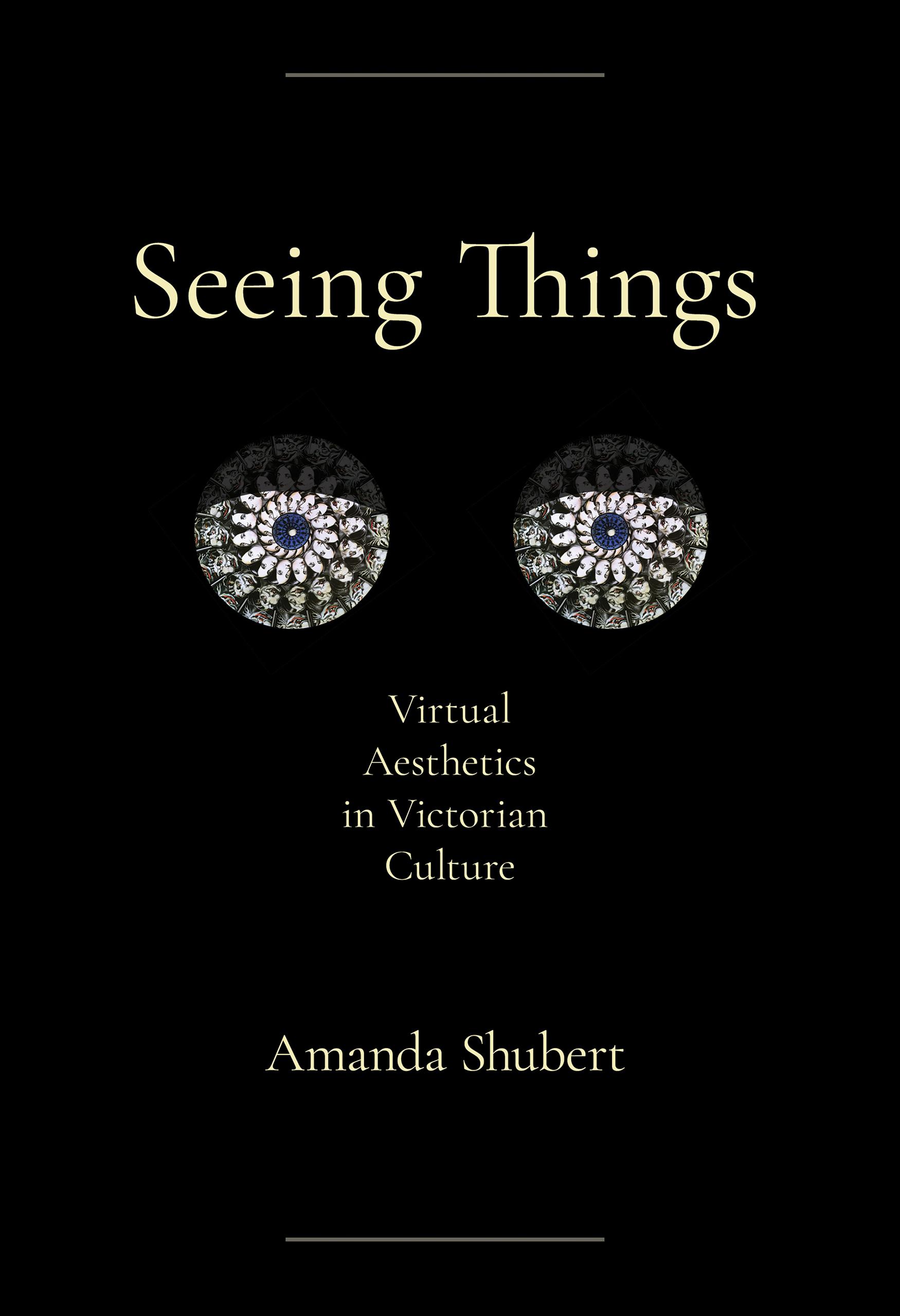
A cultural history of nineteenth-century media imaginaries, Seeing Things tells the story of how Victorians experienced the virtual images created by modern optical technologies—magic lanterns, stereoscopes, phenakistoscopes, museum displays, and illusionistic stage magic. Amanda Shubert argues that interactions with these devices gave rise to a new virtual aesthetics—an understanding of visual and perceptual encounters with things that are not really there.
The popularization of Victorian optical media redefined virtuality as a rational mode of spectatorship that taught audiences to distinguish illusion from reality. As an aesthetic expression of a civilizational ideal that defined the capacity to see but not believe, to be entertained without being deceived, it became a sign of western supremacy. By tracing the development of virtual aesthetics through nineteenth-century writings, from the novels of George Eliot and Charles Dickens to popular science writing and imperial travelogues, Seeing Things recovers a formative period of technological and literary innovation to explain how optical media not only anticipated cinema but became a paradigmatic media aesthetic of western modernity.
Betal nemt med kort, Klarna, Apple Pay eller Google Pay. Ikke tilfreds? Du har altid 14 dages fortrydelsesret. Læs mere i vores vilkår. Har du spørgsmål, så send os en mail på hello@memmo.org.
Memmo gør det nemmere at studere – uanset hvor du er i verden. Hos os samler du dine kursusbøger og smarte studieværktøjer ét sted: resuméer, quizzer, podcasts og flashcards. Og så er der Ted, din studieven, der svarer på alt, du undrer dig over. Over 50 000 studerende studerer allerede her – bygget til at hjælpe dig med at lære hurtigere og stresse mindre.