
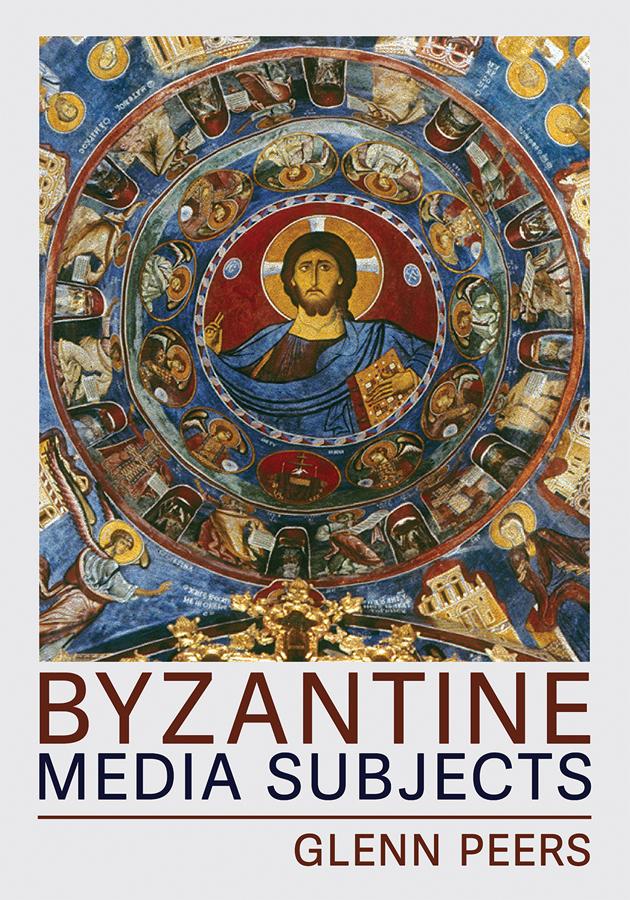
Byzantine Media Subjects invites readers into a world replete with images—icons, frescoes, and mosaics filling places of worship, politics, and community. Glenn Peers asks readers to think themselves into a world where representation reigned and humans followed, and indeed were formed. Interrogating the fundamental role of representation in the making of the Byzantine human, Peers argues that Byzantine culture was (already) posthuman.
The Byzantine experience reveals the extent to which media like icons, manuscripts, music, animals, and mirrors fundamentally determine humans. In the Byzantine world, representation as such was deeply persuasive, even coercive; it had the power to affect human relationships, produce conflict, and form self-perception. Media studies has made its subject the modern world, but this book argues for media having made historical subjects. Here, it is shown that media long ago also made Byzantine humans, defining them, molding them, mediating their relationship to time, to nature, to God, and to themselves.
Betal nemt med kort, Klarna, Apple Pay eller Google Pay. Ikke tilfreds? Du har altid 14 dages fortrydelsesret. Læs mere i vores vilkår. Har du spørgsmål, så send os en mail på hello@memmo.org.
Memmo gør det nemmere at studere – uanset hvor du er i verden. Hos os samler du dine kursusbøger og smarte studieværktøjer ét sted: resuméer, quizzer, podcasts og flashcards. Og så er der Ted, din studieven, der svarer på alt, du undrer dig over. Over 50 000 studerende studerer allerede her – bygget til at hjælpe dig med at lære hurtigere og stresse mindre.