
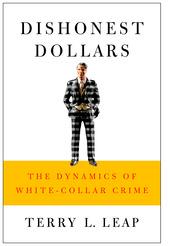
In an environment where corporate scandals fill the headlines and ethics courses have suddenly become standard fare in business schools, Terry Leap offers welcome insights into and useful ways of thinking about a critical problem that permeates our society. His main contribution is an integrative model of white-collar crime, which smoothly incorporates influences from sociology, psychology, public policy, and business. As he explains the process that occurs across the many different categories of crimes within organizations, he finds that there are more similarities than differences between "criminals in the suites" and "criminals in the streets."
Leap's definition of crimes within organizations and the people who commit them are laid out in his first chapter. He then goes on to discuss the causes of and events surrounding white-collar crime, types of crimes and criminals, the decision-making processes of white-collar criminals, and the impact of these crimes. His concluding chapter predicts future trends in corporate crime, including an explanation of why we are likely to see more crime in health care. Throughout, Leap presents numerous specific examples and cases—from famous meltdowns such as Enron and WorldCom to less-publicized incidents including a weight-loss franchisee mislabeling doughnuts as low fat and a CEO of a South Carolina regional transportation authority misusing taxpayer money for lavish meals, personal expenses, and world travel.
Betal nemt med kort, Klarna, Apple Pay eller Google Pay. Ikke tilfreds? Du har altid 14 dages fortrydelsesret. Læs mere i vores vilkår. Har du spørgsmål, så send os en mail på hello@memmo.org.
Memmo gør det nemmere at studere – uanset hvor du er i verden. Hos os samler du dine kursusbøger og smarte studieværktøjer ét sted: resuméer, quizzer, podcasts og flashcards. Og så er der Ted, din studieven, der svarer på alt, du undrer dig over. Over 50 000 studerende studerer allerede her – bygget til at hjælpe dig med at lære hurtigere og stresse mindre.