
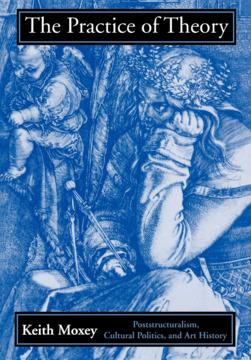
Many art historians regard poststructuralist theory with suspicion; some even see its focus on the political dimension of language as hostile to an authentic study of the past. Keith Moxey bridges the gap between historical and theoretical approaches with the provocative argument that we cannot have one without the other. "If art history is to take part in the processes of cultural transformation that characterize our society," he writes, "then its historical narratives must come to terms with the most powerful and influential theories that currently determine the way in which we conceive of ourselves."
After exploring how the insights offered by deconstruction and semiotics change our understanding of representation, ideology, and authorship, Moxey himself puts theory into practice. In a series of engaging essays accompanied by twenty-eight illustrations, he first examines the impact of cultural values on Erwin Panofsky's writings. Taking a fresh look at work by artists from Albrecht Dürer and Erhard Schön to Barbara Kruger and Julian Schnabel, he then examines the process by which he generic boundaries between "high" and "low" art have helped to sustain class and gender differences. Making particular reference to the literature on Martin Schongauer, Moxey also considers the value of art history when it is reduced to artist's biography. Moxey's interpretation of the work of Hieronymus Bosch not only reassesses its intelligence and imagination, but also brings to light its pragmatic conformity to elite definitions of artistic "genius." With his compelling analysis of the politics of interpretation, Moxey draws attention to a vital aspect of the cultural importance of history.
Betal nemt med kort, Klarna, Apple Pay eller Google Pay. Ikke tilfreds? Du har altid 14 dages fortrydelsesret. Læs mere i vores vilkår. Har du spørgsmål, så send os en mail på hello@memmo.org.
Memmo gør det nemmere at studere – uanset hvor du er i verden. Hos os samler du dine kursusbøger og smarte studieværktøjer ét sted: resuméer, quizzer, podcasts og flashcards. Og så er der Ted, din studieven, der svarer på alt, du undrer dig over. Over 50 000 studerende studerer allerede her – bygget til at hjælpe dig med at lære hurtigere og stresse mindre.